KSA Forces Martyr Teenagers, Qatif is Boiling
KSA Forces Martyr Teenagers, Qatif is Boiling
Local Editor – moqawama.org
The Eastern province of the Saudi Kingdom, al-Qatif, is boiling from anger while the Saudi police continues attacking civilian protesters in the province.
Agencies reported that Saudi police have fired live bullets at anti-government demonstrators protesting the martyrdom of a teenage boy in the city of Qatif, killing several mourners including a nine-year-old girl.
Activists say regime forces attacked protesters with artillery fire and machine guns in the city on Monday, adding that soldiers are conducting house to house searches.
Thousands of Saudi demonstrators were mourning the 19-year-old Nasser al-Mahishi, who was martyred by regime forces, when they were attacked.
Another Martyr Ali al-Felfel was hit by a bullet in the chest Monday night and died in hospital later.
Witnesses said Saudi security forces opened fire on protesters that had taken to the streets in the town of Chouika after the police killed the 19-year-old Nasser al-Mheishi.
Similar anti-government protest also took place in the nearby town of Awamiyah, where protesters burned tires and blocked main roads. There were no reports of police violence there.
Tension has been high in the province after Riyadh decided to increase its troop presence in the region in a bid to quash anti-government civilian protests there.
Saudi Arabia’s east has been the scene of anti-government protests over the past months with demonstrators demanding human rights reform, freedom of expression and the release of political prisoners.
…source
November 22, 2011 Add Comments
Made in USA – Tear Gas May Be Non-lethal But It’s Lethal to Democracy
Tear Gas May Be Non-lethal But It’s Lethal to Democracy
By Russ Wellen, November 22, 2011 – FPIF
At Salon, Avi Asher-Schapiro reports from Tahrir Square that a “protester, who told me his name was Karim, held up a used teargas canister and pointed to the label: ‘Made in USA.’ … The serial number and blue markings on the tear gas canister indicate that it was manufactured by Combined Systems Incorporated (CSI), a weapons manufacturer based in Jamestown, Pennsylvania.” In fact:
This is not the first time CSI ‘s products have been used against Egyptian citizens. During Egypt’s January revolution, CSI tear gas was employed by the Mubarak regime against demonstrators in Tahrir Square. … According to the State Department web site, the United States gave Egypt $1.2 million in 2009 for tear gas, riot control agents, and associated equipment.
Also, in January, Adalah-NY: The New York Campaign for the Boycott of Israel reported:
Jawaher Abu Rahmah’s January 1, 2011 death after she was overcome with tear gas at a protest in Bil’in has triggered a mobilization against the companies that provide Israel’s tear gas. … Combined Systems Inc. of Jamestown, Pennsylvania is the primary provider of tear gas to the Israeli army.
Why exactly does possession by the Egyptian military of U.S. made-tear gas offend the protestors, arguably more so than U.S. arms? Perhaps because they are aware that tear gas is not used in combat. Any use by the military is either to quell the populace in a country that it’s invaded and occupied — or, militarizing a police function, using it to suppress its own populace in the service of shoring up military rule.
At Salon, Glenn Greenwald also addressed this on Sunday, November 20.
… U.S. Government — in the name of Terrorism — has aggressively para-militarized the nation’s domestic police forces by lavishing them with countless military-style weapons and other war-like technologies, training them in war-zone military tactics, and generally imposing a war mentality on them. Arming domestic police forces with para-military weaponry will ensure their systematic use even in the absence of a Terrorist attack on U.S. soil; they will simply find other, increasingly permissive uses for those weapons.
In this instance, he was speaking of OWS crackdowns, which are bearing a stronger resemblance to those in Egypt every day. …more
November 22, 2011 Add Comments
Foreign Policy Leaders Urge Clinton to Push Bahrain Reforms
Foreign Policy Leaders Urge Clinton to Push Bahrain Reforms
21 November, 2011 – POMED
In anticipation of the Bahrain Independent Commission of Inquiry’s (BICI) report on November 23, a bipartisan group of individuals and leading human rights organizations working on U.S. foreign policy and Middle East affairs senta letter to Secretary of State Hillary Clinton to express its concern regarding ongoing developments in Bahrain. The letter reads, “We are hopeful the BICI report will thoroughly document human rights violations committed in Bahrain that have been independently verified by international human rights organizations […] Furthermore, we hope the implementation of reform and accountability mechanisms for human rights violations will lead to a process of substantive political reform that is responsive to the legitimate democratic aspirations of the Bahraini people.”
The group also enumerates suggestions for U.S. action, including urging the Government of Bahrain to “unconditionally release political prisoners and end torture, arbitrary detention, and incommunicado detention; protect Shi’a places of worship and religious buildings, rebuild destroyed mosques, and end systematic discrimination in political representation, government recruitment, employment, and naturalization policies; investigate and hold accountable all individuals who authorized, condoned, or committed human rights abuses, including the use of violence or torture against peaceful protesters and detainees.”
For the full text of the statement, and signatory’s continue reading HERE.
November 22, 2011 Add Comments
Sadly Amnesty lends awkward and questionable legitimacy to flawed BICI Charade
AMNESTY INTERNATIONAL MEDIA ADVISORY
17 November 2011 legitimacy
Amnesty International in Bahrain for Commission of Inquiry report launch
Amnesty International’s Bahrain researcher Said Boumedouha and Middle East and North Africa Press Officer James Lynch will be in Bahrain, at the invitation of the Bahraini government, for the 23 November launch of the Bahrain Independent Commission of Inquiry (BICI) report (also sometimes called the “Bassiouni commission”).
The team will be available for interview from Manama in English and Arabic about the work of the Commission and its findings, by phone or – subject to arrangement – in person.
Said Boumedouha has been working on Bahrain for Amnesty International for over 15 years. He visited Bahrain in March and April 2011 to carry out research into the human rights crisis in the country.
When: The Amnesty delegates will be in Bahrain from the morning of 22 November.
Contact: James Lynch (+44 7831 640 170, james.lynch@amnesty.org)
Amnesty International Press Office, London (+44 20 7413 5566, press@amnesty.org)
November 22, 2011 Add Comments
King Hamads, Human Rights Ball – No Honor for the Invited, complete with celebratory torture, gassing and murder
Bahrain’s Commission of Inquiry Report: Whitewashing a Counter-Revolution?
November 22, 2011 – By: Alaa Shehabib – Alakhbar
Tuesday, the Bahrain Independent Commission of Inquiry (BICI) will publish the findings of its three month investigation into violations of human rights. In utter insensitivity to the victims, the panel of government-appointed international law experts will hand over their report to the King of Bahrain at a “launch party” at his palace.
Apparently the head of the king’s Royal Court, one of the notorious hardliners in the ruling family who had a hand in the state’s repression, sees this occasion as some kind of celebration.
Much fanfare is expected, and invitations have been sent directly to the doorsteps of journalists and international NGOs, after locking them out of the country, if not throwing them out over the past eight months.
Meanwhile, local NGOs like the Bahrain Centre for Human Rights, that has been the strongest advocate of victims, has been kept off the invitation list.
Critics’ skepticism towards the commission largely stems from the way it was established, through a unilateral decision by the King, reinforcing the key problem of authoritarianism in the country. No consultations of any sort over the decision to establish the commission, its functions, its mandate, the terms of reference or selection of commissioners took place; not with the victims nor with civil society organizations.
To make things worse the commission’s chairperson, Mahmoud Cherif Bassiouni persistently made statements to the press that absolved the head of state of responsibility over human rights violations right from the very start.
This seriously affected the perception of partiality of the commission. At one point, thousands of protestors gathered on BICI’s premises to protest the failures of the government, forcing the commission to close.
The statistics are baffling – since February 14 when the uprising began, over 1500 have been arrested, 500 remain in detention, including my husband, 45 people have been killed, hundreds wounded and nearly 3000 sacked from their jobs.
The campaign of persecution was relentless and unceasing. One of its latest victims is 16 year old Ali Alsatrawi. His dismembered body was buried just three days ago, after being driven over by a police security jeep.
Despite the violence, the people of Bahrain continue in their brave ‘intifada’ with daily protests. By the Ministry of Interior’s own account, they have “dealt with” 1300 protests over the past five months. The uprising in Bahrain has not been ‘crushed’ or ‘quelled’ despite the introduction of Saudi troops in March.
People like myself affected by the repressive government crackdown with family members that have been killed, tortured, fired, expelled, or are in exile or in hiding, will be the most capable of judging this report.
My husband, Ghazi Farhan, was arrested on April 12 and later sentenced to 3 years in jail. He is completely apolitical. The anger I have is not because I am separated from my husband or have become a single mother with a newborn baby. It is much deeper. It is because of the repeated cycles of injustices that each generation has had to face over the past century that culminated in the biggest uprising in Bahrain’s history.
This regime has sought to radically alter the make up of the country’s population – through political naturalization of thousands of foreigners – and the physical land mass of the island – through mass land reclamation from the sea. Bahrain’s government has failed to come to terms with the land and the people it governs. That is at the heart of the popular revolt in Bahrain. …more
November 22, 2011 Add Comments
al Khalifa solves democracy and Human Rights crisis in Bahrain – 20 Charged With Abuse Of Protesters last Spring – let the weapons money flow
Bahrain Charges 20 With Abuse Of Protesters
November 21, 2011 – rferl.com
Authorities in Bahrain say 20 members of the security forces have been charged for alleged abuse of protesters during unrest earlier this year.
The government said an investigation had shown that there have been “instances of excessive force and mistreatment of detainees” during the February-March protests and crackdowns.
The statement was issued two days ahead of a report by an inquiry panel that is probing alleged government misconduct during the crackdown on Shi’ite-led protesters calling for greater rights in the island nation.
Authorities say 24 people, including four policemen, were killed in a month of unrest against the kingdom’s Sunni rulers.
The opposition puts the death toll at 30. Hundreds more were injured. …source
November 21, 2011 Add Comments
Saud and al Khalifa hallmark, murdering young people – Qatif Demonstration
November 21, 2011 Add Comments
Senate’s Disastrous New Detention Bill
Senate’s Disastrous New Detention Bill
by: Tom Parker – November 18, 2011 – Amnesty USA
The new National Defense Authorization Bill (S1867) presented to the Senate by the Armed Services Committee is such a disaster for civil liberties and human rights it is difficult to know where to begin.
Section 1031 of the Bill extends the Congressional Authorization for the Use of Military Force (AUMF) passed after the September 11th attacks to encompass any individual who has “substantially supported” Al Qaeda, the Taliban, or “associated forces”.
This is extraordinarily vague. The phrase ‘associated forces’ is so flexible that it can be used to encompass almost any militant Islamic group in existence from Indonesia to Nigeria. It might include political parties who share some of the militants’ aims but not their methods – like the Hizb ut Tahrir movement active in Western Europe and Australia.
The Bill does not set any territorial limits on where this conflict is being fought. The presumption is that US forces can engage terror groups with kinetic weapons systems wherever they find them – London, Copenhagen, Istanbul and Kampala are all fair game and to hell with consequences for any citizens of those countries who get caught in the middle.
Also alarmingly imprecise is the term “substantially supported.” In the past the Department of Defense has described both writing an opinion piece for The Guardian, a globally respected British newspaper, and detainee suicide as terrorist acts. To date, this bar has not been set high.
Some of those accused of terrorist affiliations have languished for almost a decade at Guantanamo and are still no nearer having their day in court. Requiring trials by Military Commission will simply relegate more accused individuals to the Twilight Zone of indefinite detention. …more
November 21, 2011 Add Comments
Bahrain braces for unveiling of probe into unrest
Bahrain braces for unveiling of probe into unrest
21/11/2011 – Bahrain Freedom Movement
DUBAI: Bahrain is bracing for the findings of a probe into a government crackdown on protesters as tension escalates in Shiite areas and the opposition vows not to back down from demands for democratic reform.
The report due out on Wednesday, commissioned by King Hamad, will unveil the findings of Bahrain’s Independent Commission of Inquiry into alleged government misconduct during the February-March crackdown on Shiite-led protests.
Authorities say 24 people, including four policemen, were killed in a month of unrest, while the Shiite-led opposition puts the death toll at 30. Hundreds more were injured.
Anti-government protests in mainly Shiite areas on the outskirts of Manama have intensified this month, resulting in clashes with security forces that have left dozens injured and one 16-year-old boy dead.
The mass demonstrations which rocked the Sunni-ruled kingdom earlier this year were violently crushed as government forces used live ammunition and heavy-handed tactics in clashes with protesters.
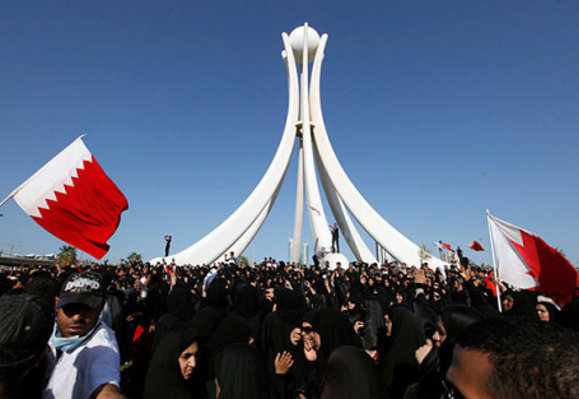
The final blow to the protests, inspired by the Arab Spring, came in mid-March as Bahraini security forces, boosted by troops from Gulf nations, drove demonstrators out of Manama’s Pearl Square — the focal point of protests.
Speaking at cabinet meeting on Sunday, King Hamad warned Bahrainis to steer clear of “anything that adversely affects” their unity.
Sporadic protests since March have intensified in anticipation of the commission’s findings.
“The real question is what happens after the report,” said human rights activist Mohammed Maskati.
“The situation is already very tense. The number of protests in the last two weeks is steadily increasing, as is the number of arrests,” said Maskati who heads the Bahrain Youth Society for Human Rights.
He warned that the report should “at the very least reflect the conclusions of other international human rights organisations … Otherwise, the crisis will escalate.”
International organisations, including Amnesty International, Human Rights Watch and the UN human rights agency, have repeatedly accused the government of violating citizens’ rights, citing allegations of torture, unfair trials, excessive use of force and violent repression.
Since the protests broke out, hundreds of Shiites have been arrested, including prominent members of the opposition, medics, teachers and youth activists.
Bahrain’s opposition groups have withheld comment until after the report is released, but at a joint press conference late Sunday they reaffirmed their commitment to democratic change.
“The Bahraini people will not go home-empty handed and we will not accept the status quo,” said prominent Shiite cleric Sheikh Ali Salman, who heads Bahrain’s largest opposition group, Al-Wefaq.
“After the report is released, we will meet to plan our next steps,” said Salman.
“Our demands are clear: an elected government, a parliament with full authorities, an independent judiciary, security for all and a just electoral system,” he said.
Salam warned that there was “no way out” of the current political crisis unless the demands were met. …more
November 21, 2011 Add Comments
Saudi forces fire on protest
Several hurt as Saudi forces fire on protest: report
(AFP) – 1 hour ago
RIYADH — Saudi security forces opened fire on protesters in the Eastern Province Shiite region of Al-Qatif on Monday, wounding several people, witnesses said.
The demonstrators had taken to the streets in the town of Shwika to protest against the death overnight Sunday of a 19-year-old Shiite man, Nasser al-Mheishi, accusing police of killing him, the witnesses said.
Mheishi had been wounded near a police checkpoint in unclear circumstances.
“The police told us that gunmen had opened fire on the police checkpoint… and that my son was caught in the crossfire between the police and the armed men, and was struck by four bullets,” the man’s father, Ali al-Mheishi told AFP.
But a witness later said that one of the policemen at the checkpoint shot Mheishi dead, his father said.
A police spokesman in the Eastern Province declined to comment.
According to militants the death is the second in the past few days after another young man was shot by security forces in the Shiite town of Awamiya.
In October 14 people, including 11 policemen, were wounding during clashes in Awamiya between security forces and demonstrators.
At the time the interior ministry in the Sunni-ruled kingdom blamed “outlaws” for the violence.
The group carried out acts causing “insecurity with incitement from a foreign country that aims to undermine the nation’s security and stability,” a ministry spokesman said in an indirect reference to Shiite Iran.
The overwhelming majority of the estimated two million Saudi Shiites live in Eastern Province, which neighbours Bahrain where authorities, supported by Saudi-led Gulf troops, earlier this year crushed a Shiite-led protest. …more
November 21, 2011 Add Comments
al Khalifa your lies have left you with no where to run – the people stand ready to tell the truth of the blood on your hands and the darkness in your heart
November 21, 2011 Add Comments
NYT acts as apologist in theatrical charade for process tainted BICI Report, due from condescending “political rights expert”
“We’re the only game in town,” the professor, M. Cherif Bassiouni, said.
Bahrain Nervously Awaits Revolt Report’s Findings
By ANTHONY SHADID – November 21, 2011 – NYT
There is the beleaguered crown prince of a veteran American ally, and a scheming royal family that believes, with seeming sincerity, that it was almost overthrown. An ensuing crackdown made chauvinism against the majority the effective policy of the state. Inscrutable and aggressive, Iran and Saudi Arabia lurk over a body politic, where the opposition waits, restrained, even as it warns that far worse is yet to come.
Bahrain’s protests in February and March stand as the opening credits to a plot that remains unresolved today, in an oil-rich region that sits at the nexus of American hegemony, regional rivalries and looming instability. In all the revolts that have roiled the Arab world this year, Bahrain’s government managed a tactical, perhaps ephemeral victory through force. But in doing so, it may have destroyed a society that once took pride it its cosmopolitanism. The question not only for Bahrain but for other Arab countries in tumult — like Egypt and Syria — is whether reconciliation can stop an unraveling spreading across the region.
The answer here may be in the hands of an Egyptian-American law professor asked by the king this summer to investigate the protests, crackdown and aftermath, in what the king’s supporters called a bid to heal the country. His task: essentially arbitrate a crisis in which neither side even agrees on what to call the landmark traffic circle where the revolt erupted.
“We’re the only game in town,” the professor, M. Cherif Bassiouni, said.
The commission of jurists and scholars led by Mr. Bassiouni is scheduled to issue its report Wednesday, which has become the defining moment for Bahrain, its Sunni Muslim monarchy and its restive Shiite Muslim majority. Its promise is to chart a way forward for reforms to blunt the fires of revolution that have swept Tunisia, Egypt and Libya. Its peril is that it comes too late for Bahrain. Critics, and there are many, already contend it will whitewash the crimes that were committed, a conclusion that will almost certainly condemn the country to more years of unrest and volatility. …more
November 21, 2011 Add Comments
In Anticipation of tainted, politically expedient BICI Report, Human Rights Groups Ready an Independent Report
Meanwhile, Bahraini human rights groups will release their own “massive report documenting all violations committed by the Bahrain regime since February 14th” on November 22, as “none of the local independent human rights organizations were invited to the BICI launch ceremony on the 23rd.”
Bahrain: Regime, Human Rights Groups Anticipate BICI Report
November 21, 2011 – POMED
The Bahraini Cabinet circulated a press release in preparation for the November 23 release of the Bahrain Independent Commission of Inquiry’s (BICI) report. The statement reads, “All the while BICI has carried out its work, the Government has carried out its own assessments and conducted its own investigations. These investigations have revealed things to praise as well as things to deplore. Regrettably, there have been instances of excessive force and mistreatment of detainees. This was in violation of government policy. 20 prosecutions against the officers involved have been initiated. This is in no way the limit of the steps that will be taken.”
The statement also assured readers that “the Government does not seek to excuse any wrongdoing. The BICI has stated publicly that it has investigated the instances of mistreatment. We can expect that its report will be very critical of these occurrences and the Government’s responsibility for failing to prevent them. The Government expects such criticism. We cannot condone mistreatment and abuses by our officials. There will be no impunity. All those responsible for abuses will be held accountable.” Furthermore, the government listed two steps it has taken to “address and remedy injustice” in Bahrain, including the establishment of a Special Fund for Victims and the National Dialogue.
Meanwhile, Bahraini human rights groups will release their own “massive report documenting all violations committed by the Bahrain regime since February 14th” on November 22, as “none of the local independent human rights organizations were invited to the BICI launch ceremony on the 23rd.” …source
November 21, 2011 Add Comments
Excessive Force, No Excuses and No Accountability – Government Claims it is Victim
Bahrain admits “excessive force” ahead of rights report
November 21, 2011 – By Andrew Hammond – Reuters
DUBAI: Bahrain admitted on Monday its forces had used excessive force and mistreated detainees during democracy protests, as it awaited the release of an independent report expected to be critical of the Gulf state’s handling of the unrest. “The government has carried out its own assessments and conducted its own investigations. These investigations have revealed things to praise as well as things to deplore,” said a cabinet statement sent to Reuters in English.
“Regrettably, there have been instances of excessive force and mistreatment of detainees. This was in violation of government policy. Twenty prosecutions against the officers involved have been initiated,” it went on.
The death of a Bahraini teenager after he was run over by police during protests last week has raised the stakes ahead of the release of a report into the government’s crushing of the democracy protest movement early this year. Sixteen-year-old Ali Yousef al-Sitrawi was killed during a protest in the Juffair district of Manama. The government said a police vehicle lost control because of oil spilt on the road deliberately by protesters, but opposition activists say police often drove straight at them.
[Read more →]
November 21, 2011 Add Comments
Universal Children’s Day
Universal Declaration of Human Rights – Article 12 ‘ States shall assure the child who is capable of forming his or her own views the right to express those views freely in all matters affecting the child…’ Article 13 “The child shall have the right to freedom of expression; this right shall include freedom to seek, receive and impart information and ideas of all kinds, …’
Universal Children’s Day
“There is no trust more sacred than the one the world holds with children. There is no duty more important than ensuring that their rights are respected, that their welfare is protected, that their lives are free from fear and want and that they can grow up in peace.” – Kofi Annan
Universal Children’s Day takes place on November 20 annually. In 1954 the United Nations’ (UN) General Assembly proclaimed November 20th as Universal Children’s Day. Each year the day set to promote international awareness for children’s rights and issues across the globe. The date of 20 November marks the day on which the Assembly adopted the Declaration of the Rights of the Child, in 1959, and the Convention on the Rights of the Child, in 1989. The Convention on the Rights of the Child was then signed on the same day in 1989, since its adoption the Convention has been signed or ratified by more countries than any other international treaty, and has since been ratified by 191 states.
November 21, 2011 Add Comments
As family buries 16 year old Ali AlSatrawi murdered by Police, they are attacked in cemetary by Secuirty Forces
November 21, 2011 Add Comments
Mother’s last time seeing her young son, Ali AlSatrawi
November 21, 2011 Add Comments
Preparation of Ali AlSatrawi body for funeral reveals massive damage to body – likely he was repeatedly run over by police
November 21, 2011 Add Comments
Murder Scene following the vehicle homicide by Police of Ali Al-Satrawi, 16 years old
November 21, 2011 Add Comments
Police Running Down Protesters
November 21, 2011 Add Comments
Good bye brave young, Ali Al-Satrawi, 16 years old
November 21, 2011 Add Comments
Bahrain’s latest Martyr – Ali Al-Satrawi, 16 years old Murdered by Security Forces
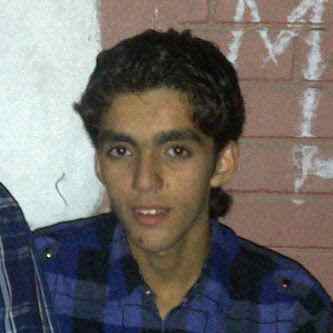
16 year old Ali AlSatrawi was run over tonight by Bahrain security forces and died at the scene. This comes after several videos emerged of attempts by riot police to run over protesters.
November 18, 2011 Add Comments
Bahrain: The Obama’s Great Contradiction
November 18, 2011 Add Comments
Legitimacy of Saudi Regime Challenged, National Press Club Membership Suspended
Legitimacy of Saudi Regime Challenged, National Press Club Membership Suspended
November 18, 2011 – by Sam Husseini – The Washington Stakeout
On Monday I went to a news conference at the National Press Club, where I am a member, titled “His Royal Highness Prince Turki al-Faisal al-Sa’ud of Saudi Arabia.” I asked a tough question at the news conference — a question that dealt with the very legitimacy of the Saudi regime. Before the end of the day, I’d received a letter informing me that I was suspended from the National Press Club “due to your conduct at a news conference.” The letter, signed by the executive director of the Club, William McCarren, accused me of violating rules prohibiting “boisterous and unseemly conduct or language.” After several days of efforts, I’ve been able to obtain video of the news conference. The video shows that I did not engage in any “boisterous and unseemly conduct or language.”
Saudi Arabia has basically been a center of counter-revolution in Arabic countries. The Tunisian dictator Zine El Abidine Ben Ali fled to Saudi Arabia, as did the Yemeni dictator Ali Abdullah Saleh for a time. The Saudi regime reportedly tried to prevent the Egyptian dictator Hosni Mubarak from stepping down. Saudi Arabia moved into Bahrain to stop a democratic uprising there. And of course it oppresses its own people, maintaining control through a combination of intimidation and in effect buying off much of the population. When major protests were attempted earlier this year, they were quickly put down and garnished little attention from most media. The Saudi regime arguably represents one of the narrowest of elites — it is not the 1%, it is perhaps the global 0.001% — and with hardly a pretense of merit. The Saudi regime continues to get weapons from the U.S. — see: “U.S. announces $60 billion arms sale for Saudi Arabia,” further preventing the possibility of peaceful change.
Prior to the event, I skimmed some material from Human Rights Watch on Saudi Arabia: “Saudi Arabia: Stop Arbitrary Arrests of Shia,” “Saudi Arabia: Free Islamic Scholar Who Criticized Ministry,” “Saudi Arabia: Women to Vote, Join Shura Council — But Reforms Exclude Other Forms of Discrimination.”
Toby Jones (Rutgers University, author of Desert Kingdom: How Oil and Water Forged Modern Saudi Arabia) recently wrote of Saudi Arabia: “the absence of public protest has little to do with the legitimacy of the ruling family, the uncertain popularity of an aged autocrat or the purported conservative nature of Saudi society. Many Saudis, whether pious or not, harbor deep frustrations with the country’s rulers. They share the same grievances about injustice, oppression and stifling corruption that have mobilized protesters elsewhere.” See also Madawi Al Rasheed “Yes, It Could Happen Here: Why Saudi Arabia is Ripe for Revolution” and Christopher M. Davidson “Lords of the Realm: The wealthy, unaccountable monarchs of the Persian Gulf have long thought themselves exempt from Middle East turmoil. No longer.”
In the course of his over 30 minutes of remarks, Turki took issue with the term the “Arab Spring” — not because he thought a term like “Arab Uprisings” would be more appropriate, as others I know have argued — rather, he said, he preferred the term “Arab Troubles.” I found it quite distressing that someone would openly say that moves toward democracy were “troubles.”
Peter Hickman, the moderator for the event, called on me for the first question. Here is the exchange:
…source and transcription HERE
November 18, 2011 Add Comments
The West needs a New Approach to Iran – Imagine Iran and US as partners for Peace
Needed: New Approach to Iran
By Manpreet Sethi – November 16, 2011 – The Diplomat
With the international community (i.e. the United States) continuing to challenge Iran’s nuclear program, a predictable pattern has emerged. Every now and again, an “authoritative” estimate surfaces declaring that Iran is on the verge of developing nuclear weapons. A round of condemnation follows. Stringent sanctions are sought. China studiously reviews the report. Russia repeats that diplomacy is the only answer to the issue. A few months later, the dust settles down. Business as usual commences. Until another report comes along, that is. Seem repetitive?
The truth of the matter is that no one outside the Iranian leadership has any definitive answer to the question of whether Iran is working on nuclear weapons. Most guesstimates are based on intelligence received from the United States, and sometimes Israel, both of whom hold a less than objective view of the current political regime in Iran.
This isn’t to justify what Iran could be doing, or to condone its obstructionist behavior. However, the solution to the problem posed by Iran’s alleged weapons program doesn’t lie in what has been attempted in the past. Sanctions have had little impact. Indeed, they have strengthened the resolve of the leadership and, more importantly, demonstrated deep fissures among the countries implementing sanctions. Until Russia and China fully implement any agreed upon sanctions, they will never be fully effective.
An answer to the Iranian nuclear issue can be found in following a multi-pronged approach. Most of the burden for this will have to be borne by the United States.
This should include:
1) Engaging directly with the political leadership of Iran.
2) Arriving at an understanding of a common approach with Russia and China. U.S.-Russia and U.S.-China bilateral relations have an obvious bearing on this issue.
3) Limiting the use of the International Atomic Energy Agency and its reporting mechanisms to score points in the media. Also, allow the IAEA to mature into a credible institution that can have the trust of the programs being safeguarded.
4) Forge an international consensus to reinforce safeguards and verification mechanisms.
5) End the rhetoric of threatening military force against the Iranian nuclear program. This is unfeasible and undesirable and can only end up driving a deep wedge in inter-state relations.
6) Enhance the attractiveness of non-proliferation. This can be achieved by creating specific advantages for non-nuclear weapon states in the form of legally binding U.N. approved assurances to never use or threaten to use nuclear weapons against them. Delegitimizing their use or threat of use through a U.N. convention or treaty.
Steps such as these will be necessary to deal with the proliferation concerns posed by Iran’s nuclear program. Directly and indirectly, they could make a difference, and are certainly worthy of being tried at a time when most other options appear to be exhausted, and indeed, have become very exhausting. …source
November 18, 2011 Add Comments