Bahrain: Military tribunals back again
Bahrain: Military tribunals back again
August 23rd, 2011 – BYSHR
Bahrain Youth Society for Human Rights-BYSHR expresses its deep concern for the decree no. “28” 2011 that was published in the Official Gazette on 18 August 2011 and allowed the trial of the civilians who have been arrested since the political unrest that started in February 2011.
The first article in the decree states that: “the ordinary courts take over all the cases of misdemeanors and appeals relating to them that were not adjudicated in a final verdict by the National Safety Court”
Article 2 states that: “The Lower National Safety Court adjudicates in all cases of crimes referred to it in accordance with the provisions of Decree No. (18) 2011 declaring state of national safety and those cases it started deliberating in them. Both the prosecutors and the sentenced can appeal the verdicts issued by this court before the Supreme Court of Appeal”
The BYSHR lawyer said that “the military tribunals will be held for seven criminal cases in the coming days” and according to the lawyer, the tribunals will try:
1. The medical staff- 28 August 2011 – The Lower National Safety Court
2. Political leaders and human rights activists – 11 September 2011 -The Appeal National Safety Court.
3. Occupation of the police station -24 August 2011 – The Lower National Safety Court.
4. Cutting the tongue of a Pakistani expatriate – 25 August 2011 – The Lower National Safety Court.
5.Covering up defendants in criminal cases – 24 August 2011 – The Lower National Safety Court.
6.Running over Nine security men -8 September 2011 – The Lower National Safety Court.
7.Attack on security men using weapons in the Financial Harbour – 6 September 2011 – The Lower National Safety Court.
The Bahraini authorities have violated international conventions to try civilians before a military tribunals.
BYSHR demands the Bahraini authorities to halt the military tribunals for defendants in criminal cases and immediate and independent investigation in the torture allegations. ..more
August 23, 2011 Add Comments
Scholars at Risk calls for letters on behalf of Prof. Masaud Jahromi of Bahrain
Scholars at Risk calls for letters on behalf of Prof. Masaud Jahromi of Bahrain
August 16, 2011
Scholars at Risk (SAR) is gravely concerned about Professor Masaud Jahromi, Chairman of the Department of Computer Science and Engineering at Ahlia University, Manama, Bahrain, who has been arrested and detained for four months. SAR asks for letters, faxes and emails urging the appropriate authorities to intervene to ensure his well-being pending his earliest release, including ensuring regular access to the legal counsel of his choosing, to family and to medical treatment.
Scholars at Risk is an international network of over 250 universities and colleges in 31 countries dedicated to protecting the human rights of scholars around the world and to raising awareness, understanding of, and respect for the principles of academic freedom and its constituent freedoms of expression, opinion, thought, association and travel. In cases like Professor Jahromi’s involving alleged infringement of these freedoms, SAR investigates hoping to clarify and resolve matters favorably.
Dr. Masaud Jahromi holds a PhD in Telecommunication Networking from University of Kent at Canterbury in the United Kingdom, and he is Chairman of the Department of Computer Science and Engineering at Ahlia University’s College of Mathematical Sciences and Information Technology. Scholars at Risk has learned that Professor Jahromi was arrested and taken from his home at 2:30 am on April 14, 2011. Scholars at Risk understands that Professor Jahromi was held first in Al Galaa Prison and then transferred to the Dry Dock Prison, where he has been since the end of April. According to reports, the police broke into his house in the middle of the night, threatened and harassed members of his family, confiscated the family’s laptops, and beat Professor Jahromi before taking him away to an undisclosed location. He was denied access to his family for over one month. Reports also indicate that Professor Jahromi is not receiving medical treatment for serious and diagnosed conditions, including Hepatitis C.
[Read more →]
August 23, 2011 Add Comments
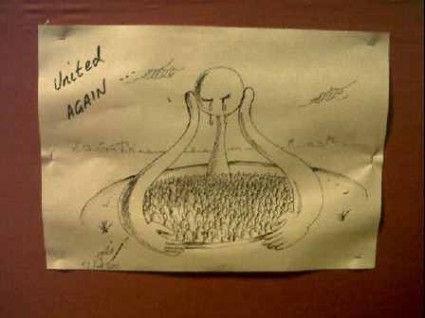
Visions of Pearl Unity and a Free Bahrain
August 23, 2011 Add Comments
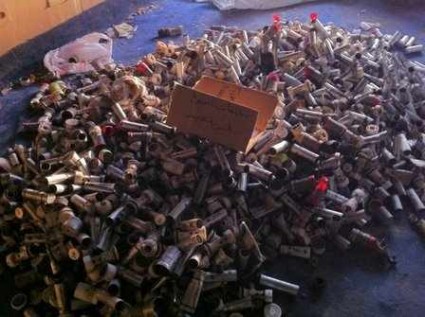
Bahrain’s al Khalifa regime gasses the masses
August 23, 2011 Add Comments
Bahrain’s economy wounded by al Khalifa’s unceasing violence against opposition, economic future uncertain
Bahrain economy seen shrinking 1.6% in 2011
By Andy Sambidge – 22 August 2011
Bahrain is set to see its economy contract by 1.6 percent this year on the back of the social unrest that hit the country earlier this year, Business Monitor International has said in a new report.
Analysts said growth in the Gulf kingdom would “slow markedly” with investment, consumption and trade all expected to trend lower.
“Although the Bahraini government will likely aggressively ramp up spending in a bid to shore up domestic political support, we continue to project the country posting a budget surplus in 2011 and 2012 to
the tune of 2 percent and 0.4 percent respectively,” BMI said.
“This will be due primarily to the impact of higher oil prices and external aid from other Gulf Cooperation Council states,” it added.
Earlier this month, the head of the country’s chamber of commerce said Bahrain’s economy had lost up to $2bn due to the policie unrest.
BMI said it had revised down its average 2011 consumer price inflation forecast for Bahrain to -0.1 percent year-on-year from 1.8 percent previously.
“This comes on the heels of a massive drop lower in housing prices, which contracted over 14 percent in March and April as a result of the government deciding to reduce housing instalments by 25 percent,” the BMI report said.
“It remains unclear what impact 2011’s political crisis will have on Bahrain’s long-term economic outlook. Should investors begin to reassess the costs of doing business in the country and begin relocating to Dubai or Doha, Bahrain’s growth outlook would suffer accordingly,” BMI added. …more
August 23, 2011 Add Comments
Bahrain Justice and Development Movement Blocked
The Bahraini authorities have blocked access to the website of the Bahrain Justice and Development Movement, a new London-based group consisting mainly of Bahraini exiles that denounces human rights violations in Bahrain and advocates democratic reforms. The website had been about to post an article in which Ali Al-Aswad, a former parliamentarian now living in exile, said he feared a civil war could break out in Bahrain. Without elaborating, the authorities accused the site of “breaking Bahrain’s laws.”
Try access HERE or on the left sidebar on this page
August 23, 2011 Add Comments
Nearly a decade later the flow of weapons from the G8 is as bad, in many instances worse, than ever – less-than-lethal weapons flow freely around the planet
A Catalogue of Failures:
G8 Arms Exports and Human Rights Violations
For 25 years, US law has stipulated that weapons should be kept out of the hands of governments that will use them to abuse human rights. Yet US commercial arms sales have frequently had the opposite effect. US arms sales directed to developing countries have quadrupled from 2000 to 2001, many of them with forces that persistently abuse human rights. In addition, US military aid is currently furnished to more than 30 countries identified by the US itself as having a “poor” human rights record, or worse.
05/19/03: Amnesty International
1. Introduction
Weak national control of the international transfer of “conventional” arms and security equipment contributes to the persistence of gross human rights violations. Of all the states with inadequate laws and administrative procedures to manage the export, transit and import of such arms – of which there are very many – none are more conspicuous than those states running the world’s largest industrialised economies – the Group of Eight.
Amnesty International is opposed to the transfer of military, security, and police equipment, technology and expertise that can reasonably be assumed will contribute to human rights violations in the receiving country, and has consistently appealed to the G8 governments to abide by this principle which they have long recognised but never fully implemented.
As this study shows, the governments of the G8 authorize unparalleled levels of arms and related assistance to the world’s armed forces and law enforcement agencies, but often to those who persistently commit gross human rights violations – equipping them, emboldening them and rewarding them.
At least two thirds of all global arms transfers in the years 1997-2001 came from five members of the G8.(1) The top supplier of weapons to the world was the United States, accounting for 28 per cent of global arms transfers. Second in line was Russia, with seventeen per cent. Third was France at 10 per cent, followed by Britain at 7 per cent and then Germany with 5 per cent.
For 25 years, US law has stipulated that weapons should be kept out of the hands of governments that will use them to abuse human rights. Yet US commercial arms sales have frequently had the opposite effect. US arms sales directed to developing countries have quadrupled from 2000 to 2001, many of them with forces that persistently abuse human rights. In addition, US military aid is currently furnished to more than 30 countries identified by the US itself as having a “poor” human rights record, or worse.
Almost ten years ago, the USA, Canada, France, Germany, Italy, Russia and the United Kingdom (UK) signed up, with other participating states of the Organization for Security and Co-operation in Europe (OSCE), to the Principles Governing Conventional Arms Transfers. These Principles commit participating states to “avoid transfers which would be likely to be used for the violation or suppression of human rights and fundamental freedoms.” However, an examination of the practices of these seven powerful states falls tragically short of their agreed benchmark.
More recently, France, Germany, Italy and the UK, as Member States of the European Union (EU), committed themselves to the European Union Code of Conduct on Arms Exports (adopted 8 June 1998 by the EU Council). Canada, the USA and many other states have declared their general support for the principles of the EU Code. Although it leaves the final decision on exports to be made by national governments, the Code does stipulate that arms should not be exported to countries where there is a clear risk they might be used for internal repression or where serious violations of human rights have occurred. However, evidence so far suggests that this promise is not being fully kept. A binding international arms trade treaty grounded in principles of international law, especially human rights and humanitarian law, rather than an ad hoc voluntary Code would provide potential victims around the world with much greater protection, but only the G8 leaders could decide on that course.
There are almost no legal or regulatory requirements amongst the G8 states for the inclusion of international human rights or humanitarian law content in the various military, security, and police force training services that they provide to states in all world regions. Even where human rights criteria are referred to in laws governing arms export and foreign military and security aid, they are often loosely interpreted. In particular, inadequate attention is given during export decision-making by governments to the long lifecycle of most types of arms and security equipment and technology – and hence to the prolonged risk of abuse.
Instead, it is short term profit making and political advantage that guide the bulk of the international arms trade. Currently, the G8 governments allow companies to engage in secretive, loosely-regulated, international trade in weapons, technologies, and training. Using the excuse of “commercial confidentiality”, the provision of meaningful and timely information to legislators, media and the general public about arms export decisions is lacking, thus undermining parliamentary scrutiny and public accountability of the trade. In addition, companies in the G8 countries have been allowed to establish foreign production facilities, sometimes under licensing arrangements with foreign companies where the licences and their impact are not subject to effective human rights conditionality or oversight. This practice allows G8 companies to evade domestic arms control restrictions by establishing production in foreign countries which have weaker arms export controls.
Some companies in the G8 countries have been involved in the supply of security equipment and devices whose prime practical purpose is for torture or ill-treatment. In many more cases, companies supply devices designed for security and crime control purposes but which in reality can easily lend themselves to torture and ill-treatment. For example, US, Russian, French and German companies are amongst the two hundred and thirty companies in 35 countries making, distributing or brokering the supply of electro-shock weapons. G8 governments do not have in place effective laws and regulations to prevent the export of such equipment to foreign security forces that are known to abuse legitimate devices to inflict torture.
The European Commission, following concerns expressed in the European Parliament, recently proposed a Trade Regulation for adoption by the European Council.(2) This will, if enacted un-amended, ban the import, export and brokering by companies and individuals within all 15 EU member states of items that the Commission has categorized as “torture equipment” including electro-shock stun belts, leg irons, thumb-cuffs and shackles. The proposed Trade Regulation will also require that all EU member states introduce controls on the export of items such as stun batons, stun guns and riot control agents such as tear gas. Amnesty International welcomes the introduction of this Trade Regulation and calls on other governments around the world to introduce similar prohibitions and controls to protect human rights.
In July 2000, six of Europe’s largest exporters of arms – France, Germany, Italy, Spain, Sweden and the UK – signed up to the Framework Agreement Concerning Measures to Facilitate the Restructuring and Operation of the European Defence Industry. This agreement is designed to loosen controls on arms exporting companies within Europe but could undermine arms export controls since it does not provide for adequate transparency or monitoring of exports to non-participating countries. …more
August 22, 2011 Add Comments
Hasan al-Sahaf testifies regarding his capture and detention by King Hamad’s Saudi mercenaries
August 9, 2011, 1:00 am
What Happened to My Bahrain Friend
By NICHOLAS KRISTOF
I wrote recently about an old friend, Hasan al-Sahaf, a Bahraini artist who had been imprisoned –nominally for economic offenses, but in reality for standing up to the regime. My column was an appeal to King Hamad to release him, and recently Hasan was indeed released. He telephoned with the good news, and I invited him to write a post on my blog about what happened. He courageously agreed, and here’s what he wrote:
I’d like to thank everyone who’s written to the government of Bahrain to demand my release from prison. Of course I write this note here hoping heartily that the Bahraini Minister of Interior will read it. And here’s what went on.
On May 13th at 2 am while everyone was asleep, the Bahraini security forces attacked my house with more than 30 armed men. They pulled me from my bed half naked and arrested me, and then they took me outside, where I was astonished by the number of armed forces, backed by two black tanks and seven armed jeeps. There were armed men on the roof of the house, boundary walls and around my car. They blindfolded me with a black cloth and drove me for three hours. I felt that we had left Bahrain for Saudi Arabia, and that was probably a way to make me horrified and scared. Finally I found myself in a prison cell at a police station. No one spoke to me at all that day. I could not go to sleep. For three days I was in a solitary cell, not allowed to talk to anyone or call anyone. No one told what my crime was.
After a week or so, I was transferred to another prison called Jaw where men are dehumanized, insulted, and hurt. A Bahraini officer named Jowder interrogated me. He asked me about politics and things like: What is your relationship with the American press? Do you communicate now with the American press and with whom? What are your political tastes? Why did you go to the roundabout (a center of protests)?
Just days before my release a Bahraini prosecutor visited me in prison. He asked so many questions concerning my leaving the University of Bahrain, about my business life, the reasons I am at prison, and asked about my current financial situations. At the end he told the reason for the interrogation: a U.S. journalist wrote an article calling for the King of Bahrain to release me from prison. He added that the writer accused the state of treating me this way because I am a Shiite, saying that this was a claim without a justifiable basis, and merely an opinion haphazardly stated. He asked then if I agreed with what was stated in the article. I told him I hadn’t read the article and I didn’t know who wrote it.
At the end, I told the prosecutor that I am ashamed to know that a person of another country is fighting for me, whereas my own government is torturing and humiliating me.
In the past when I had been in prison in Bahrain, I had been tortured and beaten from behind – they weren’t courageous enough to hit me face to face. This time they were more open in their torture, they punched and kicked me face to face. I was hit in the face and kicked on my legs.
There are so many people tortured: beaten by hands, sticks, shoes, etc. I saw people beaten before my eyes and screaming loudly. I also heard police calling for killing the Shia. …source
August 22, 2011 Add Comments
A Nation Called to Democracy – Bahrain, 22 February, 2011
August 22, 2011 Add Comments
for love of freedom for love of a Nation – Bahrain, freedom and democracy will be yours!
August 22, 2011 Add Comments
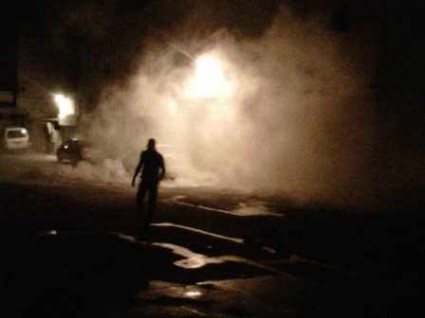
Security Forces Gas Village of Karranah Aug18, 2011
August 22, 2011 Add Comments
Demand a stop the Illegal detention and torture of Bahrain supporters of Freedom, Democracy and Human Rights
The United States under the Presidency of Barack Obama and the UK under Prime Minister David Cameron, have engaged in a Conspiracy of Silence regarding the continue tolerance of the brutal torture and oppression of the people of Bahrain by the governing al Khalifa regime. Both nations supply weapons that are used on a daily basis to gas, kill, maim and torture a peaceful people demanding freedom, democracy and protection of their Human and Constitutional Rights under Bahrain and international law. Please take a stand and help break the horrible silence of repression, demand freedom for Bahrain’s tortured prisoners of conscience and defenders of Human Rights, so together the people of Bahrain can build a free and democratic future.
August 22, 2011 Add Comments
Two prominent women activists, Roula al-Saffar, head of the Bahrain Nursing Society, and Jalila al-Salman, released after imprisonment for several months to be tried in bogus military courts
Bahrain must not try activists in military court
Amnesty – 22 August 2011
The Bahraini authorities’ decision to try two prominent women activists in a military court is a backward step and raises concerns that they will not receive a fair trial, Amnesty International said today.
Roula al-Saffar, head of the Bahrain Nursing Society, and Jalila al-Salman, vice-president of the Bahrain Teachers’ Association (BTA), have been released on bail after being detained for several months for their involvement in pro-reform protests.
Roula al-Saffar will be tried next Sunday together with 13 other medical workers before the National Safety Court, a military court, although she and Jalila al-Salman, who will be tried by the same court the following day, are both civilians.
“While we welcome the belated release of Jalila al-Salman and Roula al-Saffar, it is deeply disturbing that they are to stand trial before a military court and so are at risk of being imprisoned again next week,” said Malcolm Smart, Amnesty International’s Director for the Middle East and North Africa.
“Civilians should never be tried before military courts. The National Safety Court has been a parody of justice and a stain on the Bahraini authorities’ claim to uphold the rule of law,” he said.
The two activists were released on bail on Sunday after the Chairman of the Bahrain Independent Commission of Inquiry (BICI), Professor Cherif Bassiouni, visited them in prison on Saturday.
Roula al-Saffar was among a group of health professionals accused of committing felonies, including theft of medicines, during the protests that began in February. They strongly deny the allegations.
Jalila al-Salman faces trial on charges that include “inciting hatred against the regime” and calling to overthrow and change the regime by force”.
She appeared before the National Safety Court several times in June before her case was transferred to a civilian court and postponed until further notice.
Later the same month, the King of Bahrain announced that all military court trials connected with the February-March protests would be moved to civilian courts.
He then backtracked on 18 August, issuing a decree which makes it clear that the new measures do not apply to all arrested protesters.
The decree requires that those charged with a felony are to be tried by the National Safety Court if their cases had already been referred to that court, which was set up when the King declared a state of emergency at the height of the protests in March.
The new law means that scores of people detained during the protests are now liable to be tried in the military court.
“This is a complete U-turn by the Bahraini authorities. After they indicated that military courts were a thing of the past, it now seems that these courts are being resurrected to do the government’s bidding ,” Malcolm Smart said.
“Anyone charged with an internationally recognizable criminal offence must be promptly given a fair trial in a civilian court.”
According to local human rights organizations, many teachers and members of the BTA were detained, harassed and tortured or otherwise ill-treated in detention for their participation in protests earlier this year.
At least 500 people have been detained in Bahrain since pro-reform protests began in February and four have died in custody on suspicious circumstances. More than 2,500 people have been dismissed or suspended from work.
BICI’s five-member investigation panel is expected to report on its findings in October. …more
August 22, 2011 Add Comments
Torture in Bahrain Aided by Nokia Siemens
Torture in Bahrain Aided by Nokia Siemens
By Vernon Silver and Ben Elgin – Aug 22, 2011
The interrogation of Abdul Ghani Al Khanjar followed a pattern.
First, Bahraini jailers armed with stiff rubber hoses beat the 39-year-old school administrator and human rights activist in a windowless room two stories below ground in the Persian Gulf kingdom’s National Security Apparatus building. Then, they dragged him upstairs for questioning by a uniformed officer armed with another kind of weapon: transcripts of his text messages and details from personal mobile phone conversations, he says.
If he refused to sufficiently explain his communications, he was sent back for more beatings, says Al Khanjar, who was detained from August 2010 to February.
“It was amazing,” he says of the messages they obtained. “How did they know about these?”
The answer: Computers loaded with Western-made surveillance software generated the transcripts wielded in the interrogations described by Al Khanjar and scores of other detainees whose similar treatment was tracked by rights activists, Bloomberg Markets magazine reports in its October issue.
The spy gear in Bahrain was sold by Siemens AG (SIE), and maintained by Nokia Siemens Networks and NSN’s divested unit, Trovicor GmbH, according to two people whose positions at the companies gave them direct knowledge of the installations. Both requested anonymity because they have signed nondisclosure agreements. The sale and maintenance contracts were also confirmed by Ben Roome, a Nokia Siemens spokesman based in Farnborough, England.
The Only Way
The only way officers could have obtained messages was through the interception program, says Ahmed Aldoseri, director of information and communications technologies at Bahrain’s Telecommunications Regulatory Authority. While he won’t disclose details about the program, he says, “If they have a transcript of an SMS message, it’s because the security organ was monitoring the user at their monitoring center.”
The use of the system for interrogation in Bahrain illustrates how Western-produced surveillance technology sold to one authoritarian government became an investigative tool of choice to gather information about political dissidents — and silence them.
Companies are free to sell such equipment almost anywhere. For the most part, the U.S. and European countries lack export controls to deter the use of such systems for repression.
Dangerous Products
“The technology is becoming very sophisticated, and the only thing limiting it is how deeply governments want to snoop into lives,” says Rob Faris, research director of the Berkman Center for Internet and Society at Harvard University in Cambridge, Massachusetts. “Surveillance is typically a state secret, and we only get bits and pieces that leak out.” …more
August 22, 2011 Add Comments
al Khalifa regime reinstates Military Courts as charades of reform and “Independent Investigations” become evident
Bahrain Government Makes U—Turn on Military Court – August 22, 2011
CONTACT: Brenda Bowser-Soder, Human Rights First
202-370-3323 – BowserSoderB@humanrightsfirst.org
Washington, DC – Human Rights First today criticized the Bahrain government’s sudden decision to bring back military courts to try pro-democracy activists. The group called the development as shocking as it is duplicitous.
“The world needs to take notice that the government of Bahrain has brought back its discredited military courts, which is further evidence that meaningful reform in that country is an illusion,” said Human Rights First’s Brian Dooley. “I met with many people in Bahrain last month who had been told their cases would now be heard in civilian instead of military courts. They were lied to.”
More than a dozen doctors and other medical professionals have been summoned to appear before the military court on Sunday August 28, even though the Bahraini authorities announced on June 26 that they were transferring all cases from military courts to civilian courts.
Among those waiting to have their cases heard are medics like Roula Al-Saffar, the head of the Bahrain Nursing Society, who was released from detention yesterday after four months in custody. Roula studied at Widener University in Pennsylvania and at the University of North Texas. She also worked for many years as a nurse at Baylor University Medical Center in Dallas. Though she has been released, the charges against her have not been dropped and she has now been summoned with her colleagues to appear before the military court on Sunday.
“The U.S. government has been publicly silent on Bahrain for some time now. It has not disassociated itself from the discredited National Dialogue nor spoken out against the police attacks on peaceful protests over the last few weeks. In light of this latest development, it should say clearly and publicly that any step back to military courts will have consequences for the relationship between the United States and Bahrain,” Dooley concluded. …more
August 22, 2011 Add Comments
Convention against Torture and Other Cruel, Inhuman or Degrading Treatment or Punishment
Office of the United Nations High Commissioner for Human Rights
Convention against Torture and Other Cruel, Inhuman or Degrading Treatment or Punishment
Adopted and opened for signature, ratification and accession by General Assembly resolution 39/46
of 10 December 1984 – entry into force 26 June 1987, in accordance with article 27 (1)
Entire Text in PDF Format
PART I
Article 1
1. For the purposes of this Convention, the term “torture” means any act by which severe pain or suffering, whether physical or mental, is intentionally inflicted on a person for such purposes as obtaining from him or a third person information or a confession, punishing him for an act he or a third person has committed or is suspected of having committed, or intimidating or coercing him or a third person, or for any reason based on discrimination of any kind, when such pain or suffering is inflicted by or at the instigation of or with the consent or acquiescence of a public official or other person acting in an official capacity. It does not include pain or suffering arising only from, inherent in or incidental to lawful sanctions.
2. This article is without prejudice to any international instrument or national legislation which does or may contain provisions of wider application.
Article 2
1. Each State Party shall take effective legislative, administrative, judicial or other measures to prevent acts of torture in any territory under its jurisdiction.
2. No exceptional circumstances whatsoever, whether a state of war or a threat of war, internal political instability or any other public emergency, may be invoked as a justification of torture.
3. An order from a superior officer or a public authority may not be invoked as a justification of torture.
Article 3
1. No State Party shall expel, return (“refouler”) or extradite a person to another State where there are substantial grounds for believing that he would be in danger of being subjected to torture.
2. For the purpose of determining whether there are such grounds, the competent authorities shall take into account all relevant considerations including, where applicable, the existence in the State concerned of a consistent pattern of gross, flagrant or mass violations of human rights.
Article 4
1. Each State Party shall ensure that all acts of torture are offences under its criminal law. The same shall apply to an attempt to commit torture and to an act by any person which constitutes complicity or participation in torture. 2. Each State Party shall make these offences punishable by appropriate penalties which take into account their grave nature.
Article 5
1. Each State Party shall take such measures as may be necessary to establish its jurisdiction over the offences referred to in article 4 in the following cases:
(a) When the offences are committed in any territory under its jurisdiction or on board a ship or aircraft registered in that State;
(b) When the alleged offender is a national of that State;
(c) When the victim is a national of that State if that State considers it appropriate.
2. Each State Party shall likewise take such measures as may be necessary to establish its jurisdiction over such offences in cases where the alleged offender is present in any territory under its jurisdiction and it does not extradite him pursuant to article 8 to any of the States mentioned in paragraph I of this article.
3. This Convention does not exclude any criminal jurisdiction exercised in accordance with internal law. …more
August 21, 2011 Add Comments
Collective Punishment of Students Continues in Bahrain, fascist control, oaths of allegiance, forced confessions and public apologies have become a daily routine
Recent Bahrain Investigations are designed to enable Collective Punishment and enforcement of fascist control of Society
August 21, 2011 Add Comments
An British Imperial View of the History of Bahrain
[cb editor note: interesting but woefully absent the history of brutality against the people of Bahrain. …would be revealing to see body counts and account of torture and punishment during each of these periods. ]
Bahrian Profile
16 August 2011 Last updated at 04:16 ET
A chronology of key events:
1913 – Britain and the Ottoman government sign a treaty recognising the independence of Bahrain but the country remains under British administration.
1931 – The Bahrain Petroleum Company (Bapco), a subsidiary of the Standard Oil Company of California (Socal), discovers oil at Jabal al-Dukhan and productio begins the following year.
1939 – Britain decides that the Hawar Islands which lie in the Gulf of Bahrain between Bahrain and Qatar belong to Bahrain not Qatar.
1961 – Sheikh Isa Bin-Salman Al Khalifah becomes ruler of Bahrain.
Britain moves bases
1967 – Britain moves its main regional naval base from Aden to Bahrain.
1968 – Britain announces it will close its bases east of Suez by 1971.
1970 – The Administrative Council becomes a 12-member Council of State, headed by a president, the ruler’s brother, Sheikh Khalifah Bin-Salman Al Khalifah.
1970 May – Iran renounces its claim to sovereignty over Bahrain after a United Nations report shows that Bahrainis want to remain independent.
Independence
1971 – Bahrain declares independence and signs a new treaty of friendship with Britain. Sheikh Isa becomes the first Emir and the Council of State becomes a cabinet.
1971 – Bahrain gains formal independence from Britain.
1971 – Bahrain and the US sign an agreement which permits the US to rent naval and military facilities.
1972 December – Elections are held for a Constituent Assembly. Only Bahraini males over 20 can vote.
1973 December – After the constitution comes into force on 6 December, elections are held on 7 December for a National Assembly, an advisory legislative body, with 44 members (14 cabinet members and 30 elected by male voters) . Assembly dissolved
1975 August – Following claims by prime minister Sheikh Khalifah Bin-Salman Al Khalifah that the National Assembly is impeding the work of the government, the Emir dissolves the assembly and rules by decree.
1981 May – Bahrain joins the Cooperation Council for the Arab States of the Gulf, more usually known as the Gulf Cooperation Council (GCC), which also includes Kuwait, Oman, Qatar, Saudi Arabia and the United Arab Emirates.
[Read more →]
August 21, 2011 Add Comments
Disturbing trends set in lead-up to Egyptian coming elections
Egyptian Civilians Caught in Military Tribunals
Elizabeth Arrott – Cairo – August 17, 2011
Egyptian protesters who ended the presidency of Hosni Mubarak continue to endure one legacy of the past – an all-encompassing emergency law. Unlike Mubarak, who is on trial in a civilian court, thousands of civilians face military tribunals.
The dismantling of Egypt’s emergency law has been a key demand of anti-government protesters, and the current military rulers say they are considering its demise.
But human rights groups argue that actions speak louder than words and note that some 10,000 Egyptians have been put before military tribunals in the months since the January uprising. That is more, they say, than during the whole of Mr. Mubarak’s 29-year rule.
The government counters that the military courts, which under emergency law are allowed to try civilians, are now used only for common criminals who undermined national security during the political unrest. It is a point adamantly rejected by political activists like Ibrahim El Houdaiby.
“Those are not thugs who are being tried via military tribunals,” said El Houdaiby. “Those are our friends, our comrades, our brothers and sisters. People who have been demonstrating on the street. People who have been active and have managed to oust former President Mubarak.”
The secretive nature of the military courts makes it hard to know the exact status of each case. Most defendants have no access to lawyers or others on the outside.
Certainly, criminal acts appear to have been committed during the uprising — an event seen in real time by millions around the world.
But people also witnessed the roundup of political protesters, during raids on Tahrir Square sit-ins in recent months, and at demonstrations outside the Israeli embassy in May.
Political activist El Houdaiby finds the reliance on tribunals for these cases particularly galling, given the treatment of members of the old guard.
“If former president Mubarak, who has allegedly killed over 800 Egyptians, ordered the death of over 800 Egyptians in a few days, not to speak of the 30 years and crimes therein, is now standing in front of a civilian court, it is inconceivable that we would accept civilians standing before a military tribunal,” he said. …more
August 21, 2011 Add Comments
Confused in the West, many try to equate London Riots and PIGS Austerity Protests with “Arab Spring” – positive thing is many are trying to identify with the Arabs and Islam
‘Arab Spring’ Inspires Protests in Europe
Henry Ridgwell – London – August 17, 2011
Mid-January in Tunisia and thousands of protestors throng the street of the capital Tunis. Anti-government demonstrations that began in the small town of Sidi Bouzid culminated in the resignation of President Zine El Abidine Ben Ali.
Then, similar protests took hold in Egypt, forcing President Hosni Mubarak from power. And as demonstrations gathered momentum, they became known as the “Arab Spring.”
Mary Kaldor was part of the opposition movement in Hungary during the Cold War. She is now professor of global governance at the London School of Economics.
“People assumed that somehow the Middle East was different and that was based on assumptions that somehow Islam is different, ‘It’s not like us.’ And that was an assumption that underpinned the war on terror, too. And I think what’s so wonderful about the Arab Spring is that it’s disproving that assumption. It’s showing that Arabs are just a democratic as everyone else,” noted Kaldor.
Just as the Arab Spring was building momentum, protests also erupted in parts of Europe.
In Athens, thousands of people demonstrated against the Greek government’s package of spending cuts and privatizations – taking over Syntagma Square outside parliament.
“It’s all about, I think, a failure of representation, a feeling that the political class is one class, ‘We can’t influence them, it’s outrageous that they’re suddenly saying that we have to pay for what the banks did.’ And I think that there’s a similar feeling of outrage in the Arab world,” added Kaldor. “So I think there are very many similarities between what’s happening in Europe and what’s happening in the Arab world.”
In London, British protesters railed against their government’s austerity measures. And such scenes played out in other parts of Europe, too. In Madrid, protestors occupied the central Puerta del Sol square, in a self-proclaimed emulation of the demonstrations in Cairo’s Tahrir Square a few months earlier.
“I think there are clear differences for what’s going on in different countries,” explained Owen Tudor, international secretary for the Trades Union Congress in Britain. “We’re talking about democracies in Europe, dictatorships across much of north Africa. But many of the causes of what’s happened have been very similar. It’s about the economic crisis.”
Tudor says unions were key in instigating strikes in Egypt that led to the fall of President Mubarak. European trade unions are increasing support for their Arab counterparts, and receiving advice from the Arab street.
“They have also, in their turn, been coming to Europe, talking to trade unionists in Britain, across Europe, and have been an inspiration in many cases to people and saying, ‘You can build support, you can win these arguments,'” added Tudor.
Some observers see the Arab Spring grinding to a halt in Libya and Syria. But Professor Kaldor says the protests have already changed the geopolitical landscape of the Arab world.
“1989 brought an end to the Cold War. I think what 2011 did was to sideline the war on terror. It marginalized al-Qaida. Osama bin Laden may have been physically killed in Pakistan, but he’s been politically killed by the demonstrations in the Middle East,” she said.
The end result of the protests in Europe and the Arab world remains uncertain.
But analysts say 2011 will be etched in the memory as a year of momentous change. …source
August 21, 2011 Add Comments
Saudi Arabia vs. the Arab Spring – funding fascism in MENA
In neighboring Bahrain, the Saudis also moved quickly to bolster the Sunni-minority regime against a rising tide of protest led by the island kingdom’s Shia majority. Saudi troops marched into Bahrain under the banner of the Gulf Cooperation Council, and the Saudi rulers issued clear instructions to adopt an iron-fisted policy with the demonstrators, again arguing that Iran’s nefarious hand was at play in subverting the country.
No doubt, the Saudis believe that a Shia-led Bahrain would lead to Iranian dominance at their very doorstep. Here, too, the Kingdom employed its policy of largesse through the GCC, promising Bahrain $10 billion over the next decade. Other large-scale financial commitments were made to Oman and Jordan, both Saudi allies that have managed to silence early whispers of mass protest.
Saudi Arabia vs. the Arab Spring
JoonggAng Daily IHT – August 19, 2011
For all of their wealth and planning, the Saudis remain vulnerable to the turmoil surrounding them.
Saudi Arabia is widely perceived as leading the counterrevolution against the Arab Spring uprisings. In reality, the Kingdom’s response is centered, as its foreign and domestic policy has long been, on stability. The Saudis don’t want anti-Saudi forces, including such enemies as Iran and Al Qaeda, to increase their influence in the Middle East.
Some of the older Saudi leaders have seen this movie before. The nationalist revolutions of the 1950s and 1960s, inspired and galvanized by Gamel Nasser’s Egypt, nearly toppled the House of Saud. Nonetheless, today’s Saudi princes appear to recognize that something has genuinely changed in the Middle East: The younger generation of Arabs is no longer prepared to accept unaccountable, corrupt and brutal governments.
Saudi Arabia, a self-proclaimed bulwark of Islamic conservatism, where popular democracy has never been considered a legitimate form of rule, has been more aggressive in some arenas than in others. Domestically, the royal family struck quickly, adopting a ban on public demonstrations and acts of civil disobedience. The Kingdom’s traditional interpretation of Islam construes political legitimacy in terms of a ruler’s proper application of Islamic law. In return, his subjects owe him obedience within the constraints of Sharia religious law.
Dissent, should it arise, must always take the form of well-intentioned advice given to the ruler in a private setting. Public demonstrations of dissent are regarded as contrary to Islam, because they foster divisiveness and lead to civil strife. The highest council of Saudi religious scholars recently declared demonstrations to be categorically un-Islamic. Confronted with the possibility of mass demonstrations on March 11 – the so-called Day of Rage on a Facebook page – the Saudi rulers enforced that ruling by deploying massive numbers of security forces in the streets.
They also played the Shia card, an effective trump in Sunni-majority Saudi Arabia. The rulers argued that public protests throughout the region were being orchestrated by Shia Iran, and were anti-Sunni and sectarian. The threat of chaos, evident now in Libya, Syria and Yemen, also weighed in the royal family’s favor. The House of Saud has a long historical claim on rule in Arabia, and its promise of stability remains key to its durability. …more
August 21, 2011 Add Comments
In usual al Khalifa style BNA present delusional and dangerous interpretation of “green light” in it’s recent extreme nazi-fascist like attack against it’s own people
[cb editor note: please see the article/report that follows this article to gain perspective on the nonsensical and dangerous al Khalifa interpretation of the US Report on Counter Terrorism – though the US report is clearly lacking in it’s rebuke of recent al Khalifa brutality against Bahraini citizens.]
USA hails counter-terrorism measures taken by Bahrain
Manama, August 20 — (BNA) The annual report on terrorism issued from the USA Department of State confirmed that the Kingdom of Bahrain has efficiently worked to combat the financing of terrorism and boosted its border patrol capabilities and contributed with manpower for international anti-terror operations and conducted successful court trials for a number of cases under Bahraini Anti-Terror Act for the year 2006.
The report has been issued recently from the anti-terror liaison office in the US Department of State and covers the year 2010. The report confirmed that the Kingdom of Bahrain worked efficiently in order to combat terrorism financing and hosted the Secretariat-General of the Middle East & North African Finance Task Force. Bahrain also liaised with its banks regarding the cases of money laundering and terrorism financing.
The report stated that the Kingdom of Bahrain, since it had ratified the international anti-nuclear-terrorism initiative in March 2008 has expanded its aviation and marine patrol and increased the number of checkpoints and conducted more drills for internal coordination and stationed more border patrol officers who are capable of identifying nuclear-proliferation-related substances such as centrifuges and commercially-banned components. The report cited the Kingdom of Bahrain’s which had already joined the international treaty for combating nuclear terrorism and the treaty for physical protection of nuclear substances and amendments thereof in the year 2005.
Regarding combating radicalism and terrorism, the report confirmed that the Ministry of Justice & Islamic Affairs has been exerting its persistent efforts to combat radicalism and extremism. The Ministry of Justice & Islamic Affairs also organized forums and workshops for Muslim imams (i.e. clergymen) and also expanded its scholarships program and finalized its annual revising of religious education curricula for its schools in order to update the interpretation of Islamic texts. …source BNA
August 21, 2011 Add Comments
US Counter-terrorism Report 2010 – Released 18 August, 2011 (Bahrain Excerpt)
BAHRAIN
Overview: The Bahraini government worked to actively counter terrorist finance, enhanced border control capability, contributed manpower to international counterterrorism operations, realign internal responsibilities, and successfully prosecuted a number of cases under its 2006 counterterrorism law.
Legislation and Law Enforcement: Key to several Bahraini counterterrorism successes this year was a decision by the King to realign internal intelligence, analytical, and counterterrorism responsibilities in various government ministries under the Bahrain National Security Agency, which has resulted in a clearer delineation of roles and responsibilities allowed for greater capacity building and increased interagency cooperation.
Bahraini law enforcement actions included:
• On January 26, the High Criminal Court convicted and sentenced to five-year prison terms two Bahraini citizens affiliated with al-Qa’ida of plotting a terrorist attack against U.S. diplomatic and naval interests. On May 30, the court’s decision was upheld by the Supreme Criminal Appeals Court. Key to the successful prosecution was the digital forensic evidence seized by Bahraini law enforcement.
• On July 5, seven Bahraini citizens were convicted under the 2006 counterterrorism law and sentenced to life imprisonment for their involvement in the March 2009 death of a Pakistani national who was presumed to be a plain clothed police officer at the time of the attack.
• On July 6, two Bahraini citizens were convicted by the High Criminal Court of plotting an April 2009 terrorist attack with a homemade bomb and were each sentenced to a 10-year prison term.
• During August to November, Bahraini law enforcement arrested at least 200 men, including minors, and held many of them under the counterterrorism law for various offenses. Twenty-five Bahraini citizens (including two in absentia) have been charged and the trial was ongoing at year’s end. The arrests and subsequent prosecutions have been criticized by local and international human rights organizations as being political in nature, and there have been claims of mistreatment and coerced confessions by some of the detainees’ defense counsels.
Countering Terrorist Finance: Bahrain worked actively to counter terrorist finance and hosted the Secretariat for the Middle East and North Africa Financial Action Task Force (MENAFATF), a Financial Action Task Force-style regional body. Bahrain worked cooperatively with its banks on anti-money laundering and counterterrorist finance (AML/CTF) issues. Bahraini law enforcement and customs officials also continued to build AML/CTF capacity through extensive training.
In October, Bahrain imprisoned a Syrian national who had been convicted in absentia of terrorist financing by Bahraini courts and sentenced to a five-year prison term in February 2009. Despite progress, Bahrain has yet to adequately amend the law banning money laundering and combating terrorism finance. In addition, Bahrain’s designated non-financial businesses and professions remained vulnerable to terrorist financing, due primarily to the non-issuance of legislation for regulating and monitoring the sector. Bahrain was asked to provide MENAFATF a follow up report in 2011 outlining progress.
Regional and International Cooperation: Since formally endorsing the Global Initiative to Combat Nuclear Terrorism in March 2008, Bahrain has worked to expand air, sea, and causeway border control points through increased training, internal cooperation, and staffing the border with officers capable of recognizing and interdicting nuclear proliferation materials such as centrifuges and commercially banned items. Bahrain acceded to the International Convention for the Suppression of Acts of Nuclear Terrorism as well as the Convention on the Physical Protection of Nuclear Material and its 2005 Amendment.
Countering Radicalization and Violent Extremism: Bahrain’s efforts to counter radicalization and violent extremism have been spearheaded by the Ministry of Justice and Islamic Affairs (MJIA). The MJIA organized regular workshops and seminars for imams from both the Sunni and Shia sects, and expanded its international scholarship program to include religious schools in Egypt, Jordan, and the United Arab Emirates. It also completed an annual review of schools’ Islamic Studies curriculum to evaluate interpretations of religious texts. …source
August 21, 2011 Add Comments
UAE elections: any substance behind the gloss?
UAE elections: what substance behind the gloss?
While the UAE increases its electoral base for its semi-parliamentary body, the Federal National Council, analysts see no road to democracy through a toothless “advisory” council
Reuters, Sunday 21 Aug 2011 – In a dark auditorium, rows of men in traditional white robes and women swathed in black watch silently as computer-animated characters take their turn at electronic voting machines in a film aimed at educating them on how to vote.
On 24 September they will cast their votes for half of the United Arab Emirates’ Federal National Council (FNC), a quasi-parliamentary body designed to serve as a link between the country’s rulers and its people to build democratic institutions gradually in the Gulf Arab state.
But given that the 40-member council has no legislative authority, half its members are appointed, and only about 12 per cent of citizens – themselves handpicked by the UAE’s rulers – can vote, critics question how much substance it has.
“It’s theatre,” said a former FNC member, who spoke on condition of anonymity given the sensitivity of the issue. “It looks good, but it doesn’t mean there’s anything underneath.”
The election awareness road show has been to all seven emirates, from Umm Al-Quwain, with its low biscuit-coloured buildings, to the glinting skyscrapers of business hub Dubai, to “strengthen electoral culture”.
Officials have rolled out an election logo, set up a special website, printed explanatory brochures and even installed the Arab world’s first high-tech electronic voting machines to press on with a programme of gradual democratisation.
It is only the second election to be held in the UAE.
“We seek through the current election, a shift in the political environment of the UAE,” Minister of State for FNC Affairs Anwar Mohammed Gargash said in a statement last week.
At a session in the northern emirate of Umm Al-Quwain, several dozen voters filed into a conference hall where the election logo, a young boy running with the national flag billowing behind him, was emblazoned on booklets and posters.
“We are on the right track and we are in no hurry. What do we lack? … Our state has provided us with everything,” Aisha Rashed Leytaim, an eligible voter who also planned to run for an FNC seat, told Reuters, speaking over the election’s rousing theme song.
The UAE’s oil wealth has so far staved off the kind of popular protests that ousted the veteran leaders of Tunisia and Egypt, but hundreds of signatures on an online petition calling for free and fair elections suggest there are Emiratis who share their neighbours’ desire for a greater role in government.
Even before this year’s unrest across the Arab world, UAE rulers intended to broaden popular participation, but the regional upheaval seems to have accelerated those plans.
Last month, the number of people entitled to vote or run in the September election for the FNC was increased to 129,000, nearly 20 times more than in the UAE’s first election in 2006, in which less than one per cent of Emiratis could take part. …more
August 21, 2011 Add Comments
Iran negates it’s voice in Human Rights by committing same atrocities as it’s neighbors
URGENT APPEAL – THE OBSERVATORY
Arbitrary arrest and ongoing detention / Disappearance / Judicial harassment
Iran – August 19, 2011
The Observatory for the Protection of Human Rights Defenders, a joint programme of the International Federation for Human Rights (FIDH) and the World Organisation Against Torture (OMCT), requests your urgent intervention in the following situation in Iran.
Description of the situation:
The Observatory has been informed by reliable sources of the enforced disappearance of Mr. Kouhyar Goudarzi, member of the Committee of Human Rights Reporters (CHRR), the summons against Mr. Ali Kalaei, a former member of the CHRR, the arbitrary arrest and ongoing arbitrary detention of Messrs. Ahmad Ghabel, a religious scholar and activist fighting against death penalty and reporting on extra-judicial executions in Iran, Saeed Jalalifar, member of the CHRR and a former member of the Association for Defence of Street and Working Children, and Kayvan Samimi Behbahani, a 67 year-old human rights defender and journalist, and of the ongoing judicial harassment against, Ms. Shiva Nazarahari, member of the CHRR and of the “One Million Signatures” campaign.
According to the information received, around July 30, 2011, Mr. Kouhyar Goudarzi was arrested in Tehran. As of issuing this urgent appeal, his whereabouts remain unknown. In the morning of July 31, 2011, his mother Ms. Parvin Mokhtar’e was arbitrarily arrested at her home in Kerman, by four plainclothes agents, without a warrant. She is currently detained at the Central Prison of Kerman. While in detention, she has been informed that she was accused of “insulting the Supreme leader”, “propaganda against the regime”, and “acting against national security”, whereas she has no political or human rights-related activities. The Observatory believes that her arrest and detention are related to the human rights activities of her son.
The Observatory recalls that Mr. Kouhyar Goudarzi was previously arrested in December 2009 [1] and subsequently sentenced to one year in prison [2] , on charges among others, of “propaganda activity against the regime through effective collaboration with the Committee of Human Rights Reporters website”, “collection and publishing of biased news against the regime and transfer of this information to terrorist organisations based abroad” as well as “interview with foreign media and publishing articles in websites,” pursuant to Iranian Criminal Code. He served the sentence and was released on 14 December 2010.
On July 25, 2011, Mr. Ali Kalaei received a summon order which gave him three days to appear before the Executive Branch of Evin Prison, to serve his seven-year imprisonment sentence. He was sentenced in December 2010 on charges of “propaganda against the system”, “publishing false reports about prisoners”, “giving interviews”, “assembly and collusion with intent to commit crimes through membership of the CHRR”. Mr. Kalaei was previously detained on three occasions, in December 2007, February 2010, and May 2010. [3] No information could be obtained since then as to his situation. …more
August 21, 2011 Add Comments