
Civil society organisations urge Human Rights Council to condemn crackdown in Bahrain and Yemen
Civil society organisations urge Human Rights Council to condemn crackdown in Bahrain and Yemen | 07/06/2011
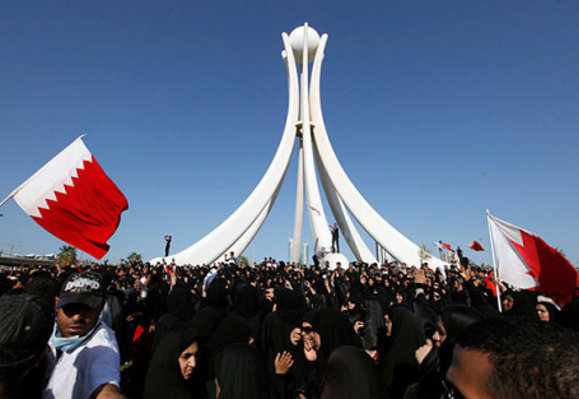
Geneva. 7 June 2011. Silence by the international community in the face of the massive crackdown on protestors, civil society and the media in both Yemen and Bahrain makes it complicit in these actions said CIVICUS: World Alliance for Citizen Participation and the Cairo Institute for Human Rights Studies (CIHRS) today. Echoing civil society representatives at a side event at the United Nations Human Rights Council yesterday, CIVICUS and CIHRS call on the international community to condemn the on-going repression in both countries.
“Civil society activists and citizens have been peacefully protesting for their rights in Yemen and Bahrain, yet they’ve been met by repression from their own governments and silence from the international community,” said Adam Nord, Lobbying and Engagement Manager at CIVICUS. “The international community and the UN Human Rights Council in particular need to be explicit in their support for the peaceful pursuit of human rights in both countries and insist on the immediate end to violence.”
The side event, entitled ‘The Arab Protest Movements: Bahrain and Yemen in Focus’ and attended by over 60 participants, emphasised the silence of the international community in the face of widespread violations of human rights in both countries. According to Sohair Riad, a researcher on Yemen with CIHRS, around 200 protestors have been killed since the protests started in February 2011 and there is a widespread crackdown on civil society, human rights defenders and the media in the country.
Similarly, Maryam Al-Khawaja, Head of the Foreign Relations Office at the Bahrain Centre for Human Rights, described the crackdown on all who supported the protests in Bahrain, from prosecution of doctors and medics who treated protestors, to the expulsion of university students who participated in protests, to a widespread clampdown on the media and civil society organisations. So far the international community has been mostly silent on the situation in Bahrain and Yemen.
“Governments often repeat that a certain threshold needs to be passed before the UN Human Rights Council should act, but the Council must not passively wait for a massacre while well documented and widespread human rights violations continue to escalate,” said Laila Matar, UN Advocacy Representative with CIHRS. “The crackdown on the rights of Yemeni and Bahraini citizens is already extreme – condemnation and political isolation from the UN Human Rights Council and foreign governments has the potential to have real impact in this situation.”
CIVICUS and CIHRS call on government members of the UN Human Rights Council to take immediate action by adopting a strong Council resolution condemning the ever increasing government attacks on civil society and human rights in Yemen and Bahrain. “The Council should also request the High Commissioner for Human Rights to brief the Council on the situation in these countries. It is not too late to exert political pressure to reverse the repression of human rights,” said Nord. …source
July 16, 2011 Add Comments
Vicious attacks on Bahraini protestors solidifies resistance – End of Times for Kings and Tyrants
Bahrain: Vicious attacks on protestors as resistance solidifies
Bahrain Freedom Movement – 15/07/2011 – 11:25 p | Hits: 215
Peaceful demonstrations were attacked this afternoon by the Saudi and Al Khalifa forces and Death Squads in the towns and villages of Sitra. Bahrainis have called for today’s protests calling for the right of self-determination for the citizens and an end to the hereditary dictatorship that have plagued Bahrain for decades.
The regime’s forces, many of whom are hired mercenaries, used chemical and tear gases to subdue the youth who reacted by erecting barricades and shouting slogans against the Saudi and Al Khalifa occupiers. Several Bahrainis were injured in these vicious attacks by foreign forces. One woman had her car destroyed by these mercenaries and fire was seen bellowing. Running battles are still raging between the two sides while the area has been hit hard with these poisonous gases. Several houses were attacked by the Al Saud and Al Khalifa forces. The main slogan was: “Down with Hamad” referring to the dictator who has now become symbol of hatred in the country for his role in the bloodbath in the past few months. He is now held responsible for war crimes and crimes against humanity. The town of Ekr, Mhazza, Ma’amir and Outer Sitra have become the main grounds of confrontations.
The Irish former Foreign Minister, David Andrews today said that Bahraini pro-government medics and state media staffers “bullied and intimidated” an Irish delegation of health workers and politicians here to secure the release of more than a dozen Bahraini health workers. He accused the president of the Bahrain Medical Society, Dr. Nabeel al-Ansari, of provoking the incident. “It’s most unfortunate that we were bullied and intimidated by him and his representatives.” “We have not come to save Irish doctors,” Damian McCormack, who led the delegation, told reporters. “We came to Bahrain to help Bahrainis,” said the professor of orthopedic surgery at Temple Street Children’s Hospital in Dublin. The delegation arrived on the Gulf island with a letter of support from the Irish foreign minister, Eamon Gilmore. They traveled here as part of an effort to determine the condition of the Bahraini health workers, many of whom had trained in Ireland.
On another level, more arrests have taken place in recent days, provoking more anger and frustration as the people continued their struggle to secure their rights. In the town of Al Ekr in the South East of the country, a Bahraini man was attacked savagely by members of the Death Squads before being snatched to the torture chambers. Jaffar Abbas Abdulla Al Moghanni was attacked as he walked in the street. His wounds were described as serious and he was on the brink of unconsciousness when he was kidnapped by the regime’s agents. Another young man, Sayyed Ahmad Al Wada’ei was arrested in the early hours of today. He had been sentenced by the military court for one year imprisonment for taking part in anti-regime peaceful demonstrations. His image on several TV screens soon after the Saudi aggression in March with blood pouring over his face and soaking his clothes had angered the Saudi and Al Khalifa occupiers. Instead of arresting his attackers, he was treated in this way as the occupiers decided to take revenge from Bahrainis.
The release of the young Bahraini poet, Ayat Al Qurmuzi, has been hailed as a victory for the people over the hereditary dictatorship. Ayat was arrested in March and kept under severe torture throughout. She became a symbol of resistance with many world artists and poets campaigning for her release. She was forced, under physical and psychological torture to “apologise” from the dictator but she has now vowed to continue her struggle until a regime change is achieved. Her testimony is expected to contribute to the indictment of the dictator, Hamad Al Khalifa and both his son and uncle who had given orders to kill and torture Bahrainis. War crimes were committed and torture is still being administered under the instruction of them.
Bahrain Freedom Movement
15th July 2011
…source
July 16, 2011 Add Comments
What’s The State of Play In Bahrain’s Protests?
NATIONAL SECURITY
What’s The State of Play In Bahrain’s Protests?
National Journal catches up with Maryam Al-Khawaja, one of the few activists able to advocate abroad.
By Sara Sorcher – Updated: July 16, 2011 | 1:23 p.m. -July 16, 2011 | 6:00 a.m.
Maryam Al-Khawaja, the 24-year-old director of foreign relations for the Bahrain Center for Human Rights, is one of the few Bahraini activists able to speak about the uprising outside the borders of the tiny, oil-rich island nation. Many of the others, Al-Khawaja says, were slapped with travel bans or have already been arrested.
National Journal caught up with Al-Khawaja on Capitol Hill, in between her meetings with State Department staff, Capitol Hill offices, and nongovernmental organizations to make the case for the United States to step up efforts to convince Bahrain to stop human-rights violations. Last month, she received word that her father Abdulhadi Al-Khawaja—one of Bahrain’s most prominent activists and BCHR’s founder—was sentenced to life in jail by a military tribunal on charges of anti-government propaganda.
In efforts to stem the protests wracking the streets of Bahrain, the Sunni rulers announced a “national dialogue” with the opposition largely comprised of Shi’ites, who make up about 70 percent of the population. (Click for more background on protests in Bahrain. Edited excerpts follow.)
NJ: Delegates of the main opposition party in Bahrain, Al Wefaq, are now threatening to pull out of this so-called National Dialogue. Why is this, and what would it mean for the protests?
MK: Although it seems like a great idea, unfortunately, the way the dialogue is set up means people on the ground in Bahrain were saying it was a failure before it even began. If you log onto Twitter, there’s even a hash tag for “Joke of a Dialogue.” You have 300 people invited to this dialogue to discuss demands with the opposition – who are representing the people on the streets – only representing 25 of the seats. It was an attempt to buy some time and get some positive media attention to what they’re doing. If [opposition parties] withdraw… that would automatically mean that the dialogue was over, and much larger numbers of people on the streets again.
NJ: Is the opposition unified over this decision?
MK: Before February 14, the political parties were the main forces that could [effect change]… But that changed when the youth called for and organized the protests. They put out statements, they use Twitter, Facebook. The reason these youth haven’t been flushed out yet is because the government doesn’t know who they are. Even today it’s still the youth that are in control, who are calling for protests. When Al Wefaq decided to go into the dialogue, they suffered a lot of heavy criticism, and they lost a lot of supporters– especially by the youth who felt they were being betrayed.
NJ: So what’s the end game for the protesters?
MK: The protests to begin with were calling for a new constitution written by the people for the people. People are asking for… a real parliament with legislative power, authority to hold the government accountable for what they’re doing. The protesters had a very serious discussion on the ground about whether they wanted the royal family to step down completely, or whether they wanted a constitutional monarchy. I would always ask the question, ‘Do you really think the government’s going to give you that choice?’
NJ: What makes you think that?
MK: If anything, they’re going to do the exact same thing as they did in 2001, which is make promises of reform [for political freedoms for the Sh’ites], initiate some reforms, but then never institutionalize it. Which basically means in a couple of years we’ll be right back where we are now. This has been the way of the regime since the royal family took over Bahrain, which was [more than 200] years ago.
NJ: Would that work this time?
MK: The regime is going to try and play a very smart game– cracking down as severely as possible, and then suddenly making very artificial progress, which is what they’re doing right now by releasing a few prisoners, stopping the torture, allowing family visitations. But the youth are not buying into it this time. They remember what happened in 2001 – it’s not that long ago. They say, ‘You know what? Even if you’re going to make these artificial changes, we’re still going to protest and demand our rights.’
NJ: What is your message to the U.S. now?
MK: I think it was great they made statements by telling Bahrain that using violence is bad– but it’s now time for something more to stop human rights violations. In no way would I ever endorse any kind of military action in Bahrain now or in the future. But I think that threatening to cut off diplomatic ties, bringing up the issue at the United Nations Security Council, making a referral to the International Criminal Court or International Court of Justice would have a big [impact]. With Bahrain, even the threat of that would be enough for the government to make real changes because the Bahraini government really cares about its international image.
…more
July 16, 2011 Add Comments
Crackdowns, Torture and Intimidation in Bahrain
Crackdowns, Torture and Intimidation in Bahrain
Contributed by Stephen Lendman on Sat, 2011/07/16 – 1:25pm
Largely ignored by Washington, Western governments, and America’s media, the ruling Al Khalifa monarchy continues cracking down brutally against nonviolent protesters since civil resistance began last February.
On July 14, UK Telegraph writer Richard Spencer headlined, “Bahraini woman poet tells of torture while in custody,” saying:
Incarcerated after reciting a poem critical of government policies, “Ayat al-Qurmezi (age 20) became one of the symbols of the (ongoing) protests….After she was arrested….she was beaten, electro(shocked) and threatened with sexual assault while in custody.”
On July 11, the Bahrain Center for Human Rights (BCHR) headlined, “Teachers ordeal in Bahrain: arrested, tortured, sacked, suspended and prosecuted,” saying:
Teachers and Bahrain Teachers Association (BTA) members participated in protest demonstrations, demanding respect for human rights and democratic change. As a result, they faced “arbitrary arrests, military prosecution, torture, suspensions, salary cuts, and investigation.”
BTA board members were arrested, held incommunicado with no access to family or lawyers. A month later, some were released. Others are still detained, including BTA President Mahdi Abu Deeb, charged with:
“deliver(ing) speeches haranguing and instigat(ing) protesters and inciting them against the political regime, flouting the real voluntary and lofty goals of the association.”
On June 6, Deeb and BTA Vice President Jaleela Al Salman were tried in military court charged with:
“inciting others to commit crimes, calling for the hatred and overthrow of the ruling system, holding pamphlets, disseminating fabricated stories and information, leaving work on purpose and encouraging others to do so and taking part at illegal practices.”
So far, at least 66 teachers were arrested. In addition, riot police repeatedly targeted 15 or more girls’ schools. Teachers and students were arbitrarily arrested, detained, and “physically abused.”
Other schools were also attacked. Many teachers were arrested, interrogated, intimidated, abused, charged with going on strike, participating in peaceful protests, and inciting anti-regime sentiment.
In custody, they were beaten and tortured. One female teacher said:
“Around 10 policewomen were asking me and beating me at the same time. Then they handcuffed me and kept beating me on the head and back while kicking me and stepping on my feet.”
Others were threatened with rape and beaten. A woman who had major back surgery was repeatedly kicked there after explaining her medical condition. …more
July 16, 2011 Add Comments
Bahrain Burning: A Fervor for Freedom that Cannot be Denied
Bahrain Burning: A Fervor for Freedom that Cannot be Denied
written by The Real News
Bahrain and the Democratic Uprising
by TRNN
Born on June 15,1951 into a working class family in the south-western city of Ahvaz in the Khuzestan province of Iran, Hamid Dabashi received his early education in his hometown and his college education in Tehran, before he moved to the United States, where he received a dual Ph.D. in Sociology of Culture and Islamic Studies from the University of Pennsylvania in 1984, followed by a postdoctoral fellowship at Harvard University.
He wrote his doctoral dissertation on Max Weber’s theory of charismatic authority with Philip Rieff (1922-2006), the most distinguished Freudian cultural critic of his time. He is currently the Hagop Kevorkian Professor of Iranian Studies and Comparative Literature at Columbia University in New York, the oldest and most prestigious Chair in his field. He has also taught and delivered lectures in many North American, European, Arab and Iranian universities. His books include Close Up: Iranian Cinema, Past, Present, Future (2001), Iran: A People Interrupted (2007), and The Green Movement and the USA: The Fox and the Paradox (2010). …source
July 16, 2011 Add Comments
Embassy of Bahrain in Islamabad – Advert and Response for Mercenary Security Force
 Embassy of Bahrain in Islamabad
| Address | Ho. No. 5, St. 83 – G 6/4
Islamabad |
|---|---|
| Phone | local: (051) 283.1117 international: +92.51.283.1117 |
| Fax | local: (051) 283.1060 international: +92.51.283.1060 |
| islamabad.mission@mofa.gov.bh |
My Cell No 00923458336322 Email id jamil3333@gmail.com
Salam O Alikum Sir My name Jamil Ahmed I Belong Balochistan and i interested in police
job in bahrain. i was work as a PRO in Dubai and i Have Dubai Lt v License my al eduction from
I can Speak V good Arabic
My Cell No 00923458336322 Email id jamil3333@gmail.com
Muhammad Saleem
i am saleem & i am 23 years old. My height is 5 feet & 11 inches.i live in Khushab.
i want to apply for this job.
E-Mail: saleem196@yahoo.com
July 16, 2011 Add Comments
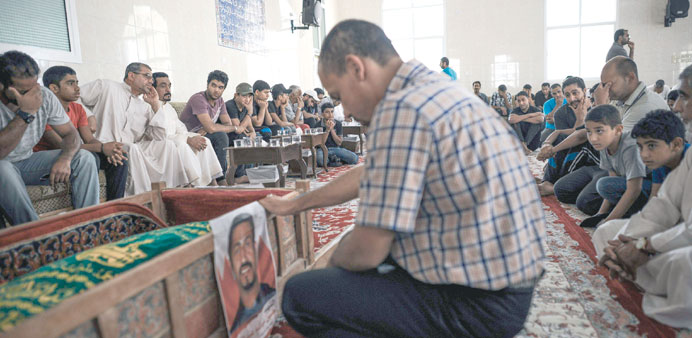
Saturday 47-year-old Zainab Hasan Ahmed al-Jumaa suffocated killed by tear gas fired in attack by Security Forces in Sitra
Activist: Bahraini woman dies during protest
Associated Press, 07.16.11, 04:08 AM EDT
MANAMA, Bahrain — A Bahraini rights activist says a woman has died during clashes between riot police and anti-government protesters in the Gulf kingdom.
Nabeel Rajab, the president of the Bahrain Center for Human Rights, said Saturday that 47-year-old Zainab Hasan Ahmed al-Jumaa suffocated after inhaling tear gas fired by riot police during a demonstration Friday near her home in Sitra, the hub of Bahrain’s oil industry.
Her death brings to 33 the number of those who have died since February when Bahrain’s Shiite majority started protests for greater freedoms in the Sunni-ruled kingdom.
Bahrain’s Interior Ministry denied al-Jumaa’s death was linked to a police operation and said in a statement posted on the ministry’s website late Friday that the woman died of natural causes.
Copyright 2011 The Associated Press. All rights reserved. This material may not be published, broadcast, rewritten or redistributed.
July 16, 2011 Add Comments
News Conference Invitation: Bahrain: Targets of Retribution
News Conference Invitation: Bahrain: Targets of Retribution
Attacks on Medics, Injured Protesters, and Health Facilities
Human Rights Watch is pleased to invite you to a news conference in Beirut on Monday, July 18 at 11 a.m. for the release of “Targets of Retribution: Attacks against Medics, Injured Protesters, and Health facilities in Bahrain,” a new report by Human Rights Watch.
Since the start of Bahrain’s political crisis in mid-February 2011, when thousands of Bahrainis took to the streets to demand political reforms, Human Rights Watch has reported on an alarming trend of attacks by Bahraini army and security forces against medical workers, medical institutions, and patients suspected of participating in protests. Violations include attacks on medical providers at the main protest site, the siege of hospitals and medical centers, the arrest and torture of patients with protest-related injuries, and the criminal prosecution of doctors and medical staff. This report documents what appears to have been a systematic government campaign to punish and intimidate medical professionals suspected of sympathies with pro-democracy protesters, and to hinder access to health care facilities for persons wounded by security forces. The report also considers evidence the government has provided to support its allegations that government actions were legitimate responses to wrongdoing by medical professionals.
What: Release of “Targets of Retribution: Attacks against Medics, Injured Protesters, and Health facilities in Bahrain”
Who: Joe Stork, deputy director, Middle East & North Africa division, Human Rights Watch
Faraz Sanei, researcher, Middle East & North Africa division, Human Rights Watch
Omar al-Issawi, advocacy and communications director, Middle East & North Africa division, Human Rights Watch
When: July 18, 2011
11 a.m.
Where: Monroe Hotel
Ain El Mreisse, Beirut
For more information about the press conference or to schedule interviews, please contact:
In Beirut, Rola Awada (English, Arabic): +961-3-062115
In New York until July 15, then in Beirut, Omar al-Issawi (English, Arabic): +1-646-420-8682
In Washington, DC until July 15, then in Beirut, Joe Stork (English): +1-202-299-4925
In New York until July 15, then in Beirut, Faraz Sanei (English, Farsi): +1-310-428-0153
Note to journalists: The report is under embargo until the news conference. Copies of the full report will be available in English and Arabic at the news conference….source – BCHR
July 16, 2011 Add Comments
marching from charade of al Khalifa’s reform to marching to his downfall- deaf ears in the West had better listen the hell up – al Khalifa days of show and play are done
July 16, 2011 Add Comments
Zainab Hasan Ahmed al-Jumaa
Activist: Bahraini woman dies during protest
(AP) – 16 hours ago
MANAMA, Bahrain (AP) — A Bahraini rights activist says a woman has died during clashes between riot police and anti-government protesters in the Gulf kingdom.
Nabeel Rajab, the president of the Bahrain Center for Human Rights, said Saturday that 47-year-old Zainab Hasan Ahmed al-Jumaa suffocated after inhaling tear gas fired by riot police during a demonstration Friday near her home in Sitra, the hub of Bahrain’s oil industry.
Her death brings to 33 the number of those who have died since February when Bahrain’s Shiite majority started protests for greater freedoms in the Sunni-ruled kingdom.
Bahrain’s Interior Ministry denied al-Jumaa’s death was linked to a police operation and said in a statement posted on the ministry’s website late Friday that the woman died of natural causes. …source
July 16, 2011 Add Comments
President Obama Stop al Khalifa Now, you are about to end up on the wrong side of a revolution – again
July 15, 2011 Add Comments
Remembering Zainab Hassan and the others who have given their lives and those who stand brave and strong in the face of al Khalifa’s wretched reign
July 15, 2011 Add Comments
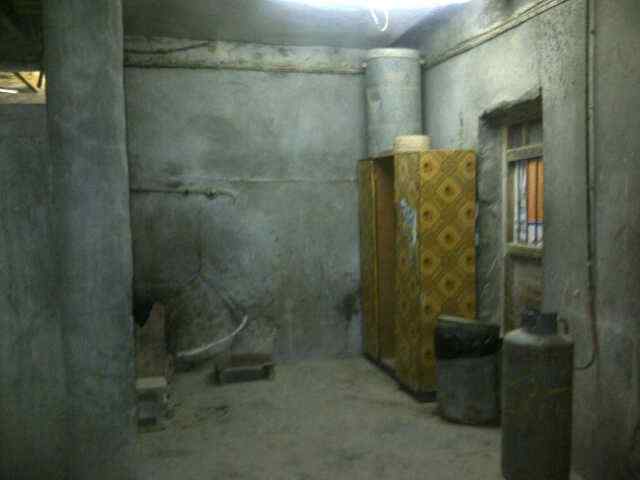
Home where Zainab Hassan 47 yrs-old mother of Sitra loved and raised her 2 girls
July 15, 2011 Add Comments
The means used to execute Zainab Hassan today 15-July, 2011
Similar acts today resulted to the death of Zainab Hassan 47 yrs-old mother of 2 girls from Sitra who suffocated in a tear gas attack on her home. Not an accident, this is an extrajudicial killing, a murder by the State of Bahrain on the order of King Hamad.
Where are your “Investigators” now King Hamad? You deceive no one but yourself, you are naked in your fools clothes and your time has run out. Your hatred, arrogance and rage is your undoing, your kingdom has fallen…
July 15, 2011 Add Comments
Human Rights Watch’s New Call To Prosecute Bush Officials For Torture
The Significance of Human Rights Watch’s New Call To Prosecute Bush Officials For Torture
By Jeffrey Kaye – The Public Record – Jul 14th, 2011
Human Rights Watch (HRW) released a new report Tuesday. As they stated in the press release announcing the 107-page report, “Getting Away with Torture: The Bush Administration and Mistreatment of Detainees” (HTML, PDF), there is “overwhelming evidence of torture by the Bush administration.” As a result, President Barack Obama is obliged “to order a criminal investigation into allegations of detainee abuse authorized by former President George W. Bush and other senior officials.”
In particular, HRW singled out “four key leaders” in the torture program. Besides former President George W. Bush, the report indicts former Vice President Dick Cheney, Secretary of Defense Donald Rumsfeld, and CIA Director George Tenet. But others remain possible targets of investigation and prosecution. According to the report:
Such an investigation should also include examination of the roles played by National Security Advisor Condoleezza Rice and Attorney General John Ashcroft, as well as the lawyers who crafted the legal “justifications” for torture, including Alberto Gonzales (counsel to the president and later attorney general), Jay Bybee (head of the Justice Department’s Office of Legal Counsel (OLC)), John Rizzo (acting CIA general counsel), David Addington (counsel to the vice president), William J. Haynes II (Department of Defense general counsel), and John Yoo (deputy assistant attorney general in the OLC).
But the key passage in the HRW report concerns the backing for international prosecutions, under the principle in international law of “universal jurisdiction,” which was used back in 1998 by Spanish Judge Baltasar Garzón to indict former Chilean dictator Augusto Pinochet for genocide and murder. …more
July 15, 2011 Add Comments
Allies look on as al Kahilfa continues scourge of Human Rigths abuses under the guise of National Dialogue and Investigations of Abuse
Bahrain: Silence surrounding repression continues
12 July 2011 – FIDH
In February 2011, following the example of the revolts in Tunisia and in Egypt, a protest movement developed calling for profound political and social reform in Bahrain. In response to these peaceful demonstrations the army fired on protesters and Gulf Cooperation Council troops intervened.
The brutal repression resulted in the death of several dozen people, hundreds of wounded and arbitrary arrests.
In recent weeks the protests have become less intensive but repression has been even greater, extending to doctors and medical staff. Human rights defenders who are not arrested or who have not disappeared are victims of regular acts of intimidation.
Massive lay-offs in factories and businesses, censorship and proceedings against journalists are the government’s response to the longings for freedom and social justice. …source
July 15, 2011 Add Comments
Pro-democracy protests planned today in Egypt
Mass pro-reform protests planned in Egypt
Jul 15, 2011
CAIRO – ACTIVISTS have called for rallies across Egypt on Friday, capping a week of nationwide sit-ins to demand political change as anger grows with the military rulers over the slow pace of reform.
More than 28 movements have called for the rallies which seek to pressure the Supreme Council of the Armed Forces (SCAF) – which took power when president Hosni Mubarak was toppled in February – to respond to their demands.
Protesters are calling for a defined and transparent plan for the transition, criticising the military junta for their absolute grip on power.
Among the key demands are an end to the military trials of civilians, the redistribution of wealth and the open and speedy trials of former regime officials.
They also want police accused of torturing and killing protesters – whether before or during the January 25 uprising – to be brought to justice.
The mounting tension has prompted both the government and the military council to offer some concessions in a bid to placate the protesters. — AFP …source
July 15, 2011 Add Comments
“king’s games” of pomp and spectacle intended to dazzel and wow does nothing to change reality on the steets – revolution sounding louder
Bahrain: Pressure mounting for fact-finding mission
Bahrain Freedom Movement – 09/07/2011 – 10:21 am
The political crisis in Bahrain has deepened in the past few days after it became clear that the long-awaited “dialogue” has failed drastically. Instead of dealing with the core issues relating to governance and the future role of the Al Khalifa, the regime turned it into a public meeting arguing about trivial issues that had nothing to do with the underlying causes and demands of the revolution.
The American Embassy in Manama exerted enormous pressure on the political societies to join the meeting and the Al Khalifa dictatorship blackmailed some of those societies threatening them with severe reprisals if they did not join. The main forces of the revolution have, however, rejected any attempt to undermine the main aims including that of regime change. The first week of this futile attempt to derail the revolution has failed; the youth have returned to the streets and made their presence felt through their demonstrations and slogans like: “The people want regime change” and “Down with Hamad”. Few now believe that it would be possible for the two sides to co-exist following the enormous crimes committed by the Al Khalifa against Bahrain’s people.
The enormity of the situation has led to international campaigns against the regime. Major news media such as The Times, The Independent, The Guardian have continued coverage of the illegal trials of Bahraini doctors and athletes. The Al Khalifa have been weakened and humiliated to such an extent that as soon as an international body threatens to take action against the Al Khalifa they would cave in without any resistance. When Fifa asked the Al Khalifa to give details of the crimes allegedly committed by the Bahraini athletes such as Alaa Hubail and his brother, Mohammad, the two were released despite their two years prison sentences. On Friday 8th July, both The Independent and Guardian newspapers carried full page adverts against the ongoing summary military trials of doctors and nurses. Almost all international human rights bodies are convinced that senior figures of the Al Khalifa had committed serious crimes against humanity. A recent videos shot secretly on Thursday 7th July depicts clearly members of the Death Squads openly torturing a Bahraini youth after being arrested in the street. There are many similar videos that could be used in any international court as evidence against senior members of the regime. New revelations of the forms of torture being inflicted on the doctors have confirmed that some of the methods may not have been used before. These include stuffing human secretion the mouths of the detainees to force them to sign false confessions. Senior figures of the opposition were given the choice either to utter words of apology to the dictator or being raped.
Meanwhile the 14th February youth have called for more protests to bring about a regime change. While public anger is rising against the American support of the regime, there is mounting pressure on international bodies to take action against the Al Khalifa dictatorship. Although Bahrain’s dictator is trying to avoid international sanctions by forming his own committee to “investigate” the crimes committed in the past few months, there are pressures on the Human Rights Council to send a fact-finding mission to Bahrain. The appointed committee is unlikely to scrutinize the dictator because it has to report to him and is financed by him. The UN Human Rights Council is urged to send her own team to investigate the Al Khalifa crimes against Bahrainis immediately, otherwise the Council will be accused of bias, double standards and failure to do its duties. Up to forty people have been killed by the regime’s machines of terror which is still committing serious crimes against more than 1000 prisoners.
Bahrain Freedom Movement
9th July 2011
…source
July 14, 2011 Add Comments
Bahrain’s dispicable “kings game” of “round ’em up and free ’em” – patronization, pretense and entertainment of Western charade for reform
The Irish Times – Friday, July 15, 2011
Bahraini minister pledges to ask king to free medics
CATHERINE WYLIE
BAHRAIN’S HEALTH and human rights minister told an Irish delegation yesterday she would ask the king for the release of the 14 medics in custody – one of whom is reportedly suicidal – after their arrest during pro-democracy protests in the Gulf monarchy earlier this year.
Damian McCormack, the orthopaedic surgeon leading the group, told The Irish Times it had been an “extremely successful trip” despite earlier doubts over getting visas.
“We’ve had very positive meetings with the health minister. We met a lot of families of detainees and some of the released doctors on Wednesday, and heard first-hand accounts of their torture and experiences. We put all of that to the minister today.
“The bottom line is that the health minister has agreed to ask the king for the release of the remaining 14 medics,” said Prof McCormack.
The group, which includes Independent MEP Marian Harkin and former minister for foreign affairs David Andrews, told minister Dr Fatima Al Beloushi that one of the detainees was suicidal.
“We have credible stories that one of the detained doctors is suicidal and we’ve pointed out to her [Minister[Ms Al Beloushi] that time is running out. One of the medics could die in detention, which would be a disaster, and I think she realises that.
“So we would be hopeful that she will speak to the king and something positive will come out of this,” said Prof McCormack.
Senator Averil Power spoke of the “very harrowing accounts” they had heard about how the medics were mistreated.
One person told of having to stand handcuffed for days with his back against the wall, while another spoke of how they would only find out what they were charged with on arrival at court.
The Bahraini authorities had indicated they were not keen on the visit by the Irish group, describing it as “interference”.
Officials at the Bahraini embassy in London said on Monday they would prefer if the visit took place in October, when reconciliation talks, which began earlier this month, will have concluded. …more
July 14, 2011 Add Comments
US backed Saudi leadership of tyranny and oppression wait to see if crushing blows to democracy movement have been effective
Analysis – Saudi policy on Yemen and Syria seen floundering
Wed Jul 13, 2011 6:13am GMT
By Andrew Hammond
DUBAI (Reuters) – Saudi Arabia has helped damp down democracy movements sweeping the Arab world but is waiting now to see how events play out in places like Syria and Yemen for fear of overplaying its hand.
After witnessing the sudden collapse of rulers in Egypt and Tunisia this year, the Al Saud family that monopolises power in Saudi Arabia orchestrated Gulf Arab moves to stop the unrest from spreading through the Gulf region.
Saudi, United Arab Emirates and Kuwaiti forces went to Bahrain in March to help crush protests threatening to force the ruling family there to make democratic changes.
They offered money to Oman and Bahrain for more social spending, and Qatar’s Al Jazeera TV toned down its hard-hitting Gulf coverage after meetings between Saudi and Qatari officials.
Riyadh was the prime mover behind a Gulf Cooperation Council (GCC) proposal to enhance relations with Jordan and Morocco in an apparent effort to boost other Arab dynastic systems. A Saudi official said Jordan was given $400 million (251 million pounds) last month.
In March and April it also brokered a peace deal in Yemen, a republic different in size and social make-up to the GCC countries, that was to see President Ali Abdullah Saleh step down one month after forming a cabinet.
Yet following that flurry of interventions, Saudi diplomacy has largely gone quiet, most notably on two fronts where Riyadh has major interests — Yemen and Syria. Its response also has been muted in Libya, a more distant concern for Riyadh.
Analysts and diplomats say there are disputes within the ranks of senior princes and officials on whether to take a back seat, intervene more forcefully to stop democratic changes or, in some cases, to back them. …more
July 14, 2011 Add Comments
Parliamentary majority only way out for Bahrain
Shiite bloc stands by majority rule for Bahrain
Agence France-Presse
Jul 14, 2011
Bahrain’s main Shiite opposition bloc said a government led by the parliamentary majority would be the only way towards reconciliation after a dispute during the National Dialogue.
“The solution to the political crisis is through the acceptance of [its] demands,” and “any other option would only deepen the crisis”, Al Wefaq said in a statement on Tuesday.
Since the start of the National Dialogue on July 2, which is aimed at forwarding political reforms after Shiite-led protests were crushed in a crackdown in March, Al Wefaq has called for a government led by the parliamentary majority.
The group won 18 of 40 seats in the most recent parliamentary elections, but its MPs resigned in protest against violence used on demonstrators.
On Tuesday, a Sunni representative in one of the dialogue sessions called Shiites “naturalised rejectors [of Islamic orthodoxy]”, in reference to the Iranian origin of some members of the community to which a majority of Bahrainis belong, Al Wasat newspaper reported.
In reaction, Al Wefaq’s representatives walked out of the meeting, which was dealing with reforming naturalisation laws.
Many Shiites accuse the kingdom’s Sunni rulers of naturalising Sunnis in a bid to change Bahraini demographics. …more
July 14, 2011 Add Comments
HRW – Bahrain, Revoke Summary Firings Linked to Protests
Bahrain: Revoke Summary Firings Linked to Protests
US to Investigate Compliance With Free Trade Agreement
July 14, 2011
(Manama) – The Bahrain government should investigate and remedy the summary dismissals of more than 2,000 workers since late March, apparently as punishment for having participated in or otherwise supported pro-democracy demonstrations, Human Rights Watch said today.
The dismissals may have violated Bahraini labor laws as well as international standards, in particular those prohibiting discrimination on the basis of political opinion, and should be rescinded, and those affected should be compensated if investigations show that this is the case, Human Rights Watch said.
“It appears that hundreds of workers have been dismissed arbitrarily, ostensibly because they missed some days of work,” said Joe Stork, deputy Middle East director at Human Rights Watch. “It seems more likely that it was because they supported peaceful protests or heeded the union federation’s strike call.”
As of July 12, 2011, a total of 2,186 workers, many in key firms in which the state has a financial stake, had been fired since late March, according to the independent General Federation of Bahrain Trade Unions (GFBTU). In most cases the stated reasons seem to have been absence from work during street protests and the initial days of martial law.
The government narrative that the pro-democracy protests constituted an Iranian-inspired plot to overthrow the ruling family also casts the leadership of the union federation as playing a major role. Those fired by companies include 41 local union leaders and seven out of 15 members of the federation’s executive board.
Human Rights Watch interviewed 18 workers fired from six companies. All said they were given no advance warning and that the companies did not conduct independent investigations to determine that they had violated company or government regulations before they were dismissed. Human Rights Watch also contacted management in these six firms. In the course of this research, the government informed Human Rights Watch’s researcher that it would not extend his visa and that he had to leave the country within 24 hours. …more
July 14, 2011 Add Comments
Standing on the side of justice is never something to fear – overcoming being made to feel guilty for crimes we did not commit.
The most powerful weapon is our humanity
Dina Elmuti – The Electronic Intifada – 13 July 2011
When I left Palestine a few weeks ago, I left behind more than the place I had come to call home, its generous people I had come to call family, and all the warm, exotic sights, smells, tastes and sounds of a world that revived my spirit, conscience, passion and will to live.
I left my heart behind. Driving away toward Tel Aviv, the Palestine I know and love began to fade into the background, as I quickly made one last mental map of the geography of occupation around me, evident in the carefully-plotted demarcations separating “us” from “them.” A world compartmentalized; the settlements, gates, trenches, and watchtowers confine my heart, leaving a caustic pang in my gut as I continued driving on my way through modern-day apartheid.
After passing an extensive security inspection at the checkpoint a mile outside of Ben Gurion Airport’s main terminal, my family and I were permitted entry into the airport where we stood in line, along with all the other Muslims, Arabs, and people of color, waiting and watching our baggage unpacked and inspected for the second time around, continuing to answer the same questions for the tenth time from the tenth person.
Watching every last thing unpacked and inspected with a chemical sniffing device, I realized that Palestinians are not the only ones strangled and imprisoned by this system of oppression and constant fear of existential threats. Israelis are too. Behind barbed wire and power-operated gates controlled by guard towers and security cameras, their lives have been reduced to the state of animals trapped behind metal cages in the zoos they’ve built themselves on the bloodshed and demolition of others.
A life consumed by fear, intimidation, and oppressive censorship not only dehumanizes the oppressed but the oppressor as well. As I watched the guards meticulously leaf through and swab the pages of my books for bomb residues or any other suspicious evidence, I pitied the ethnocentric hysteria and racial profiling creating Israel’s most dangerous threat and worst enemy: itself.
A life consumed by fear, intimidation, and oppressive censorship not only dehumanizes the oppressed but the oppressor as well. As I watched the guards meticulously leaf through and swab the pages of my books for bomb residues or any other suspicious evidence, I pitied the ethnocentric hysteria and racial profiling creating Israel’s most dangerous threat and worst enemy: itself.
In recent days, hundreds of activists from all around the world flew in to Ben Gurion Airport. Dozens have been deported and dozens more are in detention for nothing more than accepting an invitation from Palestinians to visit them in the West Bank in a peaceful challenge to Israel’s apartheid.
They have refused to be bullied into omitting where they’ll be going or who they’ll be seeing. They won’t play the “tourist card” or hide their affiliation with a noble cause in exchange for a stamped visa by an oppressive state.
Standing on the side of justice is never something to fear, and to ultimately be liberated from our oppression, we must first have the courage to liberate ourselves from the inferiority complex that has debilitated us too long. And when we do, the look on the oppressor’s face will no longer strike fear into our hearts or nail us to the spot. Their voices will no longer petrify us, and we will no longer be uneasy in their presence or be made to feel guilty for crimes we did not commit.
If defending the lives of children, traumatized by being shot at while flying kites, by having to witness their families massacred right before their eyes, and by having their childhoods stolen before ever beginning for the crime of being born Palestinian, makes us criminals and terrorists, then so be it. …source
July 14, 2011 Add Comments
The Saudi “thumb print” of extrajudicial detention and torture stains the region
Saudi Arabia: Free Islamic Scholar Who Criticized Ministry
Dr. Yusuf al-Ahmad Arrested for Defending Detainee Rights
July 14, 2011
The Saudi Interior Ministry seems intent on arresting every last critic standing. Now it’s put behind bars a prominent cleric, apparently just because he dared to criticize the government’s policy of arbitrarily detaining people without any sort of judicial process.
(Beirut) – The Saudi interior minister, Prince Nayef bin Abd al-‘Aziz, should immediately release an Islamic scholar who was detained after he criticized the ministry’s handling of detainees, Human Rights Watch said today. Dr. Yusuf al-Ahmad was detained without charge the day after he published his criticism, apparently as a direct result of his internet post.
On July 7, 2011, al-Ahmad posted a video message on YouTube in which he criticized the long-term detention of security suspects without charge or trial. In the video, the Islamic scholar, who teaches at Imam Muhammad bin Sa’ud University in Riyadh, also criticized the arrests of women who went to the ministry on July 2 and on previous occasions to protest, peacefully, the long-term detention of their male relatives.
“The Saudi Interior Ministry seems intent on arresting every last critic standing,” said Christoph Wilcke, senior Middle East researcher at Human Rights Watch. “Now it’s put behind bars a prominent cleric, apparently just because he dared to criticize the government’s policy of arbitrarily detaining people without any sort of judicial process.”
Al-Ahmad’s Twitter account administrator reported on July 8 that the scholar had been arrested that day at his father’s house in Dammam, in the Eastern Province. Saudi authorities have not announced any charges against al-Ahmad. …more
July 14, 2011 Add Comments
Women’s Rights in the Balance – Interview with Hanan Abdel Rahman-Rabbani
In the Wake of Arab Revolts: Women’s Rights in the Balance – Interview with Hanan Abdel Rahman-Rabbani
Interview by Layla Al-Zubaidi, April 9th, 2011.
Perspectives: It seems that many women, also young women representing different social groups, have been participating in the revolutions in Tunisia and Egypt and have been present in the public. Is that true?
RABBANI: The revolutions in both Tunisia and Egypt were of a popular nature where various sectors of society participated in the protests leading to the toppling of the two presidents and continued to take part in the events taking place in the aftermath. As women have always been active participants in the political, economic and social spheres in these two societies, it was only normal that they would play a role in the protests. The fact that these protests were led by youth encouraged more young women to be in the forefront and to have their share in paying
“After the revolutions, it was interesting to conclude that priorities in relation to women’s rights in the context of the transition in Tunisia and Egypt were identical.”
the price for freedom and democracy. Women were among the martyrs, injured, detained, and the price they paid extended beyond that when they were attacked , harassed and subjected to humiliating tests of virginity carried out by the army in Egypt on March 9th. In Tahrir Square, women were there leading the protests, using their creativity and talent in writing slogans, performing art, providing support to other protestors and keeping the moral high. No difference was witnessed between secular and religious women as all felt part of the same people believing in the same cause. Melting down social, ideological and political barriers among the masses and strengthening the sense of solidarity and collectivity were in my view, among the most important achievements of the two revolutions. …more
July 14, 2011 Add Comments






















Salam O Alikum Sir My name Jamil Ahmed I Belong Balochistan and i interested
in police job in bahrain. i was work as a PRO in Dubai and i Have Dubai Lt v License my al eduction from dubai i a