White House Funded NYPD No Suspicion Spyfest on Muslim Citizens
NYPD Used White House Funds to Spy on Muslims
by Ateqah Khaki – ACLU – 27 February, 2012
In response to an Associated Press article today, the ACLU and New York Civil Liberties Union (NYCLU) are calling for a federal investigation into the reported use of White House funds by the New York Police Department for its religious and racial profiling activities. According to today’s report — the latest in an ongoing series of AP stories about the NYPD’s suspicionless surveillance of Muslims — the department’s monitoring activities using this federal money were left out of the annual reports to Congress on the federal program involved.
In a statement that we issued in response to the news, Hina Shamsi, director of the ACLU’s National Security Project said, “This new report about the use of federal money to spy on Muslim communities with no suspicion of wrongdoing raises significant new questions about White House oversight of how its funds were used by the NYPD, for what purposes and whether those uses comply with the law. We are deeply concerned that federal resources may have been used and spying information stored in violation of federal regulations that protect Americans’ privacy and constitutional rights against law enforcement overreach. It’s not just Mayor Bloomberg who needs to investigate the NYPD’s improper activities, it’s now the federal government as well.”
NYCLU Executive Director Donna Lieberman added, “A federal court order prohibits the NYPD from maintaining dossiers on people unless there’s reason to believe those people are or were engaged in unlawful activity. The NYPD is spying on countless innocent Muslims up and down the eastern seaboard, but who is watching the NYPD? The lack of oversight is stunning and it demands attention at the local, state and federal level.”
As we mentioned in response to revelations last week’s revelations about the NYPD spying on mosques and Muslim college students outside New York City, we are considering every available option to address the NYPD’s actions, including the possibility of litigation. …source
February 28, 2012 Add Comments
Peaceful, Peaceful, the longsuffering of Bahrain’s Revolution
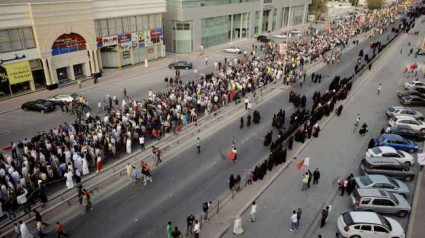
Bahraini protesters hold an anti-regime demonstration in a village near the capital Manama, February 24, 2012.
February 27, 2012 Add Comments
The Grand Prix by King Hamad, Killing them Harshly with His Thugs

And now a look at his sponsors
February 27, 2012 Add Comments
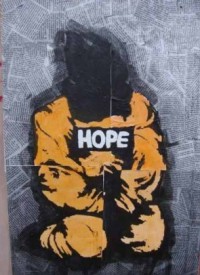
How hard would you be willing to fight for your hopes and dreams of Freedom?
February 27, 2012 Add Comments
Bahrain’s foreign minister has asked the British Government to Shut-up Critics
Bahrain remains a torture-permitting nation
Bahrain’s foreign minister has asked the British Government to get Denis MacShane to shut up about its human rights record. Here he explains why he will not be silent
by Denis MacShane – 25 February, 2012 – Tribune Magazine
I am used to endless lies and criticism from the British National Party and its favourite blogger, as well as the Islamist ideologues who hate my work on anti-Semitism, and the offshore-owned press obsessed about Europe. But this is the first time that a government, Bahrain, has written to the British Government asking the Foreign Secretary to shut me up.
In a 17-page open letter to William Hague, Bahrain foreign minister Shaikh Khalid bin Ahmed Al Khalifa accuses me of making several “demonstrably misconceived” statements about the political situation in Bahrain without visiting the country. It is true that I have not been to Bahrain recently, but I don’t need to go to Syria or Iran or North Korea to know there are serious human rights issues in those countries.
The latest news from Bahrain remains ever more worrying. There are regular pro-democracy demonstrations which are severely repressed by the police. In a new tactic, the police are raiding individual homes and throwing tear gas canisters inside. Amnesty International reports that as many as 30 people may have been killed as they choked to death in confined spaces.
Last month, 24-year-old Yousif al-Mawaly was arrested, tortured and then dumped in the sea. Photographs of his body seen by the BBC appear to show abrasions and bruises consistent with beating.
Human Rights Watch has reported that Bahraini riot police beat a prominent human rights activist, Nabeel Rajab, head of the Bahrain Centre for Human Rights, as he was leaving a peaceful protest last month. Rajab said that the police attacked him using their fists and batons at about 8.30pm, as he was walking toward his car. “I noticed a number of riot police behind me. They were all in uniform. They started beating me and I fell on the ground. I told them that I was Nabeel Rajab, hoping that they would stop, but they kept beating and kicking me.”
The interior ministry stated on its Twitter account that riot police had found Rajab “lying on the ground” and transported him to the Salmaniya Medical Complex for treatment.
The Bahraini government has refused to allow independent human rights observers from entering the kingdom, on the first anniversary of the Bahrain uprising a year ago. Members of the ruling Khalifeh family are trying to kid the international community that they are willing to move on human rights.
They attach great store to the Bassiouni Commission which reported last November on the widespread killing and torture after the democracy uprising that began a year ago. The 500-page report itself is valuable, but few if any of its recommendations have been implemented. Some low-ranking police officers have been suspended, including five Pakistani and two Yemeni police officers. But the men at the top of the royal family who authorised the brutal crackdown, and the senior officers who oversaw torture and killings, are still in place.
The Bahraini government is now hiring human rights lawyers or former police officers including Commander John Yates, who had to leave Scotland Yard in disgrace, to come to Bahrain to assure the world that all is well. But women doctors and nurses are still on trial after they were arrested in their hospitals treating the wounded last year.
Dr Fatima Haji, for example, was charged with acts of terrorism, stealing blood from hospital and harming the public by spreading false news. She was sentenced to five years in prison on these trumped up charges worthy of Stalin’s show trials.
[Read more →]
February 27, 2012 Add Comments
How many more must die before Bahrain is Free
February 27, 2012 Add Comments
US Drones now routinely violate Sovereign Airspace of other nations with impunity
US Drones in Syrian Sky
Local Editor – moqowama.com
US Military officials informed US NBC News channel that “a good number of unmanned US military drones are operating in the skies over Syria to monitor the so-called President Bashar al-Assad’s military’s crackdown against the opposition.”
In comments published on Saturday, the officials claimed that “this surveillance is not in preparation for US military intervention.”
Admitting the continuous existence of US military drones in the Syrian sky, the US officials claimed that “the Obama administration hopes to use the overhead visual evidence and intercepts of Syrian government and military communications in an effort to make the case for a widespread international response.” According to NBC News, “there has been some discussion among White House, State Department and Pentagon officials about possible humanitarian missions to Syria.”
“US officials fear that those missions could not be carried out without endangering those involved and would almost certainly draw the United States into a military role in Syria,” the channel claimed. …source
February 27, 2012 Add Comments
Syria: The War Drum of Regional War
Syria: The Wrong Drum to Beat
By Peter Certo – 24 February, 2012 – FPIF
Cross-posted from IPS Special Project Right Web’s Militarist Monitor.
The recent deaths of two Western journalists in Syria, killed during the Assad regime’s shelling of the Amr Baba neighborhood in Homs, has cast a new light on a near-daily slog of reports chronicling the carnage in Syria, where the regime has launched increasingly brutal attacks on civilian population centers in response to an increasingly armed and violent opposition.
Citing the final dispatch of Marie Colvin, one of the slain reporters, the Washington Post quickly editorialized: “Ms. Colvin was trying to tell the world is that [Srebrenica] is happening again, in Baba Amr. … If the Western nations and Syria’s neighbors continue to stand by passively, Ms. Colvin’s words will come back to haunt them.” A few days before, the Post had explicitly called for the West to arm Syria’s opposition elements: “The most available and workable solution,” it claimed, “is tactical and materiel support for the anti-regime forces, delivered through neighbors such as Turkey or the Persian Gulf states.”
That the Post, with its cast of neoconservative writers and editors, would call for U.S. involvement in a conflict in the Middle East should come as no surprise. Neither should calls by Sens. John McCain (R-AZ) and Lindsey Graham (R-SC) for the United States to channel arms to Syrian opposition fighters through connections in “third-world countries,” or Sen. Joe Lieberman’s (I-CT) support for instituting Libya-style “no-fly” zones over parts of Syria. But the Obama administration, which has ostensibly sought a diplomatic resolution to the crisis, also appears to be softening its once-strong opposition to arming Syria’s rebels.
Last week, a coalition of 56 hawks assembled by the neoconservative Foundation for Defense of Democracies and Foreign Policy Initiative sent President Obama an open letter demanding action on Syria. The letter—whose signatories included the likes of Paul Bremer, Elizabeth Cheney, and Dan Senor—called on the president “to take immediate steps to decisively halt the Assad regime’s atrocities against Syrian civilians, and to hasten the emergence of a post-Assad government in Syria,” including by providing “self-defense aid to the FSA [Free Syrian Army].”
Calls for further escalation will doubtless follow. And although they are keen to raise recent events, many of the letter’s signatories have been calling for regime change in Syria for months or even years.
Max Boot, another signatory to the letter, has claimed that “foreign jihadists will flock to Syria” if Assad is not deposed—a rather astonishing assertion given the documented (if not overwhelming) presence of Islamists in Syria’s domestic opposition, as well as Iraq’s all too recent descent into violent extremism in the wake the U.S. invasion.
However, Syria hawks have yet to articulate how funneling arms to a fractured Syrian opposition could help end the bloodletting in the country. Foreign Policy’s Marc Lynch, himself a stringent backer of the NATO action in Libya, has strongly opposed a similar course in Syria. “Arming the Syrian opposition is not a cheap and effective substitute for military intervention,” he wrote, “and it is not a generally harmless way to ‘do something.’ It does not guarantee either the protection of the Syrian people or the end of the Assad regime. It is more likely to produce a protracted stalemate, increased violence, more regional and international meddling, and eventual calls for direct military intervention.” …more
February 27, 2012 Add Comments
Bahrain Youth Society for Human Rights Exposes Abuses
Contest: Expose Human Rights Violations in Bahrain to Prevent Impunity
27 February, 2012 – Physicians Human Rights
Bahrain Youth Society for Human Rights (BYSHR) will organize a competition in order to expose human rights violations using the video camera.
Three video cameras as prizes: You must shoot – Video – human rights violation is happening in your area or village and you send it to vid.prize@gmail.com
“We want to expose human rights violations using the video camera in order to punish offenders and provide protection to the victims” Mohammed AL-Maskati, president of the BYSHR, said.
“Human rights violations should not be hidden or in the dark,” AL-Maskati said.
“This contest in honor Mr.Abdulhadi Al-Khawaja, who trained many of the activists on the documentation and monitoring to protect human rights” Yousif Abdulrasool, Coordinator of the contest, said.
“The BYSHR demanding the Bahraini authorities to immediately release of Mr.Al-Khawaja and Mr.Naji Fateel board member of the BYSHR,” Abdulrasool said. …source
February 27, 2012 Add Comments
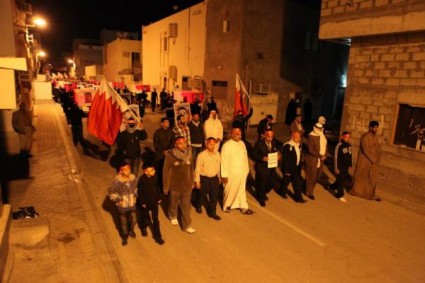
Sitra Nonviolent Protest Continue without Rest
February 27, 2012 Add Comments
Bahraini Ambassador to US Highlights Bahrain’s Religious Freedom
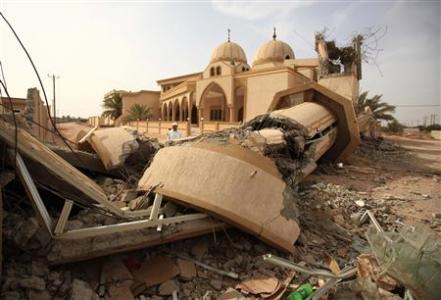
Destroyed Shia Mosque outside of Misrata in June, 2011 – Example of Religious Freedom Goals of Regime
Bahraini Ambassador to US Highlights Bahrain’s Religious Freedom
26 February, 2012 – BNA
Washington, Feb. 26. (BNA) — Bahrain’s Ambassador to the United States Houda Nonoo has highlighted the Kingdom’s superlative record in preserving religious freedom in a speech to members of the Chevy Chase Presbyterian Church on Thursday evening.

“Bahrain is a free and open society. Women are fully empowered members of society. Although Bahrain is a Muslim country, religious minorities – including Christians, Jews, Hindus and Baha’i – enjoy full freedom of worship,” Ambassador Nonoo said. “Today, next to mosques, Bahrain is home to 19 registered Churches, a synagogue, Hindu temples and many other places of worship.”
Welcoming members of the Congregation led by Rev. Fuad Khouri to Bahrain’s Embassy, the Ambassador also reflected on the past year’s events and reiterated the Kingdom’s commitment to ongoing reform. “Bahrain’s government is committed to reform, and to implementing progressive policies that will help achieve reconciliation for all Bahrainis,” she said. “We are committed to that journey because the future of Bahrain and its people relies on a meaningful unification strategy. This journey has begun.”
Reflecting on the evening in a post on her blog, Ambassador Nonoo stated: “Events like these are a wonderful opportunity to share Bahrain’s unique story as a progressive outpost in the Middle East and I look forward to sharing Bahrain’s longstanding tradition of religious freedom with our American friends.”
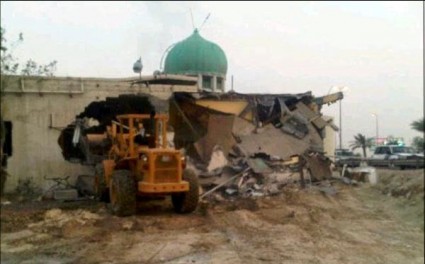
Another stunning example of Shia Mosque Crushed by Regime bolstering Religious Freedoms
February 27, 2012 Add Comments
US and Russian Weapons Sales and Opportunism fueling Middle East Catastrophe
Saudi Arabia and Syria — Iran Is in the Background
27 February, 2012 – Huffington Post – Dr. Josef Olmert
Sheikh Awad Al-Qarni is a prominent and well-respected Saudi cleric. Alongside his well-documented Islamic scholarship he is a fan of offering prize money towards causes dear to him. In the past, he offered $100,000 to the kidnapper and murderer of an Israeli soldier. These days, the benevolent Sheikh offers the same amount of money to the good Muslim who will assassinate Bashar Assad of Syria. Doing that, so the cleric declared, is an obligation more important even than killing an Israeli soldier.
Surely, a collective sigh of relief is heard in Israel, and the opposite in Syria, as the security apparatus around the besieged Syrian dictator must have paid attention to the forms of death that the Sheikh wishes their boss in Damascus. Hanging is the most benign of them…
It is not clear, whether the Sheikh coordinated his new plan with the rulers of his country, but he may still have been inspired by what seems to be a hardening Saudi attitude towards Bashar Assad. The Saudi foreign minister, Saud Al-Faysal, a veteran of many diplomatic conferences about the Middle East, left in disgust, the much-celebrated and little-achieving conference of the “Friends of Syria” in Tunis, initiated by the U.S., and attended by 70 states. The Saudi minister lamented the fact that the conferees referred to the “humanitarian aspect” of the Syrian tragedy, instead of discussing practical ways to help the rebels, including foreign military intervention. Clearly, the Saudis, always so cautious in dealing with Arab regional issues, have a reason why they want decisive action now in order to bring the Assad regime down.
They did not always show their profound resentment towards the Alawite dictatorship in Damascus. In fact, the Wahabbis of Riyad and Mecca flirted with both Hafiz and Bashar Assad when it suited their regional goals. This was not part of any newly-discovered empathy towards the Alawite religion, that much we should never expect from the pious Saudis. This was all about realpolitik, as the Alawites seemed to be entrenched in power in a country that has a major role to play in Middle East politics. So, King Abdallah swallowed his pride and sense of obvious disgust towards the Alawite regime, and paid Bashar Assad a visit, lasting just hours, in July of 2009. Less than a year later, the Saudi monarch, not known to be a frequent flyer, due to his age and illnesses, came to Beirut to confer with the host Lebanese President and Bashar Assad, in the aftermath of the UN report about the assassination of former Lebanese P.M. Rafiq Hariri. This tripartite summit was a diplomatic coup to the Syrian dictator, who was on top of the world, enjoying the Saudi recognition of Syria’s special role in Lebanese affairs, happening just five years after the not so dignified Syrian withdrawal from Lebanon during the “Cedar Revolution.” …more
February 27, 2012 Add Comments
King Hamad your brutality only ensures generations of resistance to tyranny
February 27, 2012 Add Comments
Protesters Remain Vigilant and Unshaken throughout Bahrain’s Villages
February 27, 2012 Add Comments
If Police did this in US kids in streets with Molotovs would be a mild response
February 27, 2012 Add Comments
Secretary Clinton delcares herself as leader for “Free Syria” Movement
Clinton: Syria Constitution vote a ‘ploy’
27 February, 2012 – UPI
DAMASCUS, Syria, Feb. 27 (UPI) — Results from a Syrian vote on a new constitution, roundly criticized in the West, will be available Monday, the Assad regime said as dozens died in fighting.
The results will be announced Monday evening, the official Syrian Arab News Agency said.
Interior Minister Mohammed Shaar was quoted by the state-run agency as saying the voting at more than 14,000 polling stations for multiparty elections and presidential term limits began at 7 a.m. local time and ran “normally” in most provinces, with turnout “huge … except in some areas.”
But The New York Times reported no voters appeared in the southern Damascus district of Ma’adamiah until about 1 p.m., and most of them were municipal workers.
Other polling places appeared deserted, the newspaper said.
Videos posted online by opposition groups purported to show people demonstrating against the vote throughout the country. One showed a poster saying, “We step on the new constitution.”
President Bashar Assad and his British-born wife Asma smiled and waved to cheering public employees as they voted at a polling station in the state-run broadcast center in Damascus, the capital, government TV images showed.
A 36-year-old woman who said she was from the same Alawite clan as Assad told the Times her vote meant a “new Syria.”
“This new constitution will shift Syria into the ranks of the democratic countries,” she said.
The new constitution, made public a couple of weeks ago despite Assad’s promises of constitutional reforms since at least June 2011, ends the ruling Baath Party’s political monopoly and introduces presidential term limits.
But the term limits — two terms of seven years each — would start only after Assad’s current term expires in 2014, the draft constitution says.
…more
February 27, 2012 Add Comments
Speaker Ali Larijani sees Iran as Leader and Inspiration of “Islamic Awakening”
They are in conflict with us as they consider Iran as the real source of the anti-hegemonic movements and the Islamic Awakening [in the region], and they cannot tolerate the sovereignty of our nation, Egypt and other Islamic countries.”, Ali Larijani
West fumes at Iran for inspiring MENA revolutions: Larijani
27 February, 2012 – PressTV
Iran’s Majlis Speaker Ali Larijani says the hegemonic powers are enraged at Iran over the Islamic Republic’s inspirational role in the regional pro-democracy movements.
They are in conflict with us as they consider Iran as the real source of the anti-hegemonic movements and the Islamic Awakening [in the region], and they cannot tolerate the sovereignty of our nation, Egypt and other Islamic countries, Larijani said in the city of Qom on Sunday night.
He said one of the main reasons behind the hegemonic powers’ opposition to regional revolutions was their reluctance to accept the regional countries’ willpower for self-rule.
Iran’s Majlis speaker further said that the enemies’ major problem with Iran is not the nuclear issue; rather, the hegemonic powers do not want the Iranian nation to have independence.
Commenting on the upcoming parliamentary elections in Iran, Larijani called for a high turnout of the people in the elections and said, given the current circumstances, the Iranian nation’s mass participation in Friday’s votes is of high national, regional and global significance.
He also pointed out that a high turnout at the polling stations would discourage the enemies from threatening or restricting Iran in the international arena.
“Today, the eyes of many ill-wishers are on the elections in Iran. They seek to shatter the grandeur of the Iranian nation, but the nation’s epic turnout will definitely fail them,” Iran’s top parliamentarian said.
Over 48 million Iranian voters are eligible to cast their ballots in the 9th parliamentary elections on March 2. In the elections, more than 3,400 candidates are competing for the 290 seats in Majlis. …source
February 27, 2012 Add Comments
Why is Obama Arming Wahabist, Dictators and Recruiting and Reactivating Al Qaeda Cells
Why Is Obama Selling Arms to a Theocratic Dictatorship?
David Keyes – 6 January, 2012 – The New Republic
On December 29, the White House announced that it was sending nearly $30 billion worth of F-15 fighter jets to Saudi Arabia, part of a $60 billion package—the largest arms deal in history. President Obama has come a long way since his 2008 declaration that “nothing is more important than us no longer borrowing $700 billion or more from China and sending it to Saudi Arabia.” Apparently it was the borrowing part that really irked him—not the arming of a gender-apartheid, theocratic dictatorship.
The justification for the arms sale is simple. The deal will provide at least 50,000 jobs to Americans—good PR at a time of great economic distress. More importantly, it is intended to counter the very real threat of Iran, a regional menace that has brutally repressed its own people and sponsored terrorism worldwide. But arming one theocratic dictator to stop another is not only bad policy, it is profoundly immoral.
To see why, just consider the reaction of one Saudi dissident to the news. “America has never supported human rights in Saudi Arabia,” a leading female democracy activist told me on condition of anonymity. “America wants stability no matter what the price. But Saudi Arabia has become a police-state. My friends and I are being arrested, especially writers, activists, and reformers. It’s becoming North Korea with less military power. Someone may be reading what I’m writing to you now.”
Indeed, after signing a recent reformist petition, prominent liberal Mohammed Saeed Taib was banned from traveling, even to his daughter’s upcoming wedding. Shortly thereafter, Saudi poet Ali Al Domaini was called in for questioning. One by one, reformers are being intimidated, arrested, and silenced—and these are the lucky ones. Amina bint Abdulhalim Nassar and Abdul Hamid Al Fakki were beheaded in recent months for “witchcraft.”
Yet the United States is sending the $60 million dollars without demanding any human rights reforms in return. The late Senator Henry “Scoop” Jackson once said, “We Americans are fortunate to have at our service the greatest economy the world has ever known. It can do more than enrich our lives. It can be pressed into service as an instrument of our commitment to individual liberty.” Both Democratic and Republican administrations have missed crucial opportunities to condition U.S. aid and arms on the rights of Saudi women to drive, Christians to pray, and gays to live. The White House could have demanded an end to the industry of Saudi textbooks calling Jews and Christians “apes and pigs.” Instead, it compromised its most cherished ideals and sacrificed liberty in the name of stability. As a result, it will get neither. …more
February 27, 2012 Add Comments
Secretary Clinton sees US as Vanguard and Protector of “Arab Awakening”
“They [Russia, China] are setting themselves not only against the Syrian people but also the entire Arab awakening,” Secretary Clinton
China calls U.S. criticism over Syria “totally unacceptable”
27 February, 2012 – By Chris Buckley – Reuters The Star
BEIJING: China on Monday called “totally unacceptable” U.S. Secretary of State Hillary Clinton’s denunciation of its stand on Syria, and a top newspaper said that, after the Iraq war, Washington was “super arrogant” to claim to speak for Arab people.
China’s angry words came after Clinton on Friday called the Chinese and Russian veto of a U.N. resolution on Syria “despicable”.
“They are setting themselves not only against the Syrian people but also the entire Arab awakening,” Clinton said of China and Russia, which have resisted Western and Arab calls to push Syrian President Bashar Assad from power.
China’s defence of its policy was also vehement.
“This is totally unacceptable for us,” Chinese Foreign Ministry spokesman Hong Lei told a daily briefing.
“China has always determined its stance on the Syrian issue proceeding from the peace and stability of Syria and the Middle East, and from protecting the long-term, fundamental interests of the Syrian and Arab peoples.”
The spreading bloodshed in Syria, where government forces have been bombarding neighborhoods held by opposition forces, has turned into a broader test pitting Western powers against China and Russia over how forcefully the world should intervene in civil turmoil.
…more
February 27, 2012 Add Comments
US agitates Syria collapse with no clear goal but ruination of Assad Regime – Nation in shables acceptable endpoint
No clear successor to Assad’s ‘coup-proof’ rule in Syria
27 February, 2012 – By Tabassum Zakaria – The Star
WASHINGTON: The Obama administration along with its Arab and European allies are trying to push Syria’s leader from power, but U.S. officials acknowledge they see no good candidates to replace him, either inside the government or from the nation’s fractured opposition.
That is due in no small part, the officials and experts on Syria said, to President Bashar Assad’s determination to “coup proof” his rule to ensure no challenge emerged from within.
With the Assad family facing the greatest challenge to its 41-year rule, Syrian security forces killing thousands of protesters and bystanders, and U.S. officials predicting the government will eventually fall, the question of who rules Syria has taken on added urgency.
But there is, in short, no heir apparent. And it is unclear if one will emerge anytime soon.
“The ruling establishment there is so entrenched and it is so self-interested, even if, and this is purely speculative, even if they overthrew Assad, it’s not clear that we would like his successor much more,” said a U.S. official, speaking on condition of anonymity. “There is no heir apparent.”
Similarly, among the rebels, “there is no opposition figure who has come out and become the face of Syrian resistance,” the official said.
U.S. Secretary of State Hillary Clinton Friday tried to exacerbate any divisions within Syria’s elite, especially its security forces. “Their refusal to continue this slaughter will make them heroes in the eyes of not only Syrians but people of conscience everywhere,” Clinton said.
Yet privately, officials say Assad, his close family and their inner circle will try to hang on to power as long as possible.
The Assads and many other power-brokers in Damascus are from the minority Alawite sect that makes up just 12 percent of the Syrian population. Their fortunes are tied to the president’s.
There is also family history. The Syrian leader’s late father, Hafez Assad, seized power as a result of a bloodless coup in 1970 and became the unquestioned ruler the following year.
“The Assads have been planning for this for 40 years, for a Sunni uprising against them. And that’s why they’ve poured family members and sectarian members into the top upper ranks. It’s all about loyalty to coup-proof this regime,” said Joshua Landis, a professor at the University of Oklahoma who writes a newsletter on Syrian politics.
February 27, 2012 Add Comments
Bahrain and the Arab Spring an Interview with Bahrain Activist Ahmed Mohammed
Bahrain and the Arab Spring
1 February, 2012 – Interview: Ahmed Mohammed – Socialist Worker
The small island nation of Bahrain sits in the Persian Gulf, between Saudi Arabia and Qatar. When the Tunisian and Egyptian uprising toppled U.S.-backed dictators last year, all of the region’s dictatorships trembled, including Bahrain. The winds of change inspired Bahrain’s downtrodden, and the country’s monarchy barely managed to maintain its grip on power.
Ahmed Mohammed, a Bahraini activist visiting the U.S., spoke with Zach Zill about Bahrain’s rebellion, and what the future holds.
A protester wounded during a Bahraini military assault against protesters in February 2011A protester wounded during a Bahraini military assault against protesters in February 2011
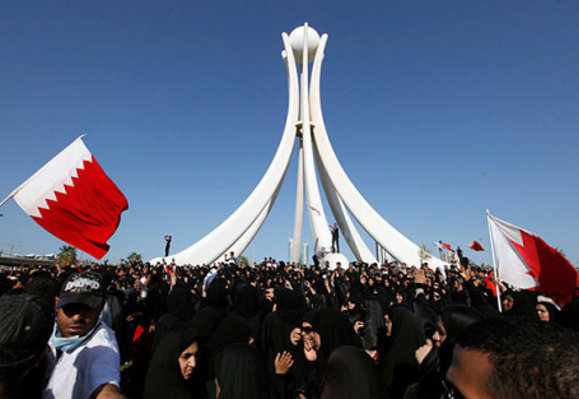
CAN YOU talk about how the movement in Bahrain unfolded last February? Why did thousands of people come out to Pearl Square in Bahrain’s capital of Manama?
THE PROTESTS had originally aimed to make the government fulfill the promises of the king. These promises were made in a referendum the king put to the people in 2001. The referendum offered us a bargain–turn Bahrain into a kingdom and the emir into a king, and in return, the dreaded state of emergency law would be ended, and a parliament with full legislative powers set up. He basically offered what the opposition had been demanding throughout the uprising of the 1990s. The referendum was widely welcomed and approved.
Then the king reneged on his promise. On February 14, 2002, the king announced a new constitution in which he concentrated power in his own hands. The parliament has virtually no legislative powers.
As the years went by, the regime plotted to permanently disempower the opposition and ensure the regime’s power in the long term. It all fell apart as their conspiracies began to leak to the public, just as WikiLeaks did with U.S. embassy cables.
Probably the most scandalous leak of all is a document that reveals a transaction between a businessman and the king’s uncle, the prime minister. The latter, who is the world’s longest-serving prime minister and a universally hated figure in Bahrain, bought a state-of-the-art financial development project called the Bahrain Financial Harbor for one dinar. That’s $2.65 for skyscrapers in the capital’s busiest district.
As all of this became public knowledge, and as it became increasingly clear that the regime had no intentions to reform the rigged political system, a lot of anger and resentment began building up. People within the opposition had been warning that this situation is not tenable, that it would explode at some point.
The departure of Tunisia’s Zine El Abidine Ben Ali in January set Bahraini activists’ imagination on fire. A Facebook group was set up to mark the 10th anniversary of the hated constitution with Bahrain’s own day of rage. There was about a month-long gap between Ben Ali’s departure and February 14. What happened during that period was even more exciting.
EGYPT.
YES, EGYPT. Mubarak fell just days before February 14. The Bahraini regime went into a panic. In a matter of hours after Mubarak’s departure, BTV, Bahrain’s national television channel, announced that the government would give 1,000 dinars to every household. That’s $2,650! Of course, the stated reason for this sudden act of generosity was the upcoming 10th anniversary celebrations of the “reform era.”
WAS THE movement in Pearl Square calling specifically for the end of the monarchy?
NOT IN the beginning. The protesters were calling for a constitutional monarchy, which is what the constitution claims Bahrain is anyway. This entailed giving the parliament full legislative powers and, most importantly, an elected prime minister. As I pointed out earlier, the current prime minister is universally hated in Bahrain and is known for his corruption and ruthlessness. Moreover, he’s been in power for 40 years, ever since the country’s independence from Britain.
The peaceful protests were met with brutal repression, especially on February 17. By then, the protesters had successfully made their way to the Pearl roundabout and camped there for two nights. I was there on February 17, but fortunately, I left just a few hours before the surprise attack. After attacking the roundabout, the government sent the army to stop people from returning to the roundabout. When some protesters attempted to return the next day, they were sprayed with live ammunition.
Against all odds and despite all the brutality, people still managed to re-occupy the roundabout. By then, the change in slogans was clear. Dispatching the army to mow down peaceful protesters was the last straw for many people. The rejectionists had been vindicated. Everyone realized that this regime is beyond reform.
When the roundabout was recaptured, people just started trickling in slowly. The really dedicated activists made it there first. Slowly, the numbers increased to unprecedented levels. At their peak, the numbers were reported to be a few hundred thousand. Proportionally speaking, this is almost certainly the largest protest among all Arab countries. It’s a country of less than a million people, after all.
WAS THERE an economic component to the demands as well?
YES, BUT you can’t see it in the slogans. Economic factors certainly underlie many of the grievances. For example, the rising price of housing. This was in large part a result of the royal family’s sweeping land-grab schemes. While they were doing this, Bahrain was also opening its markets to foreign capital through a free trade agreement with the United States.
The land-grabbing schemes caused scarcity in commercially available land, and the liberalization of the economy increased demand for whatever was left. The effect of this has been predictable: land and property values exploded. Building or purchasing a home has very quickly become out of reach for the working class.
Also, economic factors break down according to sectarian affiliation. I can tell you for sure that the people who protested were predominately Shia. And the Shia are systematically discriminated against. The level of unemployment in the Shia villages is proportionately much higher than in their Sunni counterparts. According to the Economist, unemployment in Bahrain’s villages is as high as 50 percent. And so I think that’s definitely a part of the drive to protest and why people are so angry. …more
February 26, 2012 Add Comments
How’s that Sanction thing working out for you President Obama?
Iran refuses to grant Greece 500,000 barrel oil shipment
26 February, 2012 – Al-Akhbar
Iran has refused to give Greece a shipment of 500,000 barrels of crude oil, the semi-official Fars news agency reported on Sunday, without giving a source.
“Oil tankers that had come to transfer 500,000 barrels of Iranian oil to a refinery in Greece had to go back empty-handed after Iran refused to give the shipment,” Fars reported.
The European Union in January decided to stop importing crude from Iran from July 1 over its nuclear program.
Iran stopped selling crude to British and French companies last week after Iran’s oil minister said that the Islamic state would cut its oil exports to “some” European countries.
The move is set to undermine the already fragile Greek economy. …source
February 26, 2012 Add Comments
Of Friends and Enemas
Friends of Syria?
By As’ad AbuKhalil – 26 February, 2012 – Angry Corner – Al-Akhbar
This was a quintessential American spectacle. You know that this was managed and orchestrated and choreographed by a low-ranking diplomat at the US Department of State. People with longer memories can see parallels with the theatrics that characterized US policies prior to the invasion of Iraq in 2003. International conferences were held and the US sponsored a conference for Ahmad Chalabi’s Iraqi National Congress (which reminds one of Syrian National Congress – both are led by highly educated exiled natives whose presence could not conceal the power of religious forces they are dependent on).
But the numbers of the “friends of Syria” who assembled in Tunis is not really known. Assafir newspaper spoke of 50 countries represented. US media spoke of 60 countries. But Saudi and Hariri media can’t accept such lower figures. They insisted that no less than 90 countries attended. Usually, the US brings Micronesia and the Marshal Islands to such fairs to add political weight. Was Micronesia listed also as “friend of Syria?” If the former colonial power of Syria, France, is listed as “friend of Syria,” why not invite Israel as well? Why confine it to 50 or 90? But that would have embarrassed the Syrian National Congress. Chalabi used to promise the US government that once the US topples Saddam, and once he takes over Iraq, he will sign a peace treaty with Israel. Are Ghalioun and his Ikhwan backers making such promises?
But what was achieved at the conference beyond the rhetoric which did not satisfy the “sole representatives of the Syrian people?” To be sure, Saudi Arabia came with a high ceiling of demands. Clearly, Saudi Arabia has decided to push Qatar aside. Saudi Arabia will no longer allow its small neighbor and bitter rival to take over what it sees as a primary Saudi role: leading the GCC and the Arab League – on behalf of the US and the interests of Israel, of course. …more
February 26, 2012 Add Comments
Wars against Iran, Syria and Containment Strategies against Shiite transform Middle East into Open Weapons Bazaar
Israel and Azerbaijan sign weapons deal
26 February, 2012 – Al-Akhbar
Israel has signed a $1.6 billion deal to sell drones, anti-aircraft weapons, and missile defense systems to Azerbaijan, risking further conflict with Iran.
The deal will provide further evidence to Tehran that Baku is becoming a key ally for Israel in the region.
Israel has repeatedly threatened to attack Iran in recent weeks claiming it is seeking nuclear weapons, a claim Tehran has denied.
Israel possesses the Middle East’s only nuclear arsenal.
Azerbaijan, which shares a border with the Islamic Republic, has improved its relations with the Jewish state.
A report in The Times of London two weeks ago claimed that Baku was a key base for Israeli Mossad intelligence agents looking to spy on Iran.
It quoted an unnamed Mossad official saying: “our presence here is quiet, but substantial. We have increased our presence in the past year, and it gets us very close to Iran. This is a wonderfully porous country.” Azerbaijan denied the claim.
Israel’s ties with Azerbaijan, a Muslim country that became independent with the disintegration of the Soviet Union, have grown as its once-strong strategic relationship with another Iranian neighbor, Turkey, has deteriorated.
It was not clear whether the arms deal with Azerbaijan was connected to any potential Israeli plans to strike Iran. The Israeli defense officials spoke on condition of anonymity because they were not at liberty to discuss defense deals. …more
February 26, 2012 Add Comments
The “Friends of Syria” aren’t – looking for a Security Solution
The Security Solution vs The Friends of Syria: Recipe for Deadlock
By: Nicolas Nassif – 26 February, 2012 – Al-Akhbar
There is a complete disconnect between the Friends of Syria conference that was held Friday February 24 in Tunisia and the military solution adopted by the Syrian regime inside Syria.
The dialogue between Syrian President Bashar Assad and his Arab and Western adversaries regarding the bloody crisis in Syria is almost non-existent.
Assad has ignored the pressure and harsh sanctions against his regime and has insisted on pursuing a security solution against the armed opposition in an attempt to create a new balance of power that would guarantee his place at the head of negotiations over the fate of his country under the purview of his regime.
Arab and Western leaders who are against Assad have cut off all direct dialogue with him. Communication is restricted to the media and the strict measures and sanctions taken against his regime.
These leaders rely on two Syrian opposition movements that don’t speak to one another except to highlight their differences, disagreements, and opposing views on foreign military intervention.
Arabs and Western powers distinguish between the first of these groups, the Syrian National Council (SNC) and the rest of the Syrian opposition. They invite the former to the Tunisia conference and the others to dismantle the regime.
As such, the military and political options appear to be moving on parallel tracks that don’t meet anywhere. And there has not been a breakthrough toward a settlement. …more
February 26, 2012 Add Comments