Right-to-Protect, Syria and Obama Pundit Arguments for US Intervention
The responsibility to protect (RtoP or R2P) is a United Nations initiative established in 2005. It consists of an emerging norm, or set of principles, based on the idea that sovereignty is not a privilege, but a responsibility. RtoP focuses on preventing and halting four crimes: genocide, war crimes, crimes against humanity, and ethnic cleansing, which it places under the generic umbrella term of, Mass Atrocity Crimes. The Responsibility to Protect has three “pillars”.
– A state has a responsibility to protect its population from mass atrocities.
– The international community has a responsibility to assist the state if it is unable to protect its population on its own.
– If the state fails to protect its citizens from mass atrocities and peaceful measures have failed, the international community has the responsibility to intervene through coercive measures such as economic sanctions. Military intervention is considered the last resort.
Right-to-Protect and National Sovereignty
In the international community RtoP is a norm, not a law. RtoP provides a framework for using tools that already exist, i.e. mediation, early warning mechanisms, economic sanctioning, and chapter VII powers, to prevent mass atrocities. Civil society organizations, States, regional organizations, and international institutions all have a role to play in the R2P process. The authority to employ the last resort and intervene militarily rests solely with United Nations Security Council and the General Assembly.
RtoP and National Sovereignty
One of the main concerns surrounding RtoP is that it infringes upon national sovereignty. This concern is rebutted by the Secretary General Ban Ki-moon in the report Implementing the Responsibility to Protect. According to the first pillar of RtoP, the state has the responsibility to protect its populations from mass atrocities and ethnic cleansing, and according to the second pillar the international community has the responsibility to help States fulfill their responsibility. Advocates of RtoP claim that only occasions where the international community will intervene on a State without its consent is when the state is either allowing mass atrocities to occur, or is committing them, in which case the State is no longer upholding its responsibilities as a sovereign. In this sense, RtoP can be understood as reinforcing sovereignty. However it is not clear who makes this decision on behalf of ‘international community’. Because of this in practical terms, RtoP is perceived as a tool of western countries to justify violations of sovereignty of other countries especially in developing world, using international institutions The West controls. …more at wiki
Questioning Intervention in Syria: A Response to Anne-Marie Slaughter
By Michael Busch – 2 March, 2012 – FPIP – Dissent’s Arguing the World
Before making the jump from academia to the world of policy making and punditry, Anne-Marie Slaughter compiled an impressive body of scholarship on law and international society. Her early work linking the common threads of international relations theory and legal research was nothing short of groundbreaking, and contributed meaningful insights to both fields of study. Later, Slaughter’s A New World Order revolutionized intellectual understandings of global governance by introducing network analysis and her anatomy of “disaggregated states” to mainstream academic circles.
When Slaughter has recently offered her ideas in public, however, they have been less impressive. This has been especially pointed with regard to the unfolding horrors in Syria. In an extended meditation for the Atlantic, Slaughter forcefully advocates for the application of the “responsibility to protect” (R2P) doctrine, arguing that the minimum requirements for triggering intervention have been met. On top of that, she claims, failure to act would expose R2P “as a convenient fiction for power politics or oil politics, feeding precisely the cynicism and conspiracy theories in the Middle East and elsewhere that the U.S. spends its public diplomacy budget and countless diplomatic hours trying to debunk.”
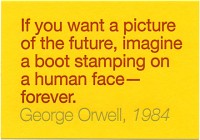
That Gareth Evans—the godfather of R2P—and others have argued that the minimum threshold for action in Syria has in fact not been met seems of little consequence to Slaughter, nor the fact that she is ready to suspend the writ of international law by acting without a Security Council mandate for the purpose of saving international law. As David Rieff points out, “Slaughter seems to be willing to undermine the structural foundations of international order, which, for better or worse, is based in large measure on the Security Council, in order to further it. Peace is war; war is peace. George Orwell, call your office.”
In Sunday’s New York Times, Slaughter returns with a condensed version of the same argument, this time sprinkled with some new ideas for resolving the crisis in Syria, though curiously not explicitly within the R2P framework. Which might be just as well: her opening statement is enough to make R2P advocates shudder. “The mantra of those opposed to intervention is ‘Syria is not Libya,’” Slaughter writes. “In fact, Syria is far more strategically located than Libya, and a lengthy civil war there would be much more dangerous to our interests. America has a major stake in helping Syria’s neighbors stop the killing.” Slaughter’s emphasis on American national interest rather than human rights is all the more curious given her awareness that humanitarian intervention is frequently seen, especially in the Global South, as a Trojan Horse designed to smuggle imperial intent past the gates of state sovereignty. …more
March 2, 2012 Add Comments
Coldwar Aggressors Showing a “little teeth” in light of “war and rumors of wars”
Russian premier vows to ward off attack on Iran
By shiapost – 2 March, 2012
Russian Prime Minister Vladimir Putin has warned of the dire consequences of a military conflict with the Islamic Republic, saying Moscow will do its utmost to avert a war on Iran.
“We will do everything possible to prevent a military conflict either in Iran or around it,” Putin told the chief editors of several leading international newspapers in his Novo-Ogaryovo residence near the Russian capital, RIA Novosti reported on Friday.
Putin said a war in Russia’s neighboring country Iran would have very “negative, direct consequences” for Russia, adding, “I think no one is interested in the situation getting out of control.”
Israeli officials have recently hyped up their war rhetoric against Iran, threatening Tehran with military strikes in case the US-engineered sanctions against it fail to force Iran into abandoning its nuclear energy program.
Putin highlighted Iran’s right to access peaceful nuclear energy and said Tehran should proceed with its nuclear activities under the supervision of the International Atomic Energy Agency (IAEA).
In 2011, Russia proposed a “step-by-step” approach that would enable Iran to adopt measures to address IAEA questions on Tehran’s nuclear program.
According to the plan, Iran can revive negotiations to alleviate individual concerns of the IAEA about its nuclear activities and be rewarded along the way by a partial removal of sanctions.
The United States, Israel and some of their allies accuse Tehran of pursuing military objectives in its nuclear program, using the pretext to impose unilateral and international sanctions against Iran and threaten the country with a military attack.
Iran has denied the allegations and promised a crushing response to any military strike against the country, warning that any such measure could result in a war that would spread beyond the Middle East. …more
March 2, 2012 Add Comments
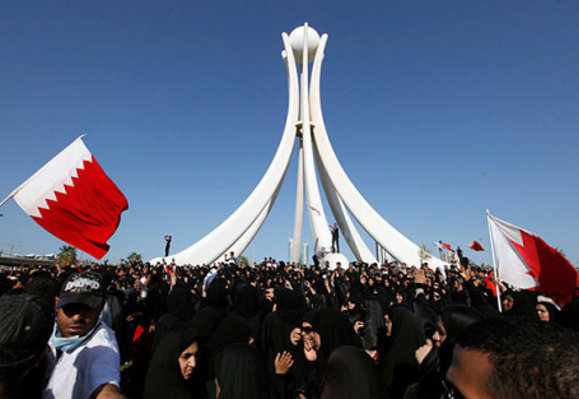
King Hamad delibertly targeting elderly and sick in Gas attacks
March 2, 2012 Add Comments
14 February Martyrs of the Revolution
March 2, 2012 Add Comments
Obama to Netanyahu, “okay to bomb the hell out of Iran but wait until after we finish wrecking Syria”
Obama to Iran and Israel: ‘As President of the United States, I Don’t Bluff’
By Jeffrey Goldberg – 2 March, 2012 – The Atlantic
Dismissing a strategy of “containment” as unworkable, the president tells me it’s “unacceptable” for the Islamic Republic of Iran to have a nuclear weapon.
At the White House on Monday, President Obama will seek to persuade the Israeli prime minister, Benjamin Netanyahu, to postpone whatever plans he may have to bomb Iran’s nuclear facilities in the coming months. Obama will argue that under his leadership, the United States “has Israel’s back,” and that he will order the U.S. military to destroy Iran’s nuclear program if economic sanctions fail to compel Tehran to shelve its nuclear ambitions.
In the most extensive interview he has given about the looming Iran crisis, Obama told me earlier this week that both Iran and Israel should take seriously the possibility of American action against Iran’s nuclear facilities. “I think that the Israeli government recognizes that, as president of the United States, I don’t bluff.” He went on, “I also don’t, as a matter of sound policy, go around advertising exactly what our intentions are. But I think both the Iranian and the Israeli governments recognize that when the United States says it is unacceptable for Iran to have a nuclear weapon, we mean what we say.”
The 45-minute Oval Office conversation took place less than a week before the president was scheduled to address the annual convention of AIPAC, the pro-Israel lobbying group, and then meet, the next day, with Prime Minister Netanyahu at the White House. In the interview, Obama stated specifically that “all options are on the table,” and that the final option is the “military component.” But the president also said that sanctions organized by his administration have put Iran in a “world of hurt,” and that economic duress might soon force the regime in Tehran to rethink its efforts to pursue a nuclear-weapons program.
“Without in any way being under an illusion about Iranian intentions, without in any way being naive about the nature of that regime, they are self-interested,” Obama said. “It is possible for them to make a strategic calculation that, at minimum, pushes much further to the right whatever potential breakout capacity they may have, and that may turn out to to be the best decision for Israel’s security.”
The president also said that Tehran’s nuclear program would represent a “profound” national-security threat to the United States even if Israel were not a target of Iran’s violent rhetoric, and he dismissed the argument that the United States could successfully contain a nuclear Iran.
“You’re talking about the most volatile region in the world,” he said. “It will not be tolerable to a number of states in that region for Iran to have a nuclear weapon and them not to have a nuclear weapon. Iran is known to sponsor terrorist organizations, so the threat of proliferation becomes that much more severe.” He went on to say, “The dangers of an Iran getting nuclear weapons that then leads to a free-for-all in the Middle East is something that I think would be very dangerous for the world.”
The president was most animated when talking about the chaotic arms race he fears would break out if Iran acquired a nuclear weapon, and he seemed most frustrated when talking about what he sees as a deliberate campaign by Republicans to convince American Jews that he is anti-Israel. “Every single commitment I have made to the state of Israel and its security, I have kept,” he told me. “Why is it that despite me never failing to support Israel on every single problem that they’ve had over the last three years, that there are still questions about that?”
Though he struck a consistently pro-Israel posture during the interview, Obama went to great lengths to caution Israel that a premature strike might inadvertently help Iran: “At a time when there is not a lot of sympathy for Iran and its only real ally, [Syria,] is on the ropes, do we want a distraction in which suddenly Iran can portray itself as a victim?”
He also said he would try to convince Netanyahu that the only way to bring about a permanent end to a country’s nuclear program is to convince the country in question that nuclear weapons are not in its best interest. “Our argument is going to be that it is important for us to see if we can solve this thing permanently, as opposed to temporarily,” he said, “and the only way historically that a country has ultimately decided not to get nuclear weapons without constant military intervention has been when they themselves take [nuclear weapons] off the table. That’s what happened in Libya, that’s what happened in South Africa.” ..more
March 2, 2012 Add Comments
Maryam Alkhawaja, Appeals for Help for Human Rights Defenders from UN Human Rights Council
01 March, 2012 – 19th Session of UN Human Right Council
March 2, 2012 Add Comments
Putin, “Syria nothing special”, Russia Pimps weapons to anyone that Obama won’t sell to
Putin denies ‘special relationship’ with Syria regime
02 March, 2012 – Agence France Presse – The Daily Star
MOSCOW: Prime Minister Vladimir Putin denied Russia had a special relationship with the Syrian regime of Bashar Assad and called for a ceasefire to end the bloody conflict with the rebels.
With pressure mounting on Moscow to harden its line against Assad, Putin in talks with foreign news executives late Thursday rejected the idea that Moscow was taking sides in what he described as an “armed civilian conflict”.
“Our aim is not to help one of the sides — not the Syrian authorities nor the armed opposition — but to obtain an all round reconciliation,” he said in comments published on the government website Friday.
“We have no special relationship with Syria,” he added at the meeting at his suburban Moscow residence.
“Our principle is not to encourage the sides in an armed conflict but make them sit down at the negotiating table and agree acceptable terms for a ceasefire and to stop the human losses,” Putin said.
Russia in February outraged the West by vetoing, along with China, a UN Security Council resolution condemning the Assad regime for the violence.
Some analysts saw that defiant move as a warning from Putin to Western states that Russia would pursue a tough foreign policy if, as expected, he returns to the Kremlin after Sunday’s presidential elections.
March 2, 2012 Add Comments
US backed al-Qaeda Cells in Libya hold British Journalists
Libya: Release or transfer British journalists and Libyan colleagues
Amnesty International – 28 February, 2012 – UNCHR
Two British journalists and their Libyan colleagues held by a Libyan militia must be set free immediately or transferred into government custody, Amnesty International said.
Nicholas Davies-Jones, Gareth Montgomery-Johnson, and their Libyan colleagues have been held by the Suweihli militia since their capture in Tripoli early on 21 February.
The Suweihli militia – which operates out of Misratah but has operatives in Tripoli and elsewhere in the country – seized the men while they were reportedly filming in the capital. It accuses the two British men of entering the country without visas.
“The detention of these journalists is unlawful and arbitrary, and their captors in the Suweihli militia must either release them immediately or transfer them into the custody of the central Libyan authorities,” said Hassiba Hadj Sahraoui, Deputy Middle East and North Africa Director at Amnesty International.
“If they are being held simply for breaching visa regulations, the central authorities should release them.”
The British journalists’ families told Amnesty International they remain concerned for the men’s safety and wellbeing.
UK authorities informed them British embassy staff in Tripoli visited the two journalists on at least two occasions and that the men were in good health but very tired.
A Libyan Interior Ministry official confirmed that the Suweihli militia is holding Nicholas Davies-Jones and Gareth Montgomery-Johnson. He said the militia was “operating outside the law and not under the control of the authorities”, and its leadership had refused repeated calls to hand over the captives.
On Tuesday morning, a representative for several Misratah militias operating in Tripoli confirmed that the men were still being held at the Suweihli militia headquarters in Tripoli.
Nothing is known about the identity and situation of the Libyan men who were detained with the British journalists.
The unlawful detention of these journalists is part of a broader pattern in Libya, where hundreds of armed militias operate outside any legal framework and in defiance of the central authorities’ call for militias to disband and join the armed and security forces.
Thousands of Libyans and hundreds of foreign nationals – mainly Sub-Saharan African migrants and refugees – are currently arbitrarily detained by armed militias who behave as if they are above the law.
Others are held in detention centres now under the control of the central authorities, but virtually none has so far been formally charged or brought to trial.
During a recent month-long fact-finding mission to Libya, Amnesty International visited 11 detention facilities across the country.
Many detainees said they had been tortured and Amnesty International saw torture marks and wounds resulting from recent abuse. Torture methods meted out by the militias included suspension in contorted positions; beatings for hours with whips, cables, plastic hoses, metal chains and bars, and wooden sticks; and the administering of electric shocks.
March 2, 2012 Add Comments
Moscow wants to prevent the replay of what happened in Libya
Putin defends Russian stance on Syria
02 March, 2012 – By Vladimir Isachenkov – The Daily Star
MOSCOW: Russia’s Prime Minister Vladimir Putin has strongly criticized the West for backing the Syrian opposition against the government, saying it has fueled the conflict.
Putin on Friday called for both Syrian government and opposition forces to pull out of besieged cities to end the bloodshed, adding that Western refusal to make that demand of opponents of President Bashar Assad has encouraged them to keep fighting.
“Do they want Assad to pull out his forces so the opposition moves right in?” Putin said at a meeting with editors of top Western newspapers in remarks carried by state television. “Is it a balanced approach?”
Putin ridiculed Western demands of Assad, saying the next thing they want will be for the Syrian leader “to grab a wooden mackintosh and have music play in his house.”
Assad “will not hear (the music) because it will be his funeral,” he said. “He will never agree to that demand.”
Putin refused to speculate on Assad’s chance of holding onto power, saying that reforms in Syria have been long overdue and it’s unclear whether the government and the opposition could find a consensus.
Syria is Russia’s last remaining ally in the Middle East. Moscow has maintained close ties with Damascus since the Cold War, when Syria was led by the current leader’s father, Hafez Assad.
Putin insisted that Russia’s opposition to the United Nations resolution condemning Assad is rooted not in its economic interests, but a desire to help end hostilities.
He defended last month’s Russia-China veto of a U.N. resolution condemning Assad’s crackdown on protests, saying that Moscow wants to prevent the replay of what happened in Libya, where a NATO air campaign helped Libyan opposition forces oust Moammar Gadhafi.
…more
March 2, 2012 Add Comments
Hackers deface Lebanese government websites
Hackers deface Lebanese government websites
Al-Akhbar – 2 March, 2012

A screen grab of the image hackers uploaded onto the Municipality of Beirut website, as seen on 2 March 2012. (Photo: screen grab)
Cyber activists hacked into four Lebanese governments websites on Thursday, defacing the home pages in an apparent bid to raise awareness over the country’s rampant corruption.
The activists, referring to themselves as Lebanon Anonymous claimed via Twitter that they defaced the sites for the Directorate General of Lebanese General Security, the Ministry of Economy and Trade, the Ministry of Foreign Affairs and Emigrants, and the Municipality of Beirut.
At the time of writing, the Municipality of Beirut website was still defaced, while the other government websites had been restored.
It is unclear whether Lebanon Anonymous is affiliated with the hacktivist group #Anonymous, renowned for its attacks on websites of governments and corporations it considers corrupt or seeking to limit free speech on the web.
Last month, they took down the Interpol’s website as a response to the arrest of 25 of their members, as well as the United Nations’ official site.
#Anonymous most recently hacked into the emails of US-based intelligence firm, Stratfor and released over five million emails, including information about credit card details, passwords, and the identities of sources.
The Stratfor emails have been obtained by Al-Akhbar, providing full coverage on the leaks. …source
March 2, 2012 Add Comments
UNHCR Update from North Lebanon – Support for Displaced Syrians
North Lebanon Update
Support to displaced Syrians – 18 – 24 February 2012
Highlights of the week Numbers The number of displaced Syrians currently registered with UNHCR and the High Relief Commission (HRC) in North Lebanon is 6,916 persons. Since the
previous week, there has been an increase of 311 newly registered persons, mainly in the Wadi Khaled, Akroom, Bire, Halba, and Old Akkar areas. Most of these (200 persons) arrived in Lebanon since the beginning of the year. The others arrived earlier but only came forward to register this week. Additionally, there were 85 persons who previously registered but were taken off the active list because they could not be verified as still residing in North Lebanon. We understand that some went back to Syria while others moved elsewhere in
Lebanon.
The HRC postponed registration in Tripoli a few weeks ago. UNHCR is in discussions with the government with the hopes that it will resume soon. In the meantime – assistance is being provided to persons in need.
There are also concentrations of Syrians displaced residing in other parts of Lebanon. UNHCR’s latest estimates with partners indicate that there are between 3,000-4,500 persons in need in the eastern Lebanon and south of Beirut.
Protection and Security
During the week, 27 wounded Syrians were admitted to hospitals and 2 wounded persons passed away.
Registration certificates to persons registered with UNHCR and HRC remain on hold and circulation permits have yet to be issued. Many in the north report feeling frustrated by their lack of mobility and consequent inability to find temporary work.
Assistance in North Lebanon
Fuel and Water
UNHCR and the HRC began the monthly distribution of fuel coupons: 2,714 fuel coupons were distributed to 358 families. In addition, in an effort to facilitate access to potable water, this week, UNHCR and partners installed a water pump into the well in Al Rama Collective Shelter. This shelter houses 98 displaced Syrians. …more
March 1, 2012 Add Comments
The Penny Drops – Arab League chief: fueling violence will not help Syria
Arab League chief says fueling violence will not help Syria
01 March, 2012 – Reuters – The Daily Star
CAIRO: Arab League chief Nabil Elaraby said on Thursday he was opposed to violence as a way to end the Syrian crisis after Gulf states called for arming the rebels seeking to oust President Bashar Assad.
Saudi Arabia and Qatar have led the Arab charge to isolate Syria, although other leading Arab states outside the Gulf such as Egypt, Algeria and Iraq have taken a more cautious approach.
Kuwait’s parliament on Thursday joined calls for arms to be sent to Syrian rebels.
“I am against using violence and the Arab League has no link to arming,” Secretary-General Nabil Elaraby told a news conference at the League headquarters in Cairo.
The League passed a resolution in February calling for Arabs to “provide all kinds of political and material support” to the opposition, a statement that Arab diplomats confirmed at the time could be interpreted as permitting arms shipments.
However, they said some Arab states who backed the resolution opposed the idea of sending weapons, a move they saw as pushing Syria closer to civil war.
Elaraby said he hoped for a ceasefire that would allow humanitarian aid to enter Syria, where protests flared up almost a year ago and were confronted by troops and heavy weaponry.
“What is happening in Syria, the abuses, killings and sometimes starvation, is a very bad situation,” he said. “We hope that this stops so that it doesn’t turn into a civil war.”
The League will host a conference in Cairo for the Syrian opposition within two weeks to help them unify their ranks, Elaraby said. Arab diplomats say divisions in the opposition are preventing Arabs from any move to formally recognize it.
“What is demanded now from the (Syrian) National Council (SNC) and all the opposition is to unite their ranks and this is something that the League is asked to do,” he said.
The United Nations says Assad’s security forces have killed more than 7,500 civilians since the revolt began last March. Syria’s government said in December that “armed terrorists” had killed more than 2,000 soldiers and police during the unrest.
March 1, 2012 Add Comments
Human Resource Exploitation, CIA Wrote the Book, Democratic Oppostion Reaps the Harvest
Psychologists and Torture, Then and Now
By Laura Melendez-Pallitto and Robert Pallitto – 1 March, 2012 – FPIP
History repeats itself, Marx famously warned, first as tragedy and then as farce. In the case of U.S. torture psychologists, the ” tragedy” occurred half a century ago when CIA-funded psychological research on electroshock treatment, sensory deprivation and the like found its way into the Agency’s counterintelligence interrogation manual. The 1963 KUBARK Manual and its later iterations were used widely by U.S. intelligence and disseminated to other governments in Latin America and Southeast Asia.
The “farce” was played post-9/11, as psychologists became involved once again in aiding counterintelligence interrogators. Although some of the material in KUBARK remained in use, psychologists augmented already- existing material with newer techniques, some of which had been developed from torture resistance protocols used to train U.S. military personnel to survive capture and interrogation themselves. Thus, as Katherine Eban has reported, discoveries initially applied to help possible torture victims were later used to break interrogation subjects held in U.S. custody. Psychologists were complicit in designing and using techniques to break subjects rather than aid them, and in so doing they made a mockery of their ethical obligation to “do no harm.”
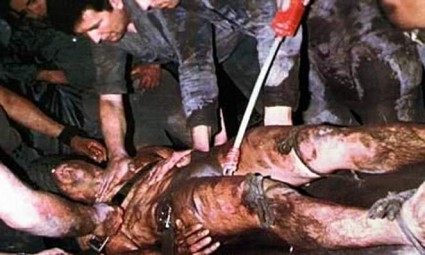
Twice, then, psychologists forged relationships with the state in which they cast ethics aside. And both times they acted with impunity.
The KUBARK Precedent
The KUBARK Manual cites Albert Biderman and other research psychologists as sources for the “scientific findings” that support its conclusions. Biderman, who died in 2003, was known for his studies of U.S. personnel captured by the Chinese during the Cold War. He examined the ways in which the Chinese military induced false confessions – often outlandish and implausible ones – from U.S. prisoners. Whatever one thinks today of the validity and cogency of that literature, the government used it to legitimize tactics and propositions that go well beyond the claims of the literature itself. KUBARK instructs interrogators to use protocols entitled, “Ivan is a Dope,” “Alice in Wonderland,” and “Mutt-and-Jeff.” Some of these tactics recall the stationhouse “third degree” sessions documented by the 1931 Wickersham Report on police abuse; others appear even more ad hoc and arbitrary. To some extent, the bibliographical citations to social psychology literature provide window-dressing for a how-to on coercive interrogation practices. They help to create a scientific-sounding discourse of counterintelligence interrogation.
KUBARK does not describe in detail the ways in which psychological interrogation methods (“clean torture,” as Darius Rejali calls it) are done. KUBARK merely recognizes that “chemical and electrical” methods are available (though it may be more specific in the redacted portions). To see how sensory deprivation and electroshock treatment actually work on the psyche of subjects, we must look outside KUBARK itself, at the research findings of scientists and the accounts of victims themselves. Naomi Klein interviewed one such victim who unwittingly became a research subject for Dr. Ewen Cameron of McGill University (a psychiatrist) while Cameron was treating her as a psychiatric inpatient. Cameron administered drug and electroshock therapy on his patient that left permanent, devastating injury. Many years later, she discovered the cause of her injuries when she learned of a legal settlement by the CIA paying unwitting experimental subjects for the damages they suffered. By then, she had become completely disabled as a result of her “treatment.” …more
March 1, 2012 Add Comments
Timoney-Yates Reform Program in Action as Regime Police work with Mentally Challenged in Bahrain
March 1, 2012 Add Comments
Central America Crisis more Significant than Syria
Should Central America’s drug violence be considered a global crisis?
By Joshua Keating – 28 February, 2012 – Foreign Policy
A new report from the U.N.’s International Narcotics Control Board contains more grim news about the drug violence in Central America:
In Central America, the escalating drug-related violence involving drug trafficking, transnational and local gangs and other criminal groups has reached alarming and unprecedented levels, significantly worsening security and making the subregion one of the most violent areas in the world. Crime and drug-related violence continue to be key issues of concern in Central American countries. Drug trafficking (including fighting between and within drug trafficking and criminal organizations operating out of Colombia and Mexico), youth-related violence and street gangs, along with the widespread availability of firearms, have contributed to increasingly high crime rates in the subregion. There are more than 900 maras (local gangs) active in Central America today, with over 70,000 members. According to a recent report by the World Bank, drug trafficking is both an important driver of homicide rates in Central America and the main single factor behind the rising levels of violence in the subregion. The countries of the so-called “Northern Triangle” (El Salvador, Guatemala and Honduras), together with Jamaica, now have the world’s highest homicide rates.
Just how bad is it? To put things in perspective, in Syria, where the the United Nations is debating imposing international sanctions and many are urging humanitarian intervention, an astonishing 7,500 people are estimated to have been killed in the last 11 months. With Syria’s population, that’s almost 37 deaths per 100,000 people.
By comparison, Honduras has a murder rate of 82.1 per 100,000, the highest in the world. It’s followed by El Salvador at 66 and Jamaica at 60 — all driven primarily by drug violence. With only 8.5 per cent of the world population, Latin America and the Carribean account for 27 percent of homicides.
I don’t mean to minimize the tragic violence of the Middle East, but it’s a bit astonishing how little this carnage closer to home gets in U.S. political circles, particularly since, as the world’s largest drug market, North Americans are directly implicated in it.
U.S. Secretary of Homeland Security Janet Napolitano is visiting Mexico, Guatemala, El Salvador, Costa Rica, and Panama this week where she faces the unenviable task of touting progress in the war on drugs. …source
March 1, 2012 Add Comments
Syrian rebels confirm receiving arms from Western & Arab countries
Syrian rebels confirm receiving arms from Western & Arab countries
24 February, 2012 – JafriaNew
Speaking at an international conference on Syria unrest in Tunisia, a Syrian opposition source said on Friday that several countries are providing armed groups in Syria with weapons, which are being smuggled into the country.
He also criticized foreign powers for ignoring the arms smuggling aimed at causing chaos in Syria.
Meanwhile, Saudi Arabia’s Foreign Minister Saud bin Faisal bin Abdul-Aziz Al Saud, attending the ”Friends of Syria” conference has openly supported arming Assad opponents.
The US has earlier said that it will consider military assistance to armed groups fighting the Syrian government. Pro-Israeli US Republican presidential candidates, Mitt Romney and Newt Gingrich, have also called for arming Syrian gangs with the help of Turkey and Saudi Arabia.
The pro-opposition Friends of Syria conference organized by a number of Western countries and the Arab League kicked off in Tunisia on Friday to discuss Syria unrest.
Russia, China and Lebanon have shunned the conference, describing it as one-sided. The leader of Syria’s opposition party, the Popular Front for Change and Liberation, has also slammed the conference.
Meanwhile, hundreds of Assad supporters gathered outside the venue of the conference to condemn the meeting.
Syria has been experiencing unrest since mid-March 2011. The violence has claimed the lives of hundreds, reportedly including over 2,000 security forces.
Damascus blames ‘outlaws, saboteurs, and armed terrorist groups’ for the unrest, asserting that it is being orchestrated from abroad. …more
March 1, 2012 Add Comments
Saudi Arabia: Cracking Down Quietly
SAUDI ARABIA: Cracking Down Quietly
By William Fisher – 29 February, 2012
It is being reported that Saudi Arabia’s aging monarch, King Abdullah, is refusing to discuss the Syrian catastrophe with international colleagues. “There is nothing more to say,” he is being quoted as saying.
Well, OK, given the huge rebuff Syrian President Basher al-Assad handed the Arab League, maybe the king’s position is understandable. On the other hand, the King’s neighborhood is chock-a-block with calamity situations triggered by the so-called Arab Spring.
The King should be a tad relieved. Ongoing violence in Syria and Bahrain, continuing post-revolutionary conflict in Egypt and Yemen – all these situations have tended to draw media attention away from locales that don’t present journalists with enough blood-curdling visuals.
And Saudi is one of those locales where brutality has always trumped justice and human rights – and still does. While far more highly-publicized transgressions are pervading the Middle East and North Africa, Saudi has quietly put in place a carrot and stick strategy in an effort to keep the country stable.
The carrots have consisted of generous cash stipends for every Saudi family and the availability of more government jobs and more funds for job training. The sticks have come from the arsenal brutally used by every Middle East dictator in memory.
In March, Saudi Arabia announced that it would not allow any demonstrations or sit-in protests in the country that the government said are aimed at undermining the Kingdom’s security and stability.
“Laws and regulations in the Kingdom totally prohibit all kinds of demonstrations, marches and sit-in protests as well as calling for them as they go against the principles of Shariah and Saudi customs and traditions,” the Interior Ministry said in a statement. The ministry said such demonstrations not only breach the Kingdom’s law and order but also encroach on the rights of others.
Saudi Arabia has blamed an unnamed foreign power for clashes that took place in its oil-rich Eastern Province in which it says 14 people were injured.
Among the people, and largely under the press radar, there appears to be a substantial desire for more human rights. Many of these demands are coming from women who want to seek office and vote, women who want the right to drive, and women who are frustrated with their roles as men’s property.
The Kingdom’s minority Shia population says they suffer from widespread discrimination in housing, top government and private sector jobs, and access to finance.
The King has not hesitated to use the stick part of his carrot-and-stick strategy. He has jailed hundreds of citizens, including many journalists and bloggers. It has long been well documented that Saudi jailers practice torture of prisoners, as do most of the nations of the Middle East-North Africa region. Men and women detained by the Security Forces are likely to lack lawyers and even less likely to experience anything that could pass for due process. Defendants frequently languish in jail for long periods before they are tried. …more
March 1, 2012 Add Comments
Revolution In Motion – Bahrain with Interview Dr. Colin Cavell
March 1, 2012 Add Comments
Chief Pillock (Yates) no “police reformer” as Phone Hacking Cover-up finds him out “back home”
March 1, 2012 Add Comments
Saudi’s Release of Dr Said bin Zair and other human rights defenders
Saudi Arabia: Update – Release of Dr Said bin Zair and other human rights defenders
01 March 2012 – Alkarahma
Update: In addition to the releases announced in our press release of last Monday, we further welcome the release of Dr Mubarak bin Zair, son of Dr Said bin Zair. He was arrested on 21 March 2011 and was arbitrarily detained until his release yesterday, 29 February 2012. His release came after the Special Criminal Tribunal, a court of exception mandated to examine terrorist-related cases, decided on 14 February 2012 that it was not competent to consider Dr Mubarak bin Zair’s case and consequently ordered his release.
These positive developments are tainted by the news that Mr Saad bin Zair, brother of Dr Mubarak bin Zair and son of Dr Said bin Zair, remains in prison. Moreover, Alkarama was informed that Mr Saad bin Zair was recently tortured and forced to sign false confessions. We firmly condemn these acts as well as his arbitrary detention, lasting nearly 5 years now, and call for his immediate and unconditional release.
Press release of 27 February 2012
Alkarama welcomes the release of Alkarama Award 2011 laureate, Dr Said bin Zair, along with other long standing human rights defenders and political activists in Saudi Arabia. Among the released are Mr Mokhlif Al Shammari, who had been held in incommunicado detention since July 2011, and Mr Thamer Al Khodr, whose detention was recently found to be arbitrary by the UN Working Group on Arbitrary Detention’s Opinion No. 42/2011. Alkarama has been closely following their situation over the past years and hopes these releases are the beginning of a real reform process. …more
March 1, 2012 Add Comments
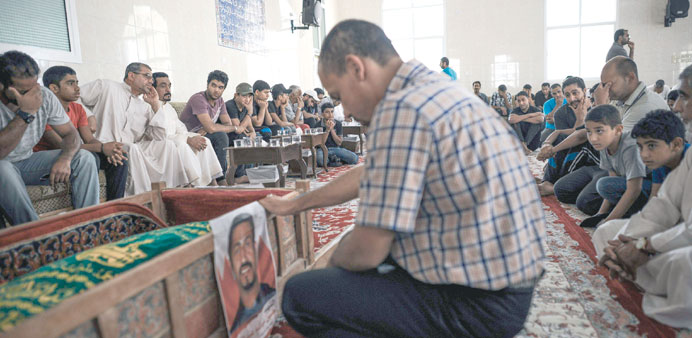
Habib Kadhim Almulla dead from Tear Gas Assault in Sehla, Bahrain
February 29: A new case of death due to tear gas suffocation
1 March, 2012 – Bahrain Center for Human Rights
Habib Kadhim Almulla, 60 years old, died on morning of Feb 29, 2012 due to teargas suffocation. Last friday, teargas was shot inside his home in Sehla, it broke the window and made him suffocates, and he was moved to to Salmanya hospital. His brother told BCHR that this was not the 1st time that Habib suffocates from the fired gases, but it was the 3rd time.
On different news, Hundreds of dismissed workers protested in front of the Ministry of Labor, demanding their return to jobs without any conditions. Security forces accompanied by armed civilians carried out a campaign of house raids and arrests without any warrants or orders in Bani Jamra, which started in the early hours of morning and continued until afternoon. …more
March 1, 2012 Add Comments
US directed, “Syrian National Council” pretends to organize rogue armed resistence to launch Syrian Civil War
Syrian opposition forms military council
By Zeina Karam – 1 March, 2012 – The Daily Star – Associated Press
BEIRUT: Syria’s main opposition group formed a military council Thursday to organize and unify all armed resistance to President Bashar Assad’s regime as the conflict veered ever closer to civil war.
The Paris-based leadership of the Syrian National Council said its plan was coordinated with the most potent armed opposition force – the Free Syrian Army – made up mainly of army defectors.
“The revolution started peacefully and kept up its peaceful nature for months, but the reality today is different and the SNC must shoulder its responsibilities in the face of this new reality,” SNC president Burhan Ghalioun told reporters in Paris, saying any weapons flowing into the country should go through the council.
Still he tried to play down the risks of all-out warfare.
“We want to control the use of weapons so that there won’t be a civil war,” he said. “Our aim is to help avoid civil war.”
The SNC has called for arming rebels in the past, but this was the first time it sought to organize the fighters under one umbrella. The plan coincides with a ferocious government offensive on the opposition stronghold of Homs in central Syria that has been going on for nearly a month.
International pressure on the regime has been growing more intense by the day. The U.N.’s top human rights body voted Thursday to condemn Syria for its “widespread and systematic violations” against civilians, and the U.K. and Switzerland closed their embassies in Damascus over worsening security. The U.S. closed its embassy in February.
But the U.S. has not advocated arming the rebels, in part out of fear it would create an even more bloody and prolonged conflict because of Syria’s complex web of allegiances in the region that extend to Iran and the Lebanese militant group Hezbollah.
On Wednesday, the Syrian regime showed a new determination to crush its opponents, vowing to “cleanse” the rebel-held district of Baba Amr in Homs from “gunmen,” as activists reported troops massing outside.
Syrian activists said government forces have cut off communications to Bab Amr, jamming satellite phone signals as they mass for an apparent ground assault. The neighborhood has been under siege for about four weeks and hundreds have died in shelling.
Authorities had previously blocked land and mobile phone lines, but activists were able to communicate with the outside world with satellite phones.
…more
March 1, 2012 Add Comments
Jihadi democrats ready for their close-up
Jihadi democrats ready for their close-up
By Pepe Escobar – 1 March, 2012 – Asia Times
Such a pity that US Secretary of State Hillary Clinton didn’t make the 2012 Oscars. La Clinton would stand a good chance of upstaging even tweet-exploding Angelina Jolie’s right leg – that force of nature now all over the net, landing on the moon and even invading Leonardo da Vinci’s Last Supper. [1]
The Empress of Libya (“We came, we saw, he died”) did try hard, including a photo op for the BBC, where she finally admitted that the US is fighting side by side with al-Qaeda to unleash regime change in Syria. [2]
Well, old Cold War fox and former Russian prime minister (under vodka junkie Boris Yeltsin) Yevgeny Primakov actually beat her to the punch on Russia’s Rossiya channel – adding that no one could seriously believe that regime change in Syria could lead to democracy.
Yet when Clinton mentions “a very dangerous set of actors in the region” who “are on our terrorist list” she is just, once again, plugging the notoriously profitable Pentagon/Central Intelligence Agency /State Department franchise of Resident Evil – whose instalments, among others, include mujahideen in Afghanistan in the 1980s, mujahideen in Bosnia in the 1990s and, recently, Libya Islamic Fighting Group (LIFG) stalwarts.
Global war on terror (GWOT)? This is sooo George W Bush Dumb and Dumber era. As certified blockbusters go, The Invasion of the Regime Change al-Qaeda Democrats is the real deal.
The Muppet show
The Empress of Libya sometimes displays a Meg Ryan-esque inability of staying close to the script. In her BBC promo, she insisted on the official narrative; the “people of Syria” are under “relentless attack” from “government forces”. At the same time she incites “security forces” to go for regime change. So what’s the story; the killers suddenly become democrats? Why not? That’s a classic Hollywood plot twist.
Meanwhile, State Department spokeswoman Victoria Nuland could give Octavia Spencer a run for her money as best supporting actress. Nuland – married to uber-neocon Robert Kagan – blasted Syria’s referendum on the grounds that this “ridiculous proposal” put forward by Bashar al-Assad coincided with “the guns and the tanks and the artillery … still firing into Homs and Hama and cities all over the country”.
Nuland seems to have conveniently forgotten that that’s exactly what the US had been doing when promoting “free” elections in both Iraq and Afghanistan – with the helpful addition of electoral forces such as killer drones, F-16s, Apache helicopters and compliant corporate media shills reciting the Pentagon script. …more
February 29, 2012 Add Comments
‘Iran’ as a weapon of subordination
‘Iran’ as a weapon of subordination
By Vijay Prashad – 29 February, 2012 – Asia Times
The United States has taken steps to pressure its allies outside Europe to move away from imports of Iranian oil. US State Department spokesperson Victoria Nuland specifically mentioned India and China when saying on February 21 that her government was “having talks with countries around the world about the implications of the [sanctions/embargo] legislation with regard to our expectation that countries will increasingly wean themselves of dependence on Iranian oil.”
Asked about an opinion piece from former Under Secretary of State Nicholas Burns, who wrote that India’s decision to continue trade with Iran “isn’t just a slap in the face for the US – it raises questions about its ability to lead”, Nuland brushed Burns off as “a private citizen”.
The commercial pressure on India has begun to show. The Indian Export Credit Guarantee Corporation, which underwrites the risk
of Indian exporters, said that it would not halt insurance cover for exports to Iran but that it is become “very cautious” and “will try to keep our exposure at the minimum level.”
With the Turkiye Halk Bankasi unable to provide third-party financial intermediation and with Dubai-based middlemen unable to easily deal with Iranian firms, about US$3 billion in Iranian arrears against Indian traders have built up since December 2010. These commercial headaches have soured India-Iran business relations.
On February 24, SWIFT, the main financial messaging service for international money transfers, threatened to cut Iran out of its network. The Society for Worldwide Interbank Financial Telecommunications (as SWIFT is less commonly known) deals with about 10,000 member banks and transmits 17 million financial messages per day. In 2010, 19 banks and 25 financial institutions in Iran transmitted 2 million messages through the SWIFT network.
Based in Brussels, SWIFT is vulnerable to the upcoming European embargo of Iran. Its corporate leaders, Yawar Shah (Citigroup) and Stephan Zimmermann (UBS), are ingrained in the Atlantic financial architecture and unwilling to stand up to the political pressure from their capitals. Avi Jorisch, a former US Treasury official told Bloomberg, “This is a financial equivalent of warfare.” SWIFT has never before expelled a country in this fashion.
Commercial fears among Indian traders and political pressure from Washington has moved the Indian government to seek refuge in Saudi Arabia. Saudi Assistant Minister for Petroleum Affairs Abdul Aziz Bin Salman bin Abdulaziz came to India and met India’s Minister of State for Petroleum and Natural Gas, R P N Singh, on February 23. Abdulaziz noted that Saudi would be glad to increase sales of oil to India, and that if India were to approach Saudi Aramco, its needs would be covered. …more
February 29, 2012 Add Comments
Clinton Remarks at Friends of Syrian People Meeting – Words but match the Western Actions of facilitating of Civil War
Clinton Remarks at Friends of Syrian People Meeting
Voltaire Network – 29 February 2012
[excerpt]
We strongly echo the Arab League’s demand that the Syrian Government immediately halt all attacks against civilians; guarantee the freedom of peaceful demonstrations; release all arbitrarily detained citizens; return its military and security forces to their barracks; and allow full and unhindered access for monitors, humanitarian workers, and journalists.
We call for a negotiated political solution to this crisis and an inclusive democratic transition to address the legitimate aspirations of Syria’s people in an environment free from violence, fear, intimidation, and extremism.
And we are firmly committed to the sovereignty, independence, national unity, and territorial integrity of Syria.
In support of these principles, this group should take concrete action along three lines: provide emergency humanitarian relief, ratchet up pressure on the regime, and prepare for a democratic transition. …more
February 29, 2012 Add Comments