In gulf democracy puts those who hold the material wealth at risk of “funding welfare-ism”
editor: the neocolonial wealth held in the gulf has been systematically robbed from it inhabitants for centuries. Its curious how the wealthy seem to forget the origin of their wealth but embrace brutality when it seems necessary to retain it. Phlipn.
“Progress vs democracy” in the Gulf
13 March, 2012 – POMED
In a comment, Mishaal Al Gergawi proposed comparing democracy and development focusing on Kuwait and the United Arab Emirates (U.A.E.). Al Gergawi said that Kuwait is perceived as an “aspirational beacon of political participation in the Gulf,” and the U.A.E. as a “successful post-oil development attempt.” Considering any comparison between democracy and development, the author reports that “Khaliji (states from the Gulf) capitalists will note that democracy has an adverse effect on development,” and Kuwait would be cited as “a state gone wrong via democracy.” However, Al Gergawi noticed that Dubai and Kuwait achieved soft power strength; following a different path, Kuwait “gave Khalijis contemporary cultural depth and a disposition towards self-criticism” while “Dubai raised the bar of the Khalijis’ own expectations of their cities.”
Al Gergawi called the Kuwaiti ruling system an “hybrid democracy,” and said “it’s in principle a parliamentary system, elections are limited to 50 of 65 seats; the Emir of Kuwait appoints the remaining 15. Those form 15 of the 16-member cabinet, the 16th is ceremonially chosen from the parliament’s 50 elected members.” This system has driven to ensure “a continuous state of crises,” as the parliament is often in conflict with the cabinet.
The author also noticed that “the abundance of oil in Kuwait and its near lack in Dubai required the latter to pursue a policy of revenue diversification while the former became a welfarist rentier state.” The different economic situation impacts the development of both cities. Dubai met an economic growth “driven by internal realities such as limited natural resources and a heritage of trade that precedes its discovery of oil.” On the other hand Kuwait’s deceleration was driven by a crisis-prone hybrid political system that was meant to balance the interests of the ruling family and people but has really antagonized both,” moreover Al Gergawi believed that the ruling family bought the Kuwaities’ apathy by expanding the state reaching an inefficient size.
The author concluded that “democracy shouldn’t be given more credit than its due or held accountable for what it does not have a direct effect on,” and added “development is the product of thorough planning and dynamic execution. If anything, it is more susceptible to oil wealth and welfarism than anything else … even if that was a well-functioning democracy.” …more
March 13, 2012 Add Comments
Bahrain: time for reforms so can all support Saudi GCC consolidation Endeavor
The GRC maintains cooperation agreements with major partners such as Emirates Bank, Shell, Glaxo Smith Kline, the University of Queensland, the Saudi Arabian Marketing and Agencies Company (SAMACO) group, the National Defence College and the FRIDE Foundation.
Bahrain: time for reforms
13 March, 2012 – Bahrain Freedom Movement
Interview with Dr. Christian Koch – Director of the Gulf Research Center Foundation.
Well, the protests in Bahrain have quite a long history and they go back even to the 1970es when there was a debate in the country about the setting up of the parliamentary functions and how to really divide governance and rule in the country. We’ve seen spiraling protests in the early 1990es when the Government was suspended and this continues to the modern days.
The issue of course in Bahrain is that you have a ruing family that is from the minority Sunni side and a majority Shia population. The exact figures are not available but the estimates are that 60% of the population of Bahrain is Shia and the two sides have simply not come to any kind of agreement of how to reform politics in the country and how to have greater access to decision making also by the Shia majority population.
And what is the balance between the Shias and the Sunnis in the region?
In the region of course you do have Shia minorities also located in Saudi Arabia which mostly are in the eastern province, so geographically located right across from Bahrain. And there have been protests also inside Saudi Arabia by the Shia there. And then you have also the minority Shia in Kuwait that has been quite politically active, although here in Kuwait they are represented more in the Parliament and use that avenue through the Parliament to voice their concerns in the opposition.
Do I get it right that last year when there were major protests in Bahrain Saudi Arabia had to intervene?
It’s a little bit more complicated, I would argue. I think that when the protests started in Bahrain, there was a common position even among the elements of the Sunni population inside Bahrain for a political reform. There has been a movement for that in Bahrain as a whole. And it was only at the later stage when there was no agreement on what kind of reform to propose that sort of extremist voices on both sides, both on the Sunni and the Shia, began to harden their positions and no agreement was eventually possible.
And there was a real concern even in the Saudi Arabia that the events in Bahrain would deteriorate further and we would have a very chaotic situation taking hold on the island and that this situation would then deteriorate to the point that a country like Iran, which has in the past even made territorial claims on Bahrain, that Iran would stand and try to interfere into the domestic politics. And the message from the Saudi Arabians at that time was to send some of their security forces to help guard vital installations and to simply signal a red line to the Iranians that any kind of domestic interference inside one of the Gulf countries would not be tolerated.
But as far as I remember last year the Government of Bahrain indicated that they were about to introduce some reforms?
The problem at the moment is that there is no consensus within the ruling family of Bahrain about which way to go forward. There are certainly the voices, even within the ruling family, they have been arguing for more political reforms and for more wide and open political dialog to be held with the Shia elements. But there are also elements within the ruling family that are very adamantly opposed to any types of concessions. So, they are very split within the Khalifa itself which has really prevented any form of dialog to take place with the Shia elements and the Shia opposition and to try to resolve the current situation in Bahrain.
It’s interesting that these developments which are illustrating the crisis of, shall we say, the monarchial model in the Middle East and the Gulf region coincides with the conference that was held in Tunisia this weekend which insisted on getting back to governmental type of a khalifate. Is the system in Bahrain, does it resemble the khalifate in any way?
No, I don’t think it resembles the khalifate in any way. Yes, you do have the monarchial system to prevail in the Persian Gulf but overall, I mean you shouldn’t argue that the system in place has done quite well. They have provided a tremendous economic development for the population over the past 40 years, they have survived multiple crises in regional relations including wars, for example the invasion of Iraq and the Iran – Iraq war, the invasion of Kuwait back in 1990. And throughout the time the Gulf States do have prospered quite well and a lot of credit has to go to the ruling families for this.
Now, that doesn’t mean that the model in necessarily going to be hold up over a long period of time and I think even the monarchies in the region now are challenged to come up with more widespread reforms that will maintain the legitimacy in the future. If they don’t, then they will be surprised by increased domestic political opposition as you have quite a young generation coming up that is no longer just interested in being wealthy but would like to have demands in terms of freedom, of accountability, of transparency, of against corruption and other issues like that.
So, we are in for a period of continued and heightened actually political discussions in all the Gulf States and Bahrain is simply the most obvious example that we are facing at the moment, and it is more delicate because of the sectarian element involved.
But then what could the international community do, it is so often that the international community intervenes with the most inefficient consequences?
I think there needs to be more consolidated efforts of also working with the GCC states, with the other GCC countries as well as with some of the international community. Behind the scenes they tried to promote a dialog in Bahrain, at the moment you don’t have the dialog going on and so basically you do have these daily protests that are really having a negative impact on the social and the human rights situation in the country and in the long term this will benefit no one.
So, there needs to be some more quiet diplomacy behind the scenes to try to encourage more of the reform-minded elements within the Bahraini ruling family and some of the more open-minded people within the opposition to try to come up with some sort of initial solution that then can be carried forward. I think that if they are just left by themselves we will just continue to see this civil conflict protract and even get worse. …more
March 13, 2012 Add Comments
Former Ambassador to Bahrain: Effective Diplomacy Melds Both US Interest and Principle
editor: the argument here seems strongly in favor of reform. Not because it is in the interests of Bahrainis but because it is in the interests of the regime and the US interests that lie within. Phlipn
Former Ambassador to Bahrain: Effective Diplomacy Melds Both Interest and Principle
13 March, 2012 – POMED
Former Ambassador to Bahrain Ronald E. Neumann wrote in the Congress Blog that effective American diplomacy toward Bahrain necessitates blending both interest and principle. According to Neumann, doing so requires “acknowledging that our base is critical, understanding the island’s communal divisions, and recognizing how support for the monarchy coincides with reform.”
Neumann, who served as ambassador to Bahrain from 2001 to 2004, writes that Bahrain’s uprising is more complex than “just another Arab rising against a regime,” because of the formation of “two radically different narrative of events. “ “The Shia opposition sees government refusal and brutal suppression of calls for reform,” writes Neumann, and the government believes that “concessions….led to demands that the government yield on most major points before beginning negotiations.”
He opined that the BICI report documented Cherif Bassiouni acknowledged multitudes of abuses and human rights violations. Radicalization of both sects have “hampered efforts of compromise,” as Sunni’s begin to regard the Shia as proxies of Iran and the Shia refusing negotiations due to suspicions of the government. He notes that Shia and Sunni used to intermarry and socialize more freely in Bahrain than any other Gulf state. While not forgetting the regional dimension, Neumann, noted that Arab pressure for reform and transition will not be seen in Bahrain.
Neumann affirmed that the U.S. has multiple interests in Bahrain, including the free flow of oil, policing the Arabian Sea, and base for confrontation, if necessary, with Iran. However, he stated that reform is a major U.S. interest. As a “mater of principle and practicality”, the U.S. has an interest in reform. “Presently, we alienate everyone,” says Neumann. “Effective U.S. policy needs to push for reform,” says Neumann making calls for “equitable representation, real judicial controls of security forces and true accountability for wrongdoing. “In addition, Neumann called for a strong constitution monarch accountable under the law to “balance community divisions.” “We need to speak openly of reform and support for a strong monarchy; something short of simple democracy,” wrote Neumann.
Without affirming our limits to what we seek opposition will “continue to hope for greater U.S. pressure on its half,” and such a policy will be criticized for hypocrisy. Neumann concluded writing that “effective diplomacy has to meld both interests and principles and explain itself clearly. Without such clarity we will remain ineffective and still be condemned for hypocrisy.” …more
March 13, 2012 Add Comments
Saudi protests spread to different cities as some in Bahrain talk Reform
Saudi protests spread to different cities
13 March, 2012 – AL-Abhbar
Protests have spread to a number of cities in Saudi Arabia following the suppression of a demonstration held by female students at a university last Wednesday, the Arab Network for Human Rights Information (ANHRI) said on Tuesday.
The Cairo-based NGO released a statement saying the anger of students has spread and “gone beyond [the city of] Abha to larger parts of the Kingdom of Saudi Arabia,” where “several protests have taken place in the cities of Riyadh, al-Namas, Ar’ar, Qatif, and al-Rabeeah.”
Tensions have been high since security forces cracked down on a group of female students demanding reform at the King Khaled University last week.
Videos have emerged online of the protests, none of which can be independently verified .
Saudi authorities responded to the protests with violence, killing one female student and injuring 54 others.
“Subsequently, popular anger escalated over this action…and the protests movement spread at the university level in the Kingdom,” ANHRI’s statement read.
In Taibah University in the city of Medina, one student was expelled for publicly criticizing the deteriorating conditions on campus during an open meeting with the director.
“This emphasizes the cruelty of the majority of Saudi universities [towards their] students,” the statement said.
In the eastern province of Qatif, one civilian was killed and several injured after security forces clashed with protesters demanding political reform.
The Ministry of Interior released a statement in which it vowed to address “acts of terrorism” and described the protesters as “a deluded minority.”
ANHRI accused the Ministry of Interior of trying to portray the protests as sectarian as many of the kingdom’s Shias live in the oil-rich province.
“Only dialogue will work out with this social anger, not the repression and violence that characterize the attitude of the Saudi government with its citizens. The Saudi government has to learn the lesson that several Arab countries have taught to their rulers,” the ANHRI statement said.
“The demands of justice and dignity in Saudi Arabia have to be met with change in policies, basing them on the values of freedom and human rights.”
Public display of dissent is rare in Saudi Arabia, as the kingdom has clamped down on any signs of unrest, fearing the Arab revolutions sweeping the region might endanger its autocratic rulers.
Saudi forces entered Bahrain last March to crush a pro-democracy uprising there, but has itself largely avoided the Arab Spring, save for sporadic protests in Qatif.
March 13, 2012 1 Comment
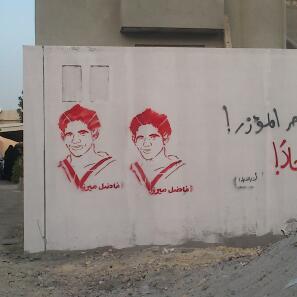
Martyr Fadhel AlObaidi
March 13, 2012 Add Comments
UN Awaits Syria’s Response as Assad Sets Election Date
UN Awaits Syria’s Response as Assad Sets Election Date
13 March, 2012 – POMED
Former U.N. Secretary General Kofi Annan, after presenting a six-point peace plan to Assad, left Damascus for Ankara on Tuesday to meet with a delegation of the Syrian national council (SNC). Annan reported that a response to the six-point proposal is expected from Syrian authorities within the next day. “One I receive their answer we will know how to react,” he said. Annan was seeking an immediate ceasefire in order to open the doors for humanitarian aid access and the commencement of dialogue between all parties. As part of a bundle of futile reforms unveiled to qualm the year-long uprising in Syria, President Bashar al-Assad announced that parliamentary elections will be held on May 7.
As international bodies strive for a political solution, Syrian troops shelled areas surrounding the Idlib province, which reportedly the regime targeting accounts is expected to be the next Homs. An activist in the nearby border town of Khan Shaykhoun in Turkey reported constant artillery fire since the morning. Secretary of State Hillary Clinton called the assault “cynical” noting that while Annan was negotiating peace, the army had increased it aggression. Reports of a massacre in Homs spread protests in at least five Syria towns stretching from Aleppo to Dara’a. Death estimates ranged between 47 and 53.
Russia released a statement agreeing to press Syria to accept “international monitors who could observe the implementation of a ‘simultaneous’ ceasefire” between government troops and opposition fighters. Russian Foreign Minister Sergei Lavrov stressed that the ceasefire is to be simultaneous. “Ultimatums will not work,” said Lavrov. Clinton rejected any attempt to equivocate the violence perpetrated by the Assad regime and the civilians “driven to civil defense.”
In response to callls for military airstrikes by Rep. John McCain (R-AZ), Rep. Dan Burton (R-IN) issued a statement in opposition to military intervention, saying that “John McCain does not speak for Congress.” President Barack Obama and Prime Minister David Cameron, writing in the Washington Post, declared their condemnation of violence used against Syrian civilians and affirmed their support of the U.N. Envoy and the opposition in order to “plan for the transition that will follow Assad’s departure from power.”
As the international community mulls over how best to stop the wide-spread and gratuitous violence in Syria, U.S. officials have expressed concern about President Assad store of chemical weapons. …source
March 13, 2012 Add Comments
China takes lead on finding political solution in Syria
China, Arabs agree on ‘political’ settlement in Syria
13 March, 2012 – Agence France Presse – The Daily Star
CAIRO: China and Arab countries agree on the need to find a “political solution” to the crisis in Syria, Chinese envoy Zhang Ming said on Tuesday after talks in Cairo with Arab League officials.
“We all recognize that there is great agreement between China and the Arab League for a political solution to the Syrian crisis,” the envoy said after talks at the Cairo headquarters of the 22-member bloc.
He told reporters he was on a mission to discuss a six-point Chinese initiative and talk with Arab officials ways of reaching “international agreement and finding a peace solution” to the Syria violence.
Under pressure from Western powers for twice blocking with Russia resolutions against Syria at the UN Security Council, China unveiled this month a six-point plan, calling for an immediate end to the conflict.
The initiative also calls for dialogue between President Bashar Assad’s regime and the opposition and rejects foreign interference or “external action for regime change” in Syria.
Last week, China said it would be dispatching envoys to Saudi Arabia, Egypt and France to explain its position on Syria.
The West and the Arab world have been piling pressure on Assad’s regime to prevent a year-old uprising from spiraling into all-out civil war.
Beijing and Moscow have drawn heavy criticism for using their veto powers as permanent members of the Security Council to block resolutions condemning the crackdown, because they singled out Assad for blame.
On Monday, China’s UN ambassador Li Baodon insisted there could be no military intervention in Syria and denied that “self-interests” had motivated its veto of the UN Security Council resolutions.
Li also announced $2 million (1.5 million euros) in humanitarian aid for Syria.
March 13, 2012 Add Comments
Clinton Pushes to Protect NGO “Western Democracy” Front
Clinton vows civil society push on rights
13 March, 2012 – Agence France Presse
WASHINGTON: U.S. Secretary of State Hillary Clinton on Tuesday vowed to press ahead with support for democracy promotion groups, saying that they play a critical role despite a crackdown in Egypt.
Clinton, addressing U.S. ambassadors from around the world who are back in Washington for a group conference, said that civil society groups are vital to encouraging U.S. goals such as advancing democracy and women’s participation.
“When people feel safe and empowered to pursue their legitimate aspirations, they are more likely to reject extremism and to invest in their own societies,” Clinton said.
Clinton noted that a number of governments, particularly in the Middle East and North Africa, are curbing such groups and “challenging the propriety of American support for civil society organizations.”
“I need each of you — and especially those of you operating in restrictive environments — to communicate our commitment to working with and supporting individuals and groups that represent not only what we believe are our values, but universal values: freedoms and human rights,” she told the diplomats.
Egypt’s relations with Washington recently fell into crisis as the longtime U.S. ally’s military-backed authorities charged staff of the National Democratic Institute, International Republican Institute and Freedom House.
The groups, which are funded largely by the U.S. government, promote the development of democratic institutions around the world and say that they do not back any particular candidates.
After pressure from Washington, Egypt allowed 13 foreigners from the groups including six Americans to leave the country on March 1 as they prepared for trial.
…more
March 13, 2012 Add Comments
Organization of Islamic Cooperation to send aid to Syria
Islamic group gets Syria’s approval to send aid
13 March, 2012 – Reuters – The Daily Star
JEDDAH: The world’s largest Islamic body said on Tuesday it had received permission by Damascus to send humanitarian aid to Syria, and will send a team there soon to assess the population’s needs.
The Organization of Islamic Cooperation (OIC), whose 57 members include conflict-stricken Syria, said preparations are under way for the assessment mission.
Last week, President Bashar Assad’s government requested more time to assess a demand by U.N. humanitarian chief Valerie Amos for “unhindered access” for aid, Amos said after a visit to Syria.
“Preparations are underway for an assessment mission to depart to Syria and to the site of refugees on the borders of Turkey and Jordan,” OIC spokesman Tariq Bakhiet said.
“Based on the assessment the amount and type of humanitarian aid will be determined and we will start sending it immediately,” he said.
The OIC aims to safeguard the interests of the Muslim world and has collected aid in the past to help its member states. Last year, the group’s Secretary-General Ekmeleddin Ihsanoglu said member states had pledged $350 million in aid to fight famine in Somalia.
The United Nations estimates more than 8,000 civilians have been killed in Assad’s crackdown on the uprising, which began almost a year ago.
Last week the United Nations said it was readying food stocks for 1.5 million people in Syria as part of a 90-day emergency plan to help civilians deprived of basic supplies.
…more
March 13, 2012 Add Comments
Syrian veto: China, Russia and the Arab Spring
Syrian veto: China, Russia and the Arab Spring
7 March, 2012 – Middle East Futures Network
It all began on March 15 2011 when protestors, inflamed by the arrest of a group of teenagers and inspired by the Tunisian, Egyptian, and Libyan people, took their desire for freedom and justice to the streets of Daraa in southwest Syria, and started the deadliest episode of the Arab Spring. Despite President Assad’s confident assurance to the world that Sham was immune from anti-Government protests, what began in Daraa kick-started Syria’s descent into a civil war; a war that seems unstoppable as it approaches its first anniversary and marks the end of a chaotic year in Syrian history.
Given the geostrategic importance of Syria and Assad’s popularity and carefully constructed image as a reformer, there was early optimism inside and outside Syria over his willingness and capability to calm the situation through the initiation of meaningful reforms. As a matter of fact, there were commentators who believed that the Arab Spring had provided the reform-minded, Western-educated Bashar with a once-in-a-lifetime opportunity finally to unleash a series of socio-political reforms, thereby weakening the more conservative members of his inner circle and encourage their early retirements.
Two months into the uprising, there emerged a sudden change in the stance of regional and extra-regional actors towards Syria led by Turkey. It was in this context of rising tensions that Syria lost its Arab League membership; GCC states, Britain, France, and the US closed their embassies; more economic sanctions were imposed by the EU, the US, and the Arab League, which also sent a monitoring mission to Syria that had two broad outcomes: embarrassment for the League, and the departure of Syrian ambassadors from the GCC. In response, Syria’s allies – namely, Iran, Hezbollah, Russia, and China – increased their public backing of the Syrian regime, helping to create a mini Cold War situation in the Levant; a situation that acquired a whole new dimension when China and Russia vetoed a UN Security Council (UNSC) resolution on Syria for the second time, claiming that it was unbalanced and unreasonable.
Hillary Clinton described China and Russia’s veto as a ‘travesty’; the Turkish Prime Minster called it a ‘fiasco’, and various Arab regimes accused Beijing and Moscow of licensing more killing in Syria. Russia and China, however, dismissed all these accusations and justified their veto as an attempt to seek ‘peaceful settlement of the chronic Syrian crisis’. Hence, digging beneath the surface and behind the veil of what has become a ‘war of rhetoric’, it is useful to ask why Beijing and Moscow, which have typically tried to align their policies with regional states/blocks, have disregarded and antagonised the Arab League by lending their backing to Mr. Assad, and how disruptive their support and indeed cooperation is to the international community’s efforts to end the violence in Syria.
For both Russia and China, and indeed the other members of the BRICs, NATO’s intervention in Libya was a wakeup call. As is evident in their remarks during the last meeting of BRICs leaders in 2011, the UN-sanctioned intervention in Libya was less of a humanitarian operation and more of a well thought out, Western-engineered strategy of regime change in order to perpetuate Western dominance over the entire MENA. As such, Chinese and Russian rationale today is that they no longer want the UN to be involved in further cases of ‘regime change’. Put differently, they fear that the Libyan campaign has set up a precedent for intervention based on human rights, and this, needless to say, has raised red flags in Beijing and Moscow at a time of leadership change/elections and rising domestic discontent and public protests in both countries. …more
March 12, 2012 Add Comments
Saudi: Women Lead Protest; Activists Plan Hunger Strike
Saudi: Women Lead Protest; Activists Plan Hunger Strike
12 March, 2012 – POMED
Female students at King Khaled University in Saudi Arabia broke out in protest because the university decided to stop all cleaning services, and to rally against perceived corruption, and failed leadership, of the university president, Abdullah Al-Rashid,. In response, the university called in the Haia religious police to quell protests that had grown to around 1,000 women. Some of the girls threw shoes at the Haia – to which they responded with batons – resulting in the death of one girl from an epileptic fit; another is reported to have suffered a miscarriage as a result of the violence. Another 50 girls received injuries during the scuffle. Two days later, about 500 male students rallied in the university courtyard demanding the resignation of Al-Rashid. “No one paid attention to the women’s complaints, but when the guys protested the administration and the authorities reacted immediately,” said one of the male students. Days later, when a large group of female students decided to boycott class there were a notably high number of absences.
In other news, dozens of Saudis signed up to join a two-day hunger strike this week to protest against the detention of a prominent rights activist Mohamad al-Bajadi. Al-Bajadi was detained in March 2011, activists said, for supporting families demonstrating, and calling for the release of detained relatives, outside the Interior Ministry in Riyadh. Al-Bajadi’s trial, which includes the charge of tarnishing the reputation of the state, has been suspended for his refusal to recognize the court.
Elham Fakhro argues in his piece “The Kingdom Divided,” that Saudi Arabia faces somewhere between 10-20 percent unemployment, with an estimated 670,000 families living in poverty. He says, “While sustained opposition movements continue to battle for their own Saudi Spring, their success hinges on their ability to unite around a common and national set of political demands—and lay to rest the demons of tribalism and sectarianism.” Fakhro writes, however, that part of the reason the regime has successfully quelled protest attempts is its strong religious connection. Madawi Al-Rasheed agrees that the Saudi regime first turned to Wahhabi religious officials, who “warned from the minarets that the wrath of God would be inflicted on demonstrators… [and] reminded the believers of the need for ijma, consensus around the pious rulers of the country, and warned that protests would lead to fragmentation and bloody civil war.” However, Christoph Wilcke argues in Foreign Policy that the Saudi “Spring” has left its mark. “The government has to publicly defend its actions,” he says, “and increasingly, members of the public are doubting its reasoning that portrays peaceful, often nationalistic and religious-based reform activism as dangerous subversion.” …more
March 12, 2012 Add Comments
Peace calling for Justice

March 12, 2012 Add Comments
No Justice in Bahrain
No Justice in Bahrain
8 March, 2012 – Bahrain Freedom Movement
Beirut – Bahrain has routinely convicted hundreds of opposition activists and others of politically motivated charges in unfair trials, Human Rights Watch (HRW) said in a new report. The government should void the convictions in trials before Bahrain’s military and civilian courts that fell far short of international fair trial standards, Human Rights Watch said.
Ressenza Human Wrongs Watch, 3/6/12 The 94-page report “No Justice in Bahrain: Unfair Trials in Military and Civilian Courts” documents serious due process violations in high-profile trials before Bahrain’s special military courts in 2011 – including one trial of 21 prominent political activists and another of 20 doctors and other medical personnel – and in politically motivated trials before ordinary criminal courts since 2010.
“Egregious Violations of Fair Trial Rights in Political Cases”
Serious abuses included denying defendants the right to counsel and to present a defense, and failure to investigate credible allegations of torture and ill-treatment during interrogation, it says.
“Grossly unfair military and civilian trials have been a core element in Bahrain’s crackdown on pro-democracy protests,” said Joe Stork, deputy Middle East director at Human Rights Watch. “The government should remedy the hundreds of unfair convictions of the past year by dropping the cases against everyone convicted on politically motivated charges and by adopting effective measures to end torture in detention.”
The egregious violations of fair trial rights in political cases do not just reflect the poor practices of individual prosecutors and judges, but serious, systemic problems with Bahrain’s criminal justice system, Human Rights Watch said.
Torture
In a February 13, 2012 interview, King Hamad bin Isa Al Khalifa told Der Spiegel magazine that: “There are no political prisoners as such in Bahrain. People are not arrested because they express their views, we only have criminals.”
The Human Rights Watch report is based on more than 50 interviews with defendants, defense lawyers, and trial observers, and a comprehensive examination of available trial verdicts and other court documents. Human Rights Watch wrote to Bahrain’s attorney general in November 2010 and to the justice minister in December 2011 concerning the trials, but received no response.
At least five people died as a result of torture while in custody following the government crackdown on mostly peaceful protests that began in mid-March 2011, according to the November report of the Bahrain Independent Commission of Inquiry, a body of five international jurists and human rights experts set up by King Hamad. Human Rights Watch has documented the persistent practice of torture and ill-treatment by Bahraini security officers over the past several years.
Those whose convictions should be voided and who should be released from prison include protest leaders such as Ibrahim Sharif, Abdul Hadi al-Khawaja, Hassan Mushaima, and Abdul Wahab Hussein, Human Rights Watch said.
In one case a nurse was convicted of “incit[ing] … hatred and contempt for the governing regime” and of “destroy[ing] moveable property … in furtherance of a terrorist purpose” because she allegedly stepped on a photo of the prime minister. …more
March 12, 2012 Add Comments
Bahrain Human Rights Defender Abdulhadi Alkhawaja Refuses Medical Check in “Freeedom or Death” Strike
In protest to distorted Press Release on His Health Condition: Human rights Defender Abdulhadi Alkhawaja Refuses Medical Check
11 March, 2012 – Bahrain Youth Society for Human Rights
The Bahrain Youth Society for Human Rights (BYSHR) has recently learnt that on the 6th of March, two individuals who only identified themselves as Dr. Fatima and Mohammed met with Human Rights Defender Mr.Abdulhadi Alkhawaja in prison. The doctor told him she will be administrating a checkup and consequently Mr.Alkhawaja allowed this. The results were, low blood pressure, low blood sugar and low temperature. When they started asking him questions unrelated to his health, Mr.Alkhawaja asked them to identify themselves properly or he would refuse to answer their questions. They refused and walked out.
Mr.Alkhawaja was surprised to see a press release days later based on the testimony of a Mr. Mohammed Alahmad – Pro-government journalist- from the GONGO organization, stating that his health was fine and the that he was being treated well. The press release was released by the Ministry of Human Rights.
In protest to the manner by which the prison and the Ministry behaved, Mr.Abdulhadi Alkhawaja decided to end cooperation with the hospital clinic by refusing medical check-ups. He insisted that they either be honest in relating information regarding his health or he would refuse to do the routine checkups. Mr.Alkhawaja also started refusing water and glucose which resulted in the deterioration of his health and he was unable to concentrate. After three days, Mr.Alkhawaja started drinking water and taking glucose once again.
On a different note and in contrast to what the Ministry of Human Rights alleges, the Danish foreign Minister stated to a Danish Newspaper that he was worried about Mr.Alkhawaja’s health after a representative of the Danish embassy met with the activist last week.
The BYSHR demands that:
1. The international community exerts more pressure in order to secure the immediate and unconditional release of human rights defender Abdulhadi Alkhawaja before there is any further deterioration in his health
2. That the Ministry of Human Rights allow credible, international human rights organizations who have repeatedly requested to see the activist access to him in order to be able to adequately evaluate his health situation
3. That the Ministry of Human Rights refrain from using GONGO’s in order to discredit claims made by credible human rights activist
4. That the Ministry of Human Rights release accurate and precise information regarding human rights defender Mr.Abdulhadi Alkhawaja’s health situation
…source
March 12, 2012 Add Comments
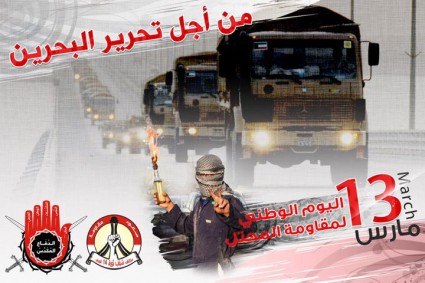
13 March Ready to Defend
March 12, 2012 Add Comments
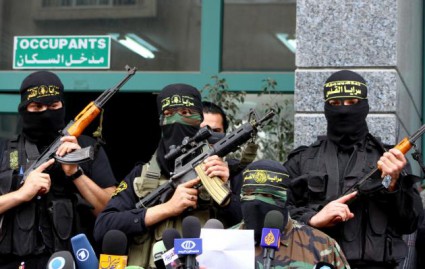
Gaza Ready for War
March 12, 2012 Add Comments
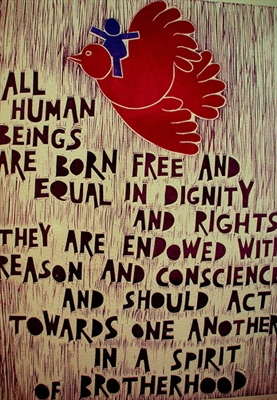
No Peace without Justice
March 12, 2012 Add Comments
Pentagon Prepares War Plans for Syria
Pentagon Prepares War Plans for Syria
By Bill Van Auken – 9 March 2012 – WSWS
In testimony before a Senate committee Wednesday, the Pentagon’s civilian and uniformed chiefs confirmed that they are drawing up war plans against Syria at the request of the Obama White House.
The statements by Defense Secretary Leon Panetta and Chairman of the Joint Chiefs of Staff General Martin Dempsey came amid mounting evidence that Washington and its key European allies, working in conjunction with the right-wing monarchical regimes in Saudi Arabia and Qatar, are escalating a covert intervention aimed at bringing about Syrian regime change.
Much of the media coverage of Wednesday’s hearing focused on the jingoistic intervention of Arizona’s Senator John McCain, the former Republican presidential candidate. He is demanding US air strikes against Syria, to carve out “safe havens” in which Western-backed armed groups can prepare military strikes against the government of Syrian President Bashar al-Assad.
“How many additional civilian lives would have to be lost in order to convince you that the military measures of the kind we are proposing [are] necessary to end the killing and force Assad to leave power?” McCain demanded of Panetta.
The defense secretary responded by asserting, “We are not divided here.” He insisted that the Pentagon is “reviewing all possible additional steps that can be taken” to hasten the downfall of the Assad regime, “including potential military options if necessary.”
General Dempsey cautioned that a US intervention in Syria would be more difficult than the NATO war in Libya given the country’s “far different demographic, ethnic, religious mix.” However, he assured the Senate panel, “Should we be called upon to defend US interests, we will be ready.” The Joint Chiefs chairman added that military operations under consideration included the imposition of a “no-fly zone,” the opening up of a “humanitarian corridor,” a naval blockade of the Syrian coastline and air strikes.
Panetta and Dempsey both echoed statements made the day before at a White House press briefing by President Obama, that it would be a “mistake” to “to take military action unilaterally.”
None of them, however, raised a United Nations Security Council resolution authorizing use of military force as a pre-condition for US military intervention in Syria. …more
March 12, 2012 Add Comments
Syria conflict sprials into accusation and counter accuations, Civilian Massacres Evident
Syrian opposition: International military intervention ‘urgent’ following Homs killings
By Liz Sly – 12 March, Washington Post
BEIRUT — The brutal killings of dozens of women and children in the central Syrian city of Homs prompted the council representing Syria’s opposition to call on Monday for “urgent” international military intervention to protect civilians as diplomatic efforts to resolve the country’s escalating conflict faltered.
The Syrian National Council, the deeply divided umbrella group whose efforts to unite the Syrian opposition have failed in part because of divisions over the issue of military intervention, issued the call after videos showing the mutilated corpses of at least 45 victims were posted overnight on the Internet.
Activists said the videos offered evidence of what they called a massacre of civilians who supported the opposition by pro-government militias. The Syrian government countered with allegations that “terrorist armed groups” had killed the victims and then filmed their bodies to influence discussions at the United Nations Security Council on Monday, and to shore up Syrian opposition calls for “foreign interference in Syria.”
March 12, 2012 Add Comments
Massacre in Afghanistan: US soldier kills 16 villagers, including 9 children
Massacre in Afghanistan: US soldier kills 16 villagers, including 9 children
By Patrick Martin – 12 March 2012 – WSWS
In a massacre that expresses the brutality and horror of the entire American war in Afghanistan, an Army staff sergeant walked into a village in rural Kandahar province early Sunday morning and murdered 16 people, nine of them children.
Eleven members of a single family were gunned down in their home, their bodies then piled in a heap and set on fire. The victims included four girls six years old or younger. Only the father, Samid Khan, and one child survived, because they were away from the village at the time.
The gunman then went on to shoot the inhabitants of two more dwellings before he returned to his base and turned himself in. At least five villagers were wounded, some of them critically, and the death toll could rise.
Samid Khan, a poor farmer, returned to the village to find his entire family shot to death and their bodies burned inside his home. “This is an anti-human and anti-Islamic act,” he told the press. “Nobody is allowed in any religion in the world to kill children and women.” He and his neighbors demanded that the killer be handed over to the Afghan government for punishment.
According to one local Afghan official, villagers loaded the bodies of the victims into cars and drove to the entrance of the nearby American base to demand justice. “They were very angry,” he said. “They wanted to do something to take revenge.”
The identity of the mass murderer was being kept secret by US and Afghan authorities and by the American media late Sunday night, but the British Broadcasting Corporation reported that he was a staff sergeant and a member of the US special operations forces engaged in training the Afghan police.
There are conflicting reports about many details of the massacre. Some survivors contend that more than one American soldier was involved, and Taliban spokesmen claimed that the attack was one of the notorious night raids conducted by US special forces that have become a focal point for popular hostility to the US occupation. …more
March 12, 2012 Add Comments
Obama’s Secret Prison System
March 12, 2012 Add Comments
Is Barack Obama the First Jewish President?
Is Barack Obama the First Jewish President?
Paul Waldman – 12 March, 2012 – The American Prostect
It’s not as crazy an idea as you might think.
If Bill Clinton was the first black president, as Toni Morrison famously observed, then could Barack Obama be the first Jewish president? That’s the interesting case Jeffrey Goldberg makes at The Atlantic. Goldberg tells how he gave Obama a copy of a new Haggadah he contributed to:
When I handed him the Haggadah, President Obama, who famously stages his own seders at the White House, (which is a very nice philo-Semitic thing to do, IMHO) spent a moment leafing through it and making approving noises. Then he said (as I told the Times): “Does this mean we can’t use the Maxwell House Haggadah anymore?”
George W. Bush was, in his own way, a philo-Semite, but he never would have made such an M.O.T. kind of joke (see the end of this post if you’re not sure what M.O.T. means). Once again, Barack Obama was riffing off the cosmic joke that he is somehow anti-Semitic, when in fact, as many people understand, he is the most Jewish president we’ve ever had (except for Rutherford B. Hayes). No president, not even Bill Clinton, has traveled so widely in Jewish circles, been taught by so many Jewish law professors, and had so many Jewish mentors, colleagues, and friends, and advisers as Barack Obama (though it is true that every so often he appoints a gentile to serve as White House chief of staff). And so no President, I’m guessing, would know that the Maxwell House Haggadah — the flimsy, wine-stained, rote, anti-intellectual Haggadah you get when you buy a can of coffee at Shoprite) — is the target, alternatively, of great derision and veneration among American Jews (at least, I’m told there are people who venerate it).
Most conservatives wouldn’t go as far as to accuse Obama of being an anti-Semite, but they certainly believe he’s anti-Israel. Which is insane, of course, but what I’ve always found so striking about this question is how sidelined Jews themselves have become in today’s discussions of Israel. That isn’t to say there aren’t particular Jews who are plenty involved, but the American Jewish community as it actually exists in America—mostly politically liberal, living its Judaism more as a culture than as a religion, troubled by the policies of the Israeli government in multiple areas—is increasingly estranged from the discussion, as more and more of that discussion is dominated by people like Sarah Palin and Rick Santorum. It’s the world of post-Jewish Zionism, where Israel’s most vehement advocates are people who see it mostly as a tool to use in a holy war between Christianity and Islam. As someone who grew up in a household where liberal Zionism was the primary expression of Jewish identity, I can’t begin to describe how alienating it is to watch people like Palin waving Israeli flags around. And I’m pretty sure there are lots of other Jews who feel the same way. …more
March 12, 2012 Add Comments
US sent 600,000 tear gas canisters to Israel
US sent 600,000 tear gas canisters to Israel
David Elkins – The Electronic Intifada – 9 March, 2012
WASHINGTON (IPS) – A new policy paper published earlier this week by the US Campaign to End the Israeli Occupation documents a number of cases occurring over the past decade in which weapons and ammunition produced and financed by the US have been used to kill unarmed Palestinians and US citizens.
“US military aid to Israel is a policy that is running on autopilot and must be reconsidered,” Josh Ruebner, the national advocacy director for the organization and author of the new policy paper, said on Monday.
“US weapons provided to Israel at taxpayer expense make the US complicit in Israel’s human rights abuses of Palestinians living under Israel’s 44-year military occupation of the West Bank, East Jerusalem and Gaza Strip and defeat US foreign policy objectives of halting Israeli settlement expansion, ending Israeli military occupation and establishing a just and lasting Israeli-Palestinian peace,” Ruebner added.
Between the years 2000 and 2009, the US transferred “more than 670 million weapons, rounds of ammunition and related equipment,” according to the report.
Violating US law
During the same period, “Israel killed at least 2,969 unarmed Palestinians, including 1,128 children, often with US weapons in violation of the Foreign Assistance Act and Arms Export Control Act.”
The Foreign Assistance Act, signed into law in 1961, stipulates that “no security assistance may be provided to any country the government of which engages in a consistent pattern of gross violations of internationally recognized human rights.”
Several US administrations have sanctioned or withheld funding from countries, including Israel, that violated laws such as the Foreign Assistance Act. But according to the report, official inquires and investigations into US military aid to Israel over recent decades have been met with growing resistance from groups both within and outside of the US government.
Although more expensive weapons systems such as tanks and aircraft make up the bulk of purchasing contracts made between the Israeli government and US manufacturers, small arms and ammunition purchases account for the largest number of deaths. …more
March 12, 2012 Add Comments
Resistance to Obama’s police-state policies
How to fight Obama’s police-state policies
by Jerry White – 6 March, 2012 – TruthOut
The drive towards an American police state that began under George W. Bush is accelerating under his Democratic successor. The Obama administration is now asserting the right to kill or jail indefinitely anyone designated by the president as a threat to US national security. Obama and his legal aides declare this to be an absolute power of the executive, unreviewable by any court or by Congress.
Obama’s Attorney General, Eric Holder defended the assassination doctrine in a speech March 5 at Northwestern University Law School, where he outlined the purported legal basis for the killing of Anwar al-Awlaki, the US citizen who was incinerated last September in Yemen by a missile fired by a CIA-controlled drone.
According to Holder, the congressional resolution passed in the immediate aftermath of the terrorist attacks of September 11, 2001 gives the president as commander-in-chief continuing power to order such extra-judicial state murders based solely on his own discretion, without even the pretext of judicial review.
This speech made the extraordinary claim that the right to “due process of law,” guaranteed to all Americans under the Fifth Amendment, does not mean a “judicial process.” That is, the president’s determination that a US citizen can be killed—anywhere, including in the United States itself—is sufficient to satisfy the Constitution.
The attorney general’s speech was largely ignored by the mass media, and not a single reporter at Obama’s press conference the next day asked him about this new doctrine of a presidential right to murder. This only demonstrates the extreme erosion of democratic consciousness in the American ruling class over the past dozen years, since the stolen presidential election of 2000. There is no significant constituency for democratic rights in any section of the US ruling elite, Democratic or Republican.
Holder’s speech follows on Obama’s executive order February 28, officially putting into effect the provisions of the National Defense Authorization Act of 2011. This law gives the president the power to arrest any person in the United States, citizen or non-citizen, and jail them forever without a trial.
While the executive order ostensibly waives the power of indefinite detention for American citizens, this is simply a cynical fraud on the part of the administration. The law remains and can be implemented at any time.
Holder has been designated as the president’s agent to make day-to-day decisions on the fate of those non-citizens who are seized as suspects in the “war on terror.” He can order those arrested to be transferred to military custody, where their detention would be unreviewable by any judge, or have them sent into the civilian justice system, where they would be tried by a federal court.
Finally, on Thursday, Obama signed into law HR 347, a bill that significantly expands on existing anti-democratic laws prohibiting demonstrations and civil disobedience at the White House or at any location being visited by the president, vice president or other officials under Secret Service protection. This includes three of the four remaining Republican presidential candidates, Mitt Romney, Rick Santorum and Newt Gingrich. …more
March 12, 2012 Add Comments
Lamenting the Martyr
March 12, 2012 Add Comments