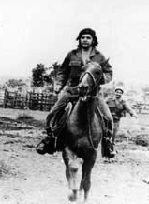
Courage in the Face of Adversity – Abdulhadi al-Khawaja
March 14, 2012 Add Comments
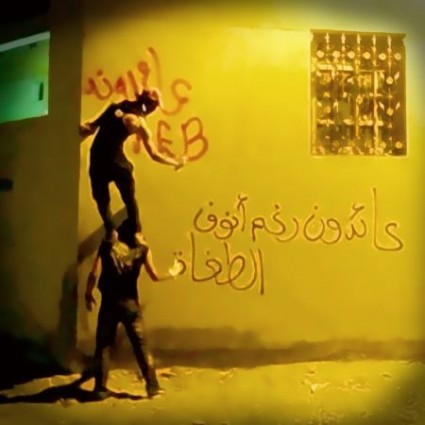
Sitra Youth Creative Arts Program
March 14, 2012 Add Comments
Has Reform Stopped this through the Generations
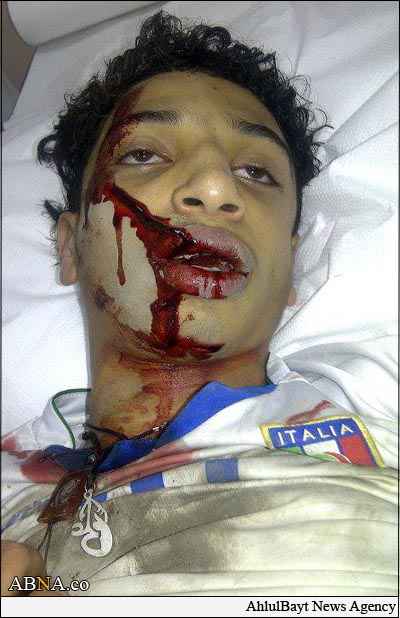
March 14, 2012 Add Comments
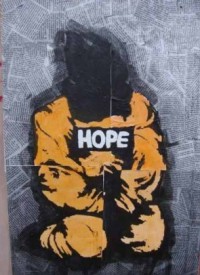
Ask them about Reform
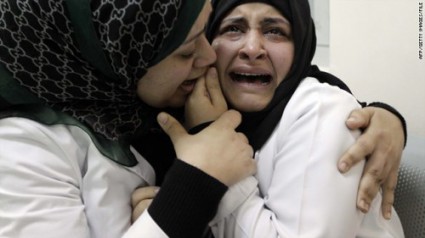
March 14, 2012 Add Comments
Less-than-lethal? Riot Control? how come 75+ dead and 1000s injured while in their homes?
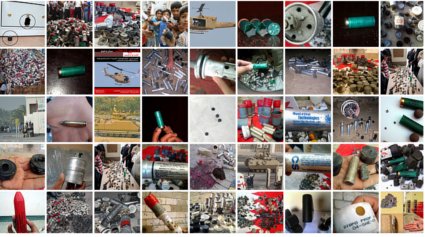
March 14, 2012 Add Comments
Protection for Bahrain Villages living in a cloud of CS Gas for the last Year!
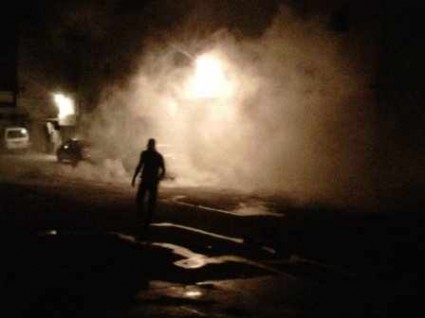
March 14, 2012 Add Comments
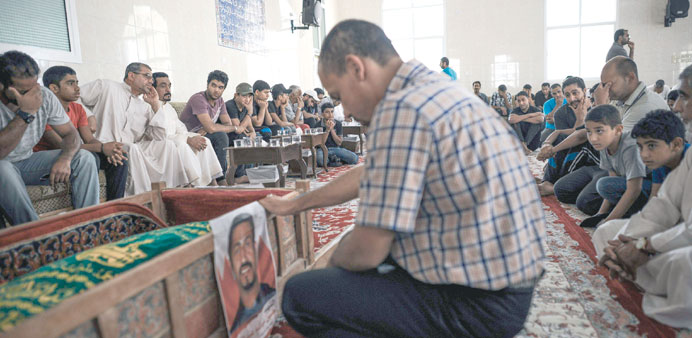
Never forgotten, Never forsaken
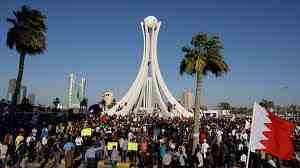
March 14, 2012 Add Comments
Bahrain Political Prisoners in Solidarity with Alkhawaja
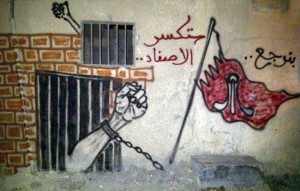
March 14, 2012 Add Comments
Freedom for AlKhawaja, Free for all Political Detainees!
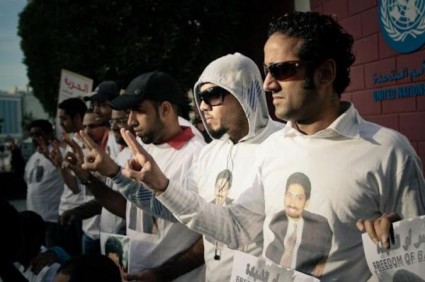
March 14, 2012 Add Comments
No Dialogue, No to Reformist Lies
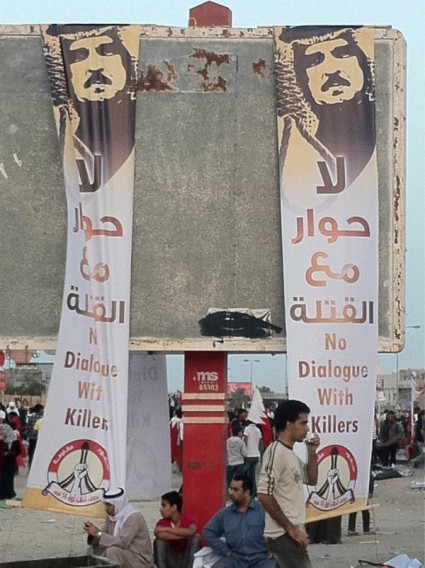
March 14, 2012 Add Comments
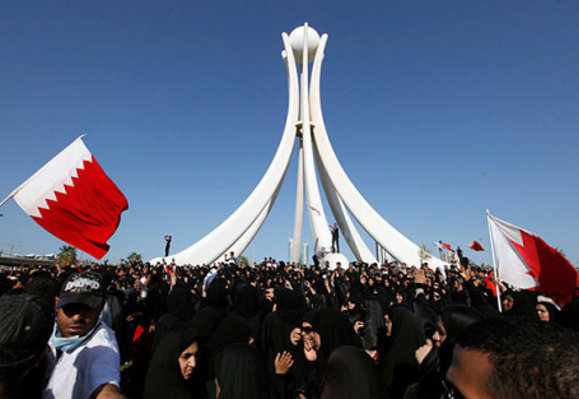
I am Bahrain, Liberty is my Future

March 14, 2012 Add Comments
Western Public Relations Groups lauch media blitz attempting to Isolate Revolutionary Bahrain
Bahrain opposition may be losing touch with the youth
14 March, 2012 – Chicago Tribune
MANAMA (Reuters) – Bahrain’s main opposition movement Wefaq is making overtures to the monarchy on how to pursue democratic reforms but its efforts may be undermined by waning support from youth who seek more revolutionary change.
Three members of Wefaq, which dominates Shi’ite politics and has taken almost half the seats in parliament in past elections, recently met a prominent member of the ruling Sunni Al Khalifa family to discuss a way forward after a year of unrest following the bloody breakup of protests at the Pearl Roundabout.
“The country is paralyzed now,” Abduljalil Khalil, one of the Wefaq members involved, said to justify Wefaq’s move. “The country is in big trouble if you can’t move your security forces from the roundabout.”
The traffic intersection has remained under heavy guard and closed. The economy in what was a bustling banking and tourism centre is stagnant, and visa restrictions have been placed on tourists, journalists and international rights groups.
Washington, for whom Bahrain’s stability is important given that it bases its Fifth Fleet in Manama across the Gulf from adversary Iran, has often urged the government to engage Wefaq.
But at this stage the point may be moot, as the monarchy now faces an array of hardline political forces – Shi’ite Islamist and secular – some of whom have said openly that they favor ditching the monarchy and replacing it with an republic.
Though most of these groups’ leaders are in prison or abroad, youth and rights activists have used new media to organize street opposition, deploying the language of revolution. And some loyalists accuse Wefaq of exploiting angry youth for its own political gain.
“We won’t let anyone go and speak in the name of the people,” said Hisham Sabbagh of Amal, a legal Islamist party.
STREET RADICALS
An underground group calling themselves the February 14 Youth Coalition – after the date when the uprising began last year – claims to speak in the name of disaffected Shi’ite youth throughout the country, announcing protests and reporting on clashes in Shi’ite districts via Twitter and Facebook.
Recently they have used alarming, sectarian phrases such as “holy petrol bombs”, “martyrdom ambushes” and “Haidar attacks”, a reference to the first Shi’ite Imam, Ali, though they do not veer into the realm of insults that some government loyalists employ against Shi’ites.
Though youths will go to Wefaq’s government-approved rallies, they ignore calls by its leader Sheikh Ali Salman to avoid slipping into violent engagement with riot police.
Activists say the heavy use of tear gas, bird shot and other crowd control tactics has caused more than 25 deaths and hundreds of injuries since last June, numbers that the government disputes.
“We respect the opposition but everyone has to choose their own path. Ali Salman doesn’t really know the situation we live in,” one teenager said while preparing bottles to throw at police in Jidhafs, an impoverished flashpoint district.
Nabeel Rajab, the founder of the Bahrain Centre for Human Rights, poses another challenge.
Rajab, who has risen to prominence in the past year with one of the highest number of Twitter followers in the Arab world at 121,000, was quick to tweet words of rebuke when the news of the talks with the government emerged, describing the court minister who met Wefaq as part of the problem, not its solution.
For many, Rajab has acquired a revolutionary allure.
“We all love him. He’s daring. He knows how to talk and he doesn’t just tell people to do something, he actually does it himself,” said a smitten receptionist after he turned up at a commercial building last month asking for directions.
Like the February 14 activists, Rajab refers to the security forces as “mercenaries”, because of the notable number of Pakistani and other foreign hires – language that Wefaq avoids. …more
March 14, 2012 Add Comments
Abuse of Judical Power and Murderous Crackdown has become daily routine in Bahrain
University students sentenced to 15 years imprisonment and ongoing sham trials
14 March, 2012 – Bahrain Center for Human Rights
The Bahrain Center for Human Rights expresses its grave concern over the continuous human rights violations against university students in Bahrain. A year past the start of the revolution, university students are still being subjected to injustice, unfair trials, arrests and torture.
On February 14 2011, Bahraini youth started to demand democracy and freedom from the oppressive Al Khalifa regime. Most of these youth were targeted even before the declaration of Martial Law in March, through a government-sponsored thug attack of the pro-democracy students at the University of Bahrain (UOB) during a planned protest which took place on March 13 2011. Following the state of emergency, the government targeted students in a fierce crackdown; more than 500 were expelled, many were arrested, tortured and put through sham trials. At least 6 UOB students were sentenced to 15 years imprisonment in an unfair trial lacking evidence.
Human chain formed by male students on 13 March 2011 to protect their female classmate from being attacked by government- sponsored thugs (Dr. Mike Diboll blog[1])
As a former professor at the University of Bahrain who was present at the time of the thug attack on March 13, Dr. Diboll recalls, they were “carrying blunt or sharp-edged weapons including axes, swords, golf clubs, iron bars, heavy chains, and baseball bats.” [2] Students were violently attacked without any protection from university security nor police forces, who only interfered when the attack was over. On that day at least 80 students were wounded and transferred to the nearby health center, although the majority was suffering from suffocation due to teargas. However, there were a few serious injuries. Mohammed Abdulmahdi, a 19 year old Applied Studies student in UOB, was hit on the head with a sharp weapon. It caused him to go into coma for around 100 days. When he woke up, he lost his ability to speak[3].
…more
March 14, 2012 Add Comments
Bahrain Regime and Spin Masters use BICI report to bound scope of abuse and accountaility
Bahrain to Start Process to Compensate Protest Victims
By Donna Abu-Nasr – 14 March, 2012 – Bloomberg News
Bahrain’s Justice Ministry will start receiving on March 18 civil settlement applications to compensate victims of violence from last year’s mass protests.
The ministry set up the civil settlement initiative in line with recommendations from an independent international commission that investigated possible human rights abuses during the February-March 2011 protests. At least 35 people were killed during the rallies and an ensuing crackdown through April last year, the commission has said.
The initiative “does not annul the victims’ right to pursue legal settlement,” the state-run Information Affairs Authority said today in an e-mailed statement, citing a ministry official. “The initiative’s beneficiaries include families of deceased victims, physical injuries or abuse, along with other cases seen fit for settlement as per the circumstances of each case.”
Mass protests led by Bahrain’s Shiite majority broke out a year ago demanding democracy and equal rights from the Sunni monarchy, leading to a crackdown by security forces in which troops from neighboring Saudi Arabia, also ruled by Sunnis, were called in to help. Tensions in the island nation have simmered in Shiite areas throughout the past year. …more
March 14, 2012 Add Comments
Afghanistan where empires die, Syria where empires anguish in hell – Perpetual War and Unquenchable Greed
Americans for Permanent War: Target Syria
14 March, 2012 – Huffington Post – Doug Bandow
Syrian President Bashar al-Assad and his family have turned his government into an essentially criminal enterprise. For more than a year Syrians have been attempting to overthrow the system.
By some estimates 7500 people have died. Defections from the military have led to creation of a small “Free Syrian Army.” Regime opponents also have turned to terrorism. With no resolution is in sight, the country is sliding toward civil war. Like King Louis XIV President Assad might say, “apres moi, le deluge.”
In America the usual suspects have begun beating the war drums. Senators John McCain and Lindsey Graham urged arming the Syrian opposition. More recently McCain called for air strikes against Syria and berated the military for its caution in “standing on the sidelines.” Similarly, the Wall Street Journal editorial page urged establishment of a no-fly zone in Syria, waving aside all opposition.
Others have taken up the cry. For example, Matthew Brodsky of the Jewish Policy Center urged military intervention in order to bring about “an end to the violence, the fall of the Assad regime and the creation of conditions for a stable democratic system.” Roger Cohen of the New York Times called for arming the Syrian opposition and establishing “a rough equality of forces.” Steven A. Cook of the Council on Foreign Relations endorsed military action so as not to leave “Syrians to their fate.” Former Obama aide Anne-Marie Slaughter suggested protecting “civilians through buffer zones and humanitarian cordons around specific cities, perhaps accompanied by airstrikes against Syrian army tanks moving against those cities.”
However, mere possession of the world’s most powerful military does not mean that it should be used irrespective of interests, circumstances, and consequences. Observed Marc Lynch on Foreign Policy online, “Risky, costly foreign policy decisions can not simply be taken to express moral outrage.”
The Journal grandly declared that “the U.S. has a strategic interest in Syria’s future,” but where is that not the case? A gaggle of neoconservative analysts wrote an open letter asserting that “The Assad regime poses a grave threat to national security interests of the United States,” but what interests are those?
Syrian support for Hamas and Hezbollah is a problem for Israel and Lebanon, not America. Damascus is allied with Iran, but that relationship is inconvenient, not threatening, to the U.S. Assad’s collapse would weaken Iran, but making Tehran feel more encircled would increase its incentive to pursue nuclear weapons.
Cohen desires “payback” for Syria “allowing al-Qaeda fighters to transit Syria to Iraq.” However, the Iraq invasion put U.S. troops on Syria’s border with talk in Washington of enforcing regime change in Damascus. The Assad regime responded rather as Washington had by supporting armed insurgents in Cuba, Afghanistan, and Nicaragua. The U.S. might have claimed a casus belli at the time, but not now, months after leaving.
Humanitarian instincts urge action. But war is no delicate tool for sculpting new societies. War means killing and destroying. The consequences usually are far worse than expected — remember Iraq’s famous “cakewalk.” Even the “best” American interventions are not particularly good, like Bosnia, Haiti, Kosovo, Libya, and Somalia, which left ethnic cleansing, violence, instability, and terrorism in their wake. …more
March 14, 2012 Add Comments
Panetta Popularity with Troops no esta bueno!
Marines disarmed for Leon Panetta speech
By TIM MAK – 14 March, 2012 – Politico
Hundreds of U.S. Marines were suddenly told Wednesday to leave and return unarmed to a venue where Secretary of Defense Leon Panetta was scheduled to speak, according to reports — an unusual move that illustrates the military’s heightened security concerns.
Typically, American forces in Afghanistan have kept hold of their weapons when Panetta addressed them.
But on Wednesday, about 200 Marines were told to take their weapons outside of the large tent at Camp Leatherneck where Panetta spoke and to leave them there, while Afghan troops already were unarmed, as is customary for these events, reports The Associated Press.
The commander on the scene, Sgt. Maj. Brandon Hall, said he was acting on orders from highers-up.
“Something has come to light,” Hall told the troops, according to the wire service. “I was told to get the weapons out.”
“All I know is, I was told to get the weapons out,” he told The New York Times. “Somebody got itchy, that’s all I’ve got to say. Somebody got itchy; we just adjust.”
American officials later said that the order came from the top commander in Helmand province, Maj. Gen. Mark Gurganus.
“You’ve got one of the most important people in the world in the room,” he told the newspaper, insisting that the order had nothing to do with the Sunday’s incident in which an American staff sergeant went door to door in Afghan villages, killing 16.
“This is not a big deal,” Gurganus added.
…source
March 14, 2012 Add Comments
Pssst, King Hamad – they won’t go away until you do
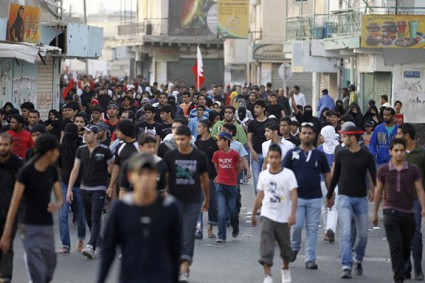
Hundreds of anti-government protesters walk from local streets towards the main highway in the village of Diraz west of Manama, March 13, 2012. Demonstrators took to streets after a protester, Fadel Mirza, died from a head injury caused by a tear-gas canister fired during a March 10 clash with riot police. …source
March 14, 2012 Add Comments
The March to War in Syria unreality and the Western Narrative
How One-Sided Reporting is Facilitating Escalation – Six Ways the Media Has Misreported Syria
by AFSHIN MEHRPOUYA – 14 March, 2012 – Counter Punch
As in the case of Libya, from NY Times to Fox News, from Guardian to National Post and from Le Monde to Le Figaro, the Western mainstream media’s coverage of the Syrian conflict has been mostly simplistic and black & white with a Hollywoodian good (opposition) and evil (Syrian government) story. The basic storyline reported is: “The dictatorial Syrian government is torturing and killing Syrian protestors and civilians including women and children and that the Western counties and the Arab League want to protect these Syrian civilians”. These outlets use any information that supports their stance regardless of its source and quality, and dismiss or ignore any information that brings it to question.
The bloody suppression of protestors by the Syrian government and also instability resulting from the armed insurgency aggravated by a complex set of foreign forces, each with its own set of vested interests, have resulted in significant suffering for the people of Syria. Western media’s unquestioning, consensual, biased and melodramatic coverage of the Syrian events risks moving this conflict to a full blown war with grave consequences for the Syrian people and the region.
Here are the six ways that the Western media, across the board, have been uncritical and misleading in their coverage of the Syrian conflict:
1. What do the majority of Syrians want?
In the mainstream Western media coverage, there is an implicit assumption rarely questioned that the majority of the Syrians support the armed insurgency and that they want immediate departure of Bashar Assad. However, the only opinion poll that has been carried out by the Qatar based YouGovSiraj, since the start of the conflict claims that about 55%[1] of Syrians do not want immediate departure of Assad. The methodology for this poll is not robust. In addition, this stance might be not due to support for Assad rather, because the Syrian people are afraid of instability and civil war or because some believe in the reform intentions of Assad and still others because they might be benefiting from the existing regime. The 89% backing of the new Syrian constitution in the recent referendum with a turnout of 57% was also dismissed because of the ongoing violence on the ground and lack of independent supervision on the referendum[2].
Nonetheless, given the West’s backing of the Syrian opposition is based on the “will of the Syrian people”, for the media it is essential to expose and debate such polls and try to establish what the majority of the Syrians want before adopting a position on behalf of the Syrian people.
2. Is the Syrian National Council (SNC) and the militarized insurgency representative of the Syrian opposition?
The opposition is primarily represented by Syrian National Council (SNC) headed by a Syrian expatriate professor, Burhan Ghalioun who is based in Paris[3]. This organization which is run mostly by expatriates has been demanding foreign intervention in Syria and it rejects any sort of dialog with the Syrian government. Several independent media outlets and other Syrian opposition groups[4] have questioned SNC’s lack of transparency about its members, funding and foreign links and whether it is a legitimate representative of the Syrian opposition[5][6]. Another organization claiming to represent the opposition is the Syrian Opposition Coordination body operated from inside Syria which is against foreign intervention and is for a dialog-based solution after an end is put to the violence and the political prisoners are freed. In addition, several militarized groups operate inside Syria such as Free Syrian Army who have been engaged in an armed conflict with the Syrian army and also have been attacking government buildings and other assets. These militia are reported to be a mix of deserting soldiers, foreign mercenaries and armed civilians[7] and they are armed by cross border smuggled arms allegedly funded/provided by foreign governments including those of Saudi Arabia[8], Qatar[9]. …more
March 14, 2012 Add Comments
Bahrain Nursing Association: Saudi Invaders must leave!
Bahrain Nursing Association demands end to Saudi invasion
14 March, 2012 – Shia Post
Bahrain’s Nursing Association has begun a week of resistance against the Saudi invasion of the country on the first anniversary of the arrival of KSA troops to help Manama in its brutal crackdown on protests.
Secretary of the Association of Nursing Ebrahim al-Dimstani told Al Alam television on Wednesday that activities planned for ”Resistance week against Saudi invasion” include holding nationwide protest rallies and expressing solidarity with the victims of the Saudi-backed regime crackdown.
According to al-Dimstani, the anti-Saudi invasion week began on Monday, two days ahead of the first anniversary of the Saudi invasion.
Meanwhile, Bahrain’s 14 February Coalition has called for large anti-government demonstrations to be held on March 15 to protest against Saudi Arabia’s military intervention in Bahrain.
On March 14, 2011, Saudi troops entered Bahrain to assist the Manama government in its quelling peaceful popular protests in the Persian Gulf Island.
Bahrainis have been holding anti-government demonstrations since mid-February 2011, calling on the US-backed Al Khalifa family to leave power.
According to local sources, scores of people have been killed and hundreds have been arrested in the Saudi-backed regime crackdown. ..source
March 14, 2012 Add Comments
Obama continues to escalate US trangression on Sovereign Nation Rights will others pursue Diplomacy
Obama: window for solving Iran crisis without attack is shrinking
14 March, 2012 – Al-Akhbar
US President Barack Obama reiterated on Wednesday that the US was considering a military attack in Iran and said the opportunity to solve the issue diplomatically was “shrinking.”
In a joint press conference with British Prime Minister David Cameron, Obama said that the situation was coming to a head.
Asked if he thought that April’s six-nation negotiations on Iran’s nuclear program represented a last chance to solve the situation without Israel bombing Iranian nuclear facilities, Obama suggested that was the case.
“I have sent a message very directly to [the Iranians] publicly, that they need to seize this opportunity of negotiations with the P5 plus one to avert further consequences.”
“They should understand that because the international community has applied so many sanctions, because we have employed so many of the options that are available to us to persuade Iran to take a different course, the window for solving this issue diplomatically is shrinking,” he said.
Assad will go
President Obama also discussed the continuing conflict in Syria and said he would try his hardest to ensure the downfall of President Assad.
UN and Arab League envoy to Syria Kofi Annan this week presented Assad with a list of demands to help bring about peace in the country.
The list is understood to have made no reference to Assad stepping down but President Obama said he was set on regime change.
“Just as the regime and security forces continue to suffer defection the opposition is growing stronger. Assad will leave power, it is not a question of if but when,” he said. …more
March 14, 2012 Add Comments
Abdulhadi al-Khawaja condition worsens in “Freedom or Death” hunger strike
Condition of Bahrain hunger striker seen worsening
14 March, 2012 – By Andrew Hammond – Reuters
DUBAI: The condition of a jailed Bahraini activist who has been on hunger strike for over a month is deteriorating and prison authorities may force-feed him, a lawyer who visited him this week said on Wednesday.
Abdulhadi al-Khawaja is serving a life sentence for his role in a pro-democracy protest movement that erupted in February last year after uprisings in Egypt and Tunisia only to be put down by force one month later.
He was found guilty of charges including forming and organising a “terrorist group” to end the Al Khalifa monarchy and change the constitution. A founder of the Bahrain Centre for Human Rights, he is one of 14 protest leaders serving jail terms after controversial military trials.
Facing international criticism of the crackdown, Western-allied Bahrain has moved most of the military verdicts and cases to civilian courts. The verdicts in the protest leaders case still stand, though an appeal is pending in civilian courts.
The men held a brief hunger strike last month to demand their release, but Khawaja, a vocal rights activist believed to have been tortured in the first weeks of his detention, started his own hunger strike on Feb. 9.
The protest movement included opposition parties who want parliamentary reforms and groups calling for an end to the monarchy. Shi’ites complain of political and economic marginalisation, a charge the government denies.
Khawaja is drinking a litre a day of salted water and glucose but prison authorities may intervene to force-feed him if the hunger strike continues, said Mohammed al-Jishi, a lawyer who visited him this week.
“He can’t go on like this, but he refuses absolutely to go back to eating. He says ‘I take my freedom or die’,” he said, adding Khawaja had stopped drinking water for several days last week. “Since Sunday he started drinking liquids again and got back strength and could talk and move.”
Khawaja stopped drinking in protest after a visit by Bahraini rights group official who Khawaja had believed was a journalist, Jishi said. He said the group, viewed by Khawaja as pro-government, gave a false impression of his condition.
“We believe that his hunger strike is not exposing him thus far to imminent danger,” the group called Mabadi said in a statement published in the pro-government al-Ayyam daily.
March 14, 2012 Add Comments
Motion For A Resolution to save those who inherited Neocolonial Tyranny in Bahrain
MOTION FOR A RESOLUTION (SOURCE)
See also joint motion for a resolution RC-B7-0171/2012
13.3.2012 PE486.710v01-00
B7-0171/2012
with request for inclusion in the agenda for the debate on cases of breaches of human rights, democracy and the rule of law
pursuant to Rule 122 of the Rules of Procedure on Bahrain
Barbara Lochbihler, Frieda Brepoels, Rui Tavares, Raül Romeva i Rueda, Ulrike Lunacek on behalf of the Verts/ALE Group
NB: This motion for a resolution is available in the original language only.
European Parliament resolution on Bahrain
B7‑0171/2012
The European Parliament,
-Having regard to the Report of the Bahrain Independent Commission of Inquiry (BICI), released on 23rd November 2011
– having regard to its previous resolutions on the situation in Syria, Yemen and Bahrain in the context of the situation in the Arab World and North Africa on 7 July 2011, and of 27 October 2011 on Bahrain
– having regard to its resolution of 24 March 2011 on European Union relations with the Gulf Cooperation Council,
– having regard to the statements by its President of 12 April 2011 on the death of two Bahraini civil activists and of 28 April 2011 condemning the death sentences passed
against four Bahraini for participating in peaceful protests,
– having regard to the Hearing on Bahrain in the European Parliament Human Rights Subcommittee on 3 October 2011,
– having regard to the statements by the Vice-President of the Commission/High Representative (VP/HR) on Bahrain of 2011 and in particular of 24 November 2011 on the publication of the report of the Bahrain Independent Commission of Inquiry, the Statement by the spokesperson of High Representative Catherine Ashton on the anniversary of the unrest in Bahrain on 13 February 2012 and the statements by the HR/VP on the situation in Egypt, Syria, Yemen and Bahrain at the European Parliament on 12 October 2011,
– having regard to the Council conclusions on Bahrain of 23 May, 12 April, 21 March 2011,
– having regard to the statement of 23 June and 30 September 2011 by the UN Secretary-General on the sentences imposed on 21 Bahraini political activists, human rights defenders and opposition leaders, and the Statement by the Spokesperson for the Secretary-General on Bahrain on 15 February 2012
– having regard to the statement on Bahrain by 66th UN General Assembly on 29 September 2011,
– having regard to the International Covenant on Civil and Political Rights of 1966, the Convention against Torture and other Cruel, Inhuman or Degrading Treatment or Punishment, and the Arab Charter on Human Rights to all of which Bahrain is a party,
– having regard to the Universal Declaration of Human Rights of 1948,
– having regard the Human rights Watch report issued February 2012,
– having regard to Rule 122 of its Rules of Procedure,
A. whereas 14 February 2012 marked the first anniversary of the peaceful popular movement calling for the respect of fundamental human rights and democratic reforms; whereas nationwide protests happened to commemorate the date with casualties, mainly in the Shia communities;
B. whereas the Bahrain Independent Commission of Inquiry (BICI) in its report has documented 45 killings, 1,500 cases of arbitrary arrest, and 1,866 cases of torture since the start of the mass demonstrations on 14 February; whereas the report further concluded that the security forces systematically use torture and excessive force and calls for those responsible to be held accountable;
C. whereas despite numerous recommendations by the BICI, serious human rights violations continue to be committed as protests are still ongoing including the use of excessive force against peaceful protesters, arbitrary arrests and detentions, torture and ill-treatment of detainees, ongoing judicial harassment, impunity, obstacles to independent monitoring; whereas due process continues to be denied to hundreds of persons arrested for taking part in the 2011 uprising and notably human rights defenders, health workers, lawyers and teachers continue to be particularly harassed
D. whereas according to Bahraini trade unions more than 1000 people dismissed from their positions during the unrest have still not been reinstated into their jobs; whereas many of those allowed to go back have been asked to sign statements, put under pressure to give up trade union activities and be appointed in different functions from the original ones;
E. whereas on 26 November 2011 following the BICI’s recommendations, King Hamad bin Isa Al Khalifa issued a Royal Order to form a 19 member National Committee to study the recommendations of the BICI’s report; whereas on 1 January 2012 the head of the National Committee Saleh Al Saleh resigned after attacks against his integrity and credibility; whereas the National Committee is supposed to issue its conclusions on 20 March 2012 including changes in the way the police, judiciary, education, media and other departments are run, payment of compensations to torture victims and the establishment of an independent ombudsman that will conduct investigations into allegations made against the police;
F. whereas the UN special rapporteur on torture, Juan Mendez was supposed to visit Bahrain from 8 to 17 March 2012 and has been officially asked by the Bahraini authorities to delay his trip until July 2012;
G. whereas in February military reinforcement was sent to the mainly Shia villages outside the capital of Manama to prevent people from gathering; whereas clashes between youth and riot police occur daily in Shiite neighbourhoods; whereas international human rights organisations have condemned the way the police are using teargas in Shia villages;
1. Expresses its grave concern that the violations of Human Rights in Bahrain continue unabated despite the very welcome establishment of the Bahrain Independent Commission of Inquiry (BICI) by King Hamad bin Isa Al Khalifa which raised great hopes when it delivered its recommendations; Regrets that the implementation mechanisms set up by the the Government of Bahrain, among them, a national Commission which is mandated to review the laws and procedures adopted in the wake of the February and March 2011 events, have not yet led to concrete results.
[Read more →]
March 14, 2012 Add Comments
Bahrain: “reform” that works for Saudi, GCC consolidation of power or time for democracy?
editor: The GRC maintains cooperation agreements with major partners such as Emirates Bank, Shell, Glaxo Smith Kline, the University of Queensland, the Saudi Arabian Marketing and Agencies Company (SAMACO) group, the National Defence College and the FRIDE Foundation. In the Article below it seems Dr. Christian Koch would have those who aspire to democracy, give it up for the pretense of “democratic reform” lead by post-colonial Monarchs, that line their pockets with oil, security state technology and weapons wealth, they and their “friends” lavish upon themselves. Further, Dr. Koch argues that unanimity on reforms was prevalent before “extremist voices” caused the “unanimity of reform” to fail in Bahrain.
All of this might make sense if 14 February had never happened, but it did and a small faction of “reformers” tried and failed to bring the “Majority Society” to the regimes “table of reforms” that was swimming in a pool of blood. 14 February will go down as regime’s greatest misstep and perhaps that of the Majority Society, the message was clear, the hopes and dreams of democracy were not to be as long as the regime possessed the hand to crush those who would hope to break out of the cycle of inter-generational tyranny. Those within the Ranks of the Majority Society knew better and would not have it. The “would be reformers” retreated to retain their stature. The distance between the reforms on the table, which looked more like bribes from a corrupt regime and the demand for liberty from the Nations tyrannical leaders, was simply too great and mired in decades of lies, misdeeds by the brutal regime.
Now a year later with much maneuvering from the Saudis, the al Khalifa’s and Obama’s Department of State, a grand charade is about to take place, the deal for reform that promises democracy that will never come is on the table again. The reality is the Bahrainis cannot have it both ways, they can settle for the promise of democracy that will never come or they can demand the democracy that is rightfully theirs. The quite diplomacy Mr. Koch is speaking of, has filled the prisons with opposition leaders, made scores of Martyrs and entombed the villages in a clouds of toxic gas as regime thugs torture, steal and murder with impunity. Phlipn.
Bahrain: time for reforms
13 March, 2012 – Bahrain Freedom Movement
Interview with Dr. Christian Koch – Director of the Gulf Research Center Foundation.
Well, the protests in Bahrain have quite a long history and they go back even to the 1970es when there was a debate in the country about the setting up of the parliamentary functions and how to really divide governance and rule in the country. We’ve seen spiraling protests in the early 1990es when the Government was suspended and this continues to the modern days.
The issue of course in Bahrain is that you have a ruing family that is from the minority Sunni side and a majority Shia population. The exact figures are not available but the estimates are that 60% of the population of Bahrain is Shia and the two sides have simply not come to any kind of agreement of how to reform politics in the country and how to have greater access to decision making also by the Shia majority population.
And what is the balance between the Shias and the Sunnis in the region?
In the region of course you do have Shia minorities also located in Saudi Arabia which mostly are in the eastern province, so geographically located right across from Bahrain. And there have been protests also inside Saudi Arabia by the Shia there. And then you have also the minority Shia in Kuwait that has been quite politically active, although here in Kuwait they are represented more in the Parliament and use that avenue through the Parliament to voice their concerns in the opposition.
Do I get it right that last year when there were major protests in Bahrain Saudi Arabia had to intervene?
It’s a little bit more complicated, I would argue. I think that when the protests started in Bahrain, there was a common position even among the elements of the Sunni population inside Bahrain for a political reform. There has been a movement for that in Bahrain as a whole. And it was only at the later stage when there was no agreement on what kind of reform to propose that sort of extremist voices on both sides, both on the Sunni and the Shia, began to harden their positions and no agreement was eventually possible.
And there was a real concern even in the Saudi Arabia that the events in Bahrain would deteriorate further and we would have a very chaotic situation taking hold on the island and that this situation would then deteriorate to the point that a country like Iran, which has in the past even made territorial claims on Bahrain, that Iran would stand and try to interfere into the domestic politics. And the message from the Saudi Arabians at that time was to send some of their security forces to help guard vital installations and to simply signal a red line to the Iranians that any kind of domestic interference inside one of the Gulf countries would not be tolerated.
But as far as I remember last year the Government of Bahrain indicated that they were about to introduce some reforms?
The problem at the moment is that there is no consensus within the ruling family of Bahrain about which way to go forward. There are certainly the voices, even within the ruling family, they have been arguing for more political reforms and for more wide and open political dialog to be held with the Shia elements. But there are also elements within the ruling family that are very adamantly opposed to any types of concessions. So, they are very split within the Khalifa itself which has really prevented any form of dialog to take place with the Shia elements and the Shia opposition and to try to resolve the current situation in Bahrain.
It’s interesting that these developments which are illustrating the crisis of, shall we say, the monarchial model in the Middle East and the Gulf region coincides with the conference that was held in Tunisia this weekend which insisted on getting back to governmental type of a khalifate. Is the system in Bahrain, does it resemble the khalifate in any way?
No, I don’t think it resembles the khalifate in any way. Yes, you do have the monarchial system to prevail in the Persian Gulf but overall, I mean you shouldn’t argue that the system in place has done quite well. They have provided a tremendous economic development for the population over the past 40 years, they have survived multiple crises in regional relations including wars, for example the invasion of Iraq and the Iran – Iraq war, the invasion of Kuwait back in 1990. And throughout the time the Gulf States do have prospered quite well and a lot of credit has to go to the ruling families for this.
Now, that doesn’t mean that the model in necessarily going to be hold up over a long period of time and I think even the monarchies in the region now are challenged to come up with more widespread reforms that will maintain the legitimacy in the future. If they don’t, then they will be surprised by increased domestic political opposition as you have quite a young generation coming up that is no longer just interested in being wealthy but would like to have demands in terms of freedom, of accountability, of transparency, of against corruption and other issues like that.
So, we are in for a period of continued and heightened actually political discussions in all the Gulf States and Bahrain is simply the most obvious example that we are facing at the moment, and it is more delicate because of the sectarian element involved.
But then what could the international community do, it is so often that the international community intervenes with the most inefficient consequences?
I think there needs to be more consolidated efforts of also working with the GCC states, with the other GCC countries as well as with some of the international community. Behind the scenes they tried to promote a dialog in Bahrain, at the moment you don’t have the dialog going on and so basically you do have these daily protests that are really having a negative impact on the social and the human rights situation in the country and in the long term this will benefit no one.
So, there needs to be some more quiet diplomacy behind the scenes to try to encourage more of the reform-minded elements within the Bahraini ruling family and some of the more open-minded people within the opposition to try to come up with some sort of initial solution that then can be carried forward. I think that if they are just left by themselves we will just continue to see this civil conflict protract and even get worse. …more
March 13, 2012 Add Comments
Diraz protesters come out to challenge regime
Bahraini protesters hold anti-regime demonstration in Diraz
13 March, 2012 – Shia Post
Bahraini protesters have held a demonstration against the ruling Al Khalifa regime in the northwestern village of Diraz, Press TV reports.
Protesters chanted slogans against the Al Khalifa regime during the demonstration in Diraz on Tuesday.
In addition to the Tuesday demonstration in Diraz, Bahraini people in several other towns and villages also protested against the Saudi support for the Manama regime.
In mid-March 2011, Saudi Arabia, along with the United Arab Emirates, deployed troops in Bahrain to help the Manama regime crush anti-government demonstrations.
Saudi-backed Bahraini forces continue the violent crackdown on anti-regime protests.
On March 10, regime forces killed a 21-year-old protester who was trying to get to the iconic Pearl Square in Manama with a group of other demonstrators.
Bahrainis hold King Hamad bin Isa Al Khalifa responsible for the death of protesters during the popular uprising in the country that began in February 2011. …more
March 13, 2012 Add Comments
Russia, China find Highroad – Russia seeks monitors, China presses political solution in Syria
Russia seeks monitors, China presses political solution in Syria
13 March, 2012 – AL-Akhbar
China and Russia were both active on Tuesday in pressing for a political resolution to the Syrian crisis, with Russian Foreign Minister Sergei Lavrov calling for international monitors to observe a ceasefire in the country.
Foreign Minister Sergei Lavrov said Russia was discussing the proposal both with the Arab League and at the United Nations, where the Security Council debated the crisis on Monday.
“The objective is for both sides to understand that there is an independent observer watching how they meet demands – and we are definitely going to be making such demands – for an immediate ceasefire,” he said.
“This must be simultaneous. We must not have a situation in which the government is required to leave the cities and villages while the armed groups are not made to do the same.
“This is unrealistic, not because we want the bloodshed to continue, but because the unilateral withdrawal of government forces is completely unrealistic,” Lavrov told reporters.
“The Syrian authorities will not go for that, whether we like it or not.”
Lavrov argued that President Bashar Assad’s forces will continue to wage their campaign until Western and Arab governments with sway over the opposition can force the rebel forces to also lay down their arms.
Russia and China have vetoed two Western-backed UN Security Council resolutions on Syria, and Moscow has expressed reservations about a new US-backed version of the text now under discussion.
China was also on a diplomatic offensive to bridge international divisions over the Syrian crisis, with Chinese envoy Zhang Ming saying on Tuesday that Beijing and Arab countries agree on the need to find a “political solution.”
“We all recognize that there is great agreement between China and the Arab League for a political solution to the Syrian crisis,” Ming said after talks at the Cairo headquarters of the Arab League.
He told reporters he was on a mission to discuss a six-point Chinese initiative and talk with Arab officials about ways of reaching “international agreement and finding a peace solution.”
The initiative calls for dialogue between Assad’s regime and the opposition and rejects foreign interference or “external action for regime change” in Syria.
Last week, China said it would be dispatching envoys to Saudi Arabia, Egypt and France to explain its position on Syria.
Beijing and Moscow are critical of what they see as Western and Gulf Arab attempts to sow discord in Syria and plunge the country into civil war.
On Monday, China’s UN ambassador Li Baodon insisted there could be no military intervention in Syria and denied that “self-interests” had motivated its veto of the UN Security Council resolutions. …more
March 13, 2012 Add Comments