Misfired and spent lethal ammunition found after Security Force drive by – al Khalifa claims not responsible

August 31, 2011 Add Comments
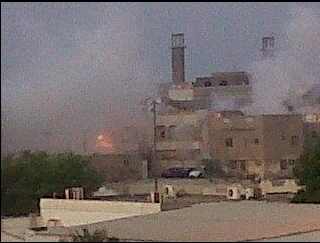
Massive Gas Attack BaniJamra – al Khalifa claims not responsible
August 31, 2011 Add Comments
King Hamad continues to direct violence by his “hired foreign security forces” and mocks his victims with his words of denial
“There are those who were arrested, and investigations proved that they were the victims of individual behavior and were ill-treated in custody,” the king said. “This is not tolerated by God and we do not condone it” – King Hamad bin Isa Al Khalifa.
August 31, 2011 Add Comments
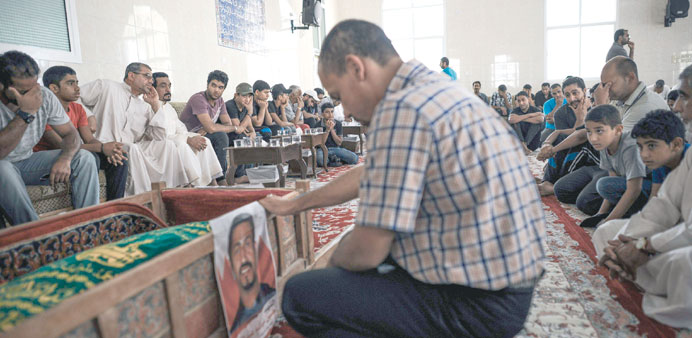
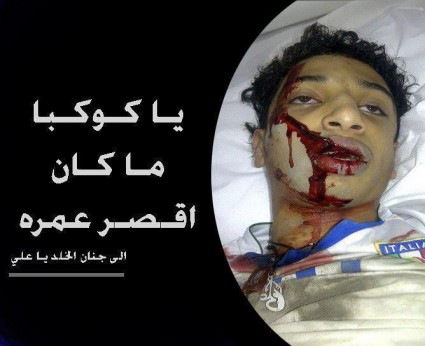
The world bears witness to the murder of 14 year old Ali Jawad by the al Khalifa regime – Justice demands al Khalifa and his criminal security forces be held accountable for their crimes!
August 31, 2011 Add Comments
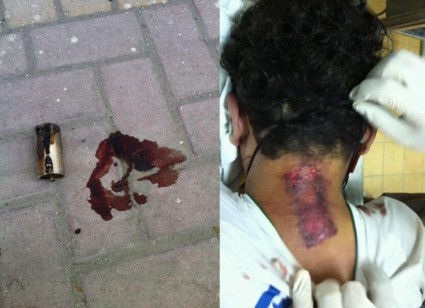
14 year old Martyr Ali Jawad – Murdered by al Khalifa Secuirty Forces, 31 August, 2011
August 31, 2011 Add Comments
14 year old Martyr Ali Jawad’s story
Wednesday, August 31, 2011
Martyr Ali Jawad’s story, #Bahrain
Martyr Ali Jawad story
How the martyr Ali Jawad Al-Shaikh (14 years old) died on 31-08-2011 (the Eid day)
#Bahrain انقل لكم من شاهد عيان ماذا حدث في سترة في الساعة ٨،٤٠ كان الطفل المتظاهر علي جواد في سترة يتظاهر سلميا مع زملائة يتبع
Translation: I’ll recount what happened from an eye-witness, at 8:40 am Ali Jawad was protesting peacefully with his friends in Sitra.
#Bahrain وقام احد افراد الشغب و من مسافة ٥ متر باطلاق مسيل دموع مباشرة في راس الطفل بغرض القتل و ليس التفريق و استشهد حينها ، يتبع
Translation: one of the riot policemen and from 5 meters distance shot a tear gas canister directly to the child’s head in the purpose of killing him not to separate the demonstrators.
#Bahrain و بعدها تم نقلة الى مركز سترة الصحي و لكنة قد فارق الحياة و جائت بعدها قوات الشغب للمستشفى لاختطاف الجثة و اخفاء الجريمة ،يتبع
Translation: after that Ali Jawad was transported to Sitra health centre but he died there, and then riot policemen came to the hospital to kidnap his body to hide the crime.
#Bahrain و رفض الاهالي اعطائهم الجثة و قامت قوات الشغب بالتحقيق مع موظفي الامن يسالونهم من الذي احظر الجثة فنفى علمة فتم اعتقال ٢ منهم ،يتبع
Translation: his relatives refuse to give them the body, and the riot policemen interrogated the hospital security guards and asked them who brought his body, they said they don’t know and then the police arrested 2 of them.
#Bahrain و الان موظفي الامن معتقلين و قد يتعرضو للتعذيب لان القوات تريد منهم اسم من احظر الجثة لكي يعتقلوة و يخفو الشاهد على جريمتهم القبيحة
Translation: and now the arrested security guards may face torture because the police want from them to tell the name of the one who brought the body to arrest him and hide their ugly crime.
August 31, 2011 Add Comments
Bahrain’s foreign staffed Security Forces murder 14 year old boy in illegal use of less-than-lethal weapons provided by West
Bahrain activists blame security forces for death of 14-year-old boy during protest
By Associated Press, Updated: Wednesday, August 31, 5:44 AM
MANAMA, Bahrain — Bahraini security forces clashed with anti-government protesters after Wednesday morning prayers, killing a 14-year-old boy who died after being hit by a police tear gas canister, human rights activists said.
The activists blamed the police for the death of Ali Jawad Ahmad, who was among the crowd of protesters in the oil hub of Sitra.
The Bahrain Youth Society for Human Rights cited witnesses as saying the boy died after being hit by a tear gas canister fired at close range by police during the demonstration.
Bahraini officials confirmed a 14-year-old lost his life but gave no other details on the possible cause of death. A statement by the Interior Ministry said there was no reported police action in Sitra at the time the boy’s death was reported.
It said an investigation was ordered into the death.
Isa Hassan, an uncle of the dead teen, claimed police overreacted when confronted by a small group of protesters after morning prayers marking the end of the holy month of Ramadan.
Hassan said the tear gas was fired from about 21 feet (seven meters) away directly at the protesters.
“They are supposed to lob the canisters of gas, not shoot them at people,” he said at the funeral for the boy. “Police used it as a weapon.”
Bahrain has been gripped by ongoing clashes between police and Shiite-led protesters demanding greater rights and political freedoms in the tiny Gulf nation that is the home of the U.S. Navy’s 5th Fleet.
More than 30 people have been killed since protests began in February inspired by other uprisings across the Arab world.
Shiites are the majority in Bahrain but claim widespread discrimination by the ruling Sunni dynasty. Sunni rulers in the Gulf fear any concessions by Bahrain’s Al Khalifa family to protesters would strengthen the region’s Shiite powerhouse Iran.
Small-scale clashes between police and mostly Shiite demonstrators have become a near nightly event in the tense Gulf nation since authorities lifted emergency rule in June. …source
August 31, 2011 Add Comments
“The revolution has just begun”
“The revolution has just begun”
by Gilbert Achcar – IV Online magazine : IV439 – August 2011
The journal Al-Akhbar interviewed Gilbert Achcar on the current stage of the Arab revolutions in June 2011. The translation and introduction we publish here were published in their English-language edition on 24 August 2011.
Gilbert Achcar, professor at the School of Oriental and African Studies of the University of London, has no qualms calling the popular protests sweeping the Arab world a revolution. They are, in his view, part of a revolutionary process that is taking the region into uncharted territory. The forces active on the ground have changed, and, while the future is unpredictable, there is no going back to the previous situation.
Dima Charif: Different terms have been used to describe what the Arab world has witnessed since the beginning of the year: revolution, uprising, popular revolt, protests, etc. What do you think is the best description?
Gilbert Achcar: There has been much debate about what to call what has been happening, whether we’re talking about the region as a whole or the countries which have seen successes, namely Tunisia and Egypt. In fact, even in those two countries, there are many who object to the use of the word ‘revolution’, as it gives the impression that the regime was overthrown in accordance with the people’s wishes, when in reality it was not. Only its head and its most despotic and corrupt figures were removed. But the backbone of the regime survives. I think the best description of what is happening today is ‘revolutionary process.’ This term also explains what happened in Egypt and Tunisia. There were indeed revolutions there, with mass action achieving undeniable successes, even though they did not bring about overall regime change. They are important victories nevertheless, and the process is continuing in both countries. The Egyptians were right to name their revolution by the date it began, the ‘Revolution of 25 January.’ That was the date of a mass rally, nothing more, not a major achievement as such. But it was the starting date of a process that is still continuing and whose fate is now being contested.
DC: Who is driving these revolutions in your opinion: the marginalized, the national bourgeoisie, the workers?
GA: The situation differs between countries. In Egypt, Tunisia, and elsewhere, there is a broad social front that is opposed to two key features: despotism and corruption. All are united against these two aspects. It is noteworthy that in countries where there is corruption but less despotism, the mass movements have not had the same momentum as when they have been united against both despotism and corruption, as in Egypt and Tunisia. This applies to Morocco, for example. There is no overwhelming sense of political oppression there, as the king instituted some democratic changes and eased some restrictions on freedoms, albeit to a limited extent. Right after the start of the protests he announced a number of reform measures. Thus the protests demanding political change and a constitutional monarchy lack the momentum of Egypt and Tunisia.
In Egypt, Tunisia, and elsewhere, there is a broad social front that is opposed to two key features: despotism and corruption. All are united against these two aspects.The masses suffering from social injustice and poverty took to the streets alongside wealthier social groups more concerned with ending despotism. These social groups are liberal in the political sense. They may favor social reform, and oppose neoliberal economic policies, but their members aspire above all to a degree of democracy and freedom that they believe to be appropriate for our time. They are advocates of modernity.
The bulk of the movement involves a very broad mass of the marginalized, poor, and unemployed who resent the corruption and the social status quo and understand that there is a link between despotism and corruption. Included in this front are the left and the workers’ movements. These were instrumental in Tunisia, as well as in Egypt where the mobilization of the workers’ movements hastened the downfall of Mubarak.
Toppling Mubarak thus brought together a broad spectrum of forces, from far-left to far-right. But once he was ousted, a new alignment of political forces developed, with the Muslim Brothers (MB) and Salafist religious currents supporting the Supreme Council of the Armed Forces (SCAF), and differences emerging with the other forces – leftist and liberal – over the future shape of the state.
DC: What does the US want from the Arab revolutions? Is it behind the train, on board, or ahead?
GA: America certainly isn’t ahead of the train. Washington and its ally the Zionist state were and continue to be extremely concerned about the changes in the Arab world. We know from the Israeli press that they are even concerned for the Syrian regime, because at least it provides a measure of stability. But the US wasn’t entirely surprised by what happened. That was clear from the WikiLeaks cables. They know what is going on, especially regarding the corruption of the regimes. They know they are dealing with despotic regimes, but these are their clients. They have no illusions about such regimes lasting forever, and they know there’s popular dissatisfaction.
[Read more →]
August 30, 2011 Add Comments
Nokia developer forum hacked, following Nokia – Seimens Torture Report
Nokia developer forum hacked, still unavailable
Nokia said e-mail addresses of forum members have been accessed
By John Ribeiro, IDG News Service – August 30, 2011 01:48 AM ET
The community section of Nokia’s developer site was hacked, and some member’s e-mail addresses have been accessed, the mobile phone maker said.
The part of the site has been taken down, and instead delivers a statement from the company about the hack.
Nokia said that during its ongoing investigation of the incident, it discovered that a database table containing e-mail addresses of developer forum members was accessed, by exploiting a vulnerability in the bulletin board software that allowed an SQL injection attack.
The community section of Nokia’s developer site was hacked, and some member’s e-mail addresses have been accessed, the mobile phone maker said.
The part of the site has been taken down, and instead delivers a statement from the company about the hack.
Nokia said that during its ongoing investigation of the incident, it discovered that a database table containing e-mail addresses of developer forum members was accessed, by exploiting a vulnerability in the bulletin board software that allowed an SQL injection attack.
“Initially we believed that only a small number of these forum member records had been accessed, but further investigation has identified that the number is significantly larger,” the statement said.
Nokia did not specify when the site was hacked, though it is likely to have happened last week, according to some reports.
The database table records includes members’ e-mail addresses and, for fewer than 7 percent who chose to include them in their public profile, either birth dates, homepage URL (uniform resource locator) or usernames for AIM, ICQ, MSN, Skype or Yahoo services. Sensitive information such as passwords and credit cards details were not compromised, and the potential fallout of the hack is likely to be limited to unsolicited mail, Nokia said.
After addressing the initial vulnerability, Nokia said it took the developer community website offline as a precautionary measure, while it conducts further investigations and security assessments. The developer community section was still down on Tuesday.
Soon after the hack, visitors to the community pages were taken to a third-party web page containing an image of Homer Simpson, the character from the TV series The Simpsons, and a message, warning the company to patch its security holes, according to reports.
The hack of Nokia’s developer site is the latest in a series of hacks of corporate and government web sites. An April hack on Sony’s PlayStation Network and Qriocity online services forced Sony to close both networks while it rebuilt cyber defense systems. In all, it took two and a half months for the full resumption of service. …source
August 30, 2011 Add Comments
As al Khalifa’s sham BICI Investigation procedes numerous Human Rights Groups continue to Invesitgate and Report abuses
Opinion: Challenging Manama’s narrative
Egregious violations of Bahraini rights have occurred in the wake of the protests.
by Faraz Sanei – August 29, 2011 11:46
NEW YORK — On the afternoon of April 12, plain-clothes security officials arrested Ghazi Farhan, a businessman, in his office parking lot.
They blindfolded and handcuffed him and took him to a detention facility, where officers interrogated him, beat him with a hose, and forced him to sign a confession that he had participated in anti-government demonstrations. Authorities kept Farhan in incommunicado detention for 48 days, and prevented him from meeting with his lawyer and his family to prepare his defense.
Today Farhan is having trouble sleeping. Until recently he shared a two-person cell in Jaw prison with a convicted murderer. On Aug. 6, after his family complained, authorities moved him to another cell. But as recently as July 27, Farhan asked his family to cancel a visit because prison guards were beating and harassing him, presumably to stop his wife from talking about conditions inside the prison.
Farhan’s case is typical of the hundreds of Bahrainis caught up in Manama’s campaign of retribution, which began on March 17. That is when security forces began their massive crackdown, targeting nearly everyone associated, however tenuously, with the anti-government protests in February and March.
It is this calculated campaign of arbitrary arrests, incommunicado detention, serious allegations of abuse in prisons, and show trials before special military courts that is at the heart of the rights crisis in Bahrain today. It is this reprisal campaign that Manama has tried desperately — and some would say successfully — to hide from world attention.
By most accounts, Farhan was not really involved in the protests and was instead busy running his businesses. Perhaps he was arrested because his wife, Ala’a al-Shehabi, was a familiar face at the Pearl Roundabout, the center of anti-government protests and activity for a month. And his father-in-law, Saeed al-Shehabi, is the London-based leader of an opposition group. (On June 21, the special military court sentenced Saeed al-Shehabi, in abstentia, to life in prison, along with seven other prominent opposition leaders and activists.)
On May 30, two days before King Hamad bin Isa Al Khalifa declared an end to martial law, a military prosecutor brought Farhan before a special military court and charged him with two counts of participating in illegal gatherings and one count of spreading false information. Both his wife and his lawyer met with him for the first time since his detention after the two-minute court session ended. On June 9, Farhan had his second court session. The court did not permit Farhan’s lawyer to meet with him to prepare his defense, but the judges did allow him to present three witnesses on Farhan’s behalf.
Twelve days later, on June 21, the court sentenced Farhan to three years in prison. His wife, who reviewed his case file, said the court convicted Farhan based on a two-line forced confession regarding his participation in protests, a Facebook printout with a highlight around the words “the people are demanding their freedom from the government,” and four messages he had sent from his private email to his work account that included YouTube links and pictures of anti-government protests.
Since mid-March, Bahraini authorities have mounted an aggressive public relations campaign aimed at advancing a narrative that focuses exclusively on what allegedly happened during the protest period between Feb. 14 and March 16 — and ignores everything that has happened since.
“Debt Throes” suggested:
How about a story on the world’s biggest soveriegn defaults. What can we learn from them to put the current turmoil in perspective?
Last week’s winner looks to history for lessons on Europe’s debt crisis. Check the membership site in mid-September for a link to completed piece.
Officials obsessively harp on what they claim protesters did, the “human rights” they violated, and the crimes they allegedly perpetrated. Yet the majority of those sentenced by the special military courts were essentially convicted for speaking out against the government. This despite the fact that the crown prince had publicly stated at the time, on several occasions, that the demonstrations at the roundabout were not against the law.
Some protesters may have committed crimes of violence, and those who did should face justice. But most of those arrested, detained and put on trial were, like Farhan, denied a fair trial and are now sitting in prison, awaiting trial or convicted on politically motivated charges. Authorities say they will continue to try some of the detainees in special military courts after King Hamad issued a decree on Aug. 18 allowing these courts to retain jurisdiction over certain criminal cases.
The new decree seems to override an earlier one, issued by King Hamad in late June, which seemingly transferred all cases pending before the special military courts to civilian courts. Human Rights Watch opposes prosecution of civilians in these special military courts and believes that civilians charged with genuine criminal offenses should be tried in an independent civilian court that meets fair trial standards.
The Bahraini government has made some positive steps. An independent international commission of inquiry is looking into human rights violations associated with the period of unrest. Al-Wefaq, the largest legal opposition group, has held several large rallies without interference. And authorities have released a few hundred detainees during the past several weeks, though most are merely out on bail and charges have not been dropped.
But even the positive steps will count for little as long as people like Farhan remain unjustly imprisoned, abused, and deprived of their rights with impunity.
Except for the clearly excessive use of lethal force against peaceful protesters prior to March 17 that left seven protesters and bystanders dead and hundreds of others injured, the most egregious and systematic rights violations occurred in Bahrain after security forces violently suppressed the public protests.
To lose sight of this is to miss the mark on the rights crisis that is unfolding in Bahrain today. And squander the opportunity to provide real justice and accountability for the victims of this campaign of retribution.
Faraz Sanei is a Middle East researcher for Human Rights Watch. …source
August 30, 2011 Add Comments
Bahrain’s Human Rights Abuse Endemic
Special Reports
U.N. still worried about rights in Bahrain
Published: Aug. 30, 2011 at 12:24 PM
GENEVA, Switzerland, Aug. 30 (UPI) — Hundreds of people face military trials and thousands more lost their jobs because of their opposition to Bahrain’s monarchy, the U.N. human rights office said.
Bahrain in early July started a dialogue process meant to examine possible improvements in the political structure. The government earlier received praise for transferring some trials from a military tribunal to civilian courts. Under a series of political reforms announced last month, the prime minister of Bahrain is granted more power over the state’s affairs.
Human rights groups, however, have accused the ruling Sunni minority of using state hospitals as torture chambers and other abuses.
The U.N. High Commissioner for Human Rights in its latest update on the situation in Bahrain said there were at least 264 cases pending before what amounts to a military court. Thousands more are jobless because they were accused of taking part in anti-government protests early this year, the OHCHR adds.
“We are concerned that most of the defendants in these cases may be prisoners of conscience, detained only for exercising their rights to freedom of expression and association,” OHCHR spokesman Rupert Colville said in a statement.
PHOTOS: Protesters in Bahrain clash with police
King Hamad bin Isa al-Khalifa of Bahrain in a customary gesture marking the end of Ramadan said he was pardoning an unknown number of political prisoners and called for the reinstatement of some employees.
“There are those who were charged with abusing us and senior officials in Bahrain, and we today announce that we forgive them as we hope that they understand that abusing us and others in fact offends everyone and achieves nothing,” he said in a statement. …source
August 30, 2011 Add Comments
Bahrain’s authorities strive to muzzle and intimidate the independent channels that cover the violations in Bahrain
Bahrain’s authorities strive to muzzle and intimidate the independent channels that cover the violations in Bahrain
Bahrain is involved in jamming and pressuring on the satellite channels covering human rights condition in Bahrain, such as Al-Jazeera English and Lulu channel.
14 August, 2011 – BCHR
Bahrain Center for Human Rights expresses its concern about the permanent campaigns by the government of Bahrain that muzzle, blur the facts and restrict publishing the information and freedom of media, which have increased in the last years and worsen since the beginning of the brutal repression campaign against the protesters last February and after imposing the state of emergency, that ended in the beginning of June 2011. The latest jamming was on lulu channel, Bahraini opposition channel broadcasting from London, also, pressuring on Al-Jazeera English to prevent re- broadcasting “Bahrain shouting in the dark”, that shows the repression campaign against pro-democracy protesters in Bahrain.
Bahrain Center for Human Rights demands the government of Bahrain represented in the media the following:
• Stop all forms of harassment by the government on the independent media and their crews and allow them to operate and broadcast news about Bahrain.
• Cancel all procedures that would restrict flowing of information and freedom of speech and opinion.
• Release all those who were arrested because they exercise freedom of speech and to deal with the media.
• Bahrain’s government has to restrict with its international obligations and respect for all forms of freedom of expression and publication as provided in the international covenants and treaties.
• Punish all those who are responsible in spreading lies and inciting sectarian and removed them from their offices in the Information Affairs Authority and Bahrain Tv .
• Oblige to codes of ethics on the media and all the international treaties and conventions, especially the International Covenants on Civil and Political, Social and Cultural Rights.
• Give all spectrums of the society the same amount of freedom to express their views about various issues without excluding any category based on the basis of sectarian or ideological or political.
…more
August 30, 2011 Add Comments
al Khalifa regime maintains savage detention of gravely ill medical, Dr. Basim Dhaif
Dr.Ghassan Dhaif wife Letter to all
The situation of detained doctors is very critical.the military courts are back and doctors are still facing serious charges infront of military court despite the royal decree no 62 which diverted all military courts to civil courts.
The health condition of the doctors inside jail is very bad.my husband Dr Ghassan Dhaif is having severe depression,suicidal thoughts,on several antidepressants,now on hunger strike so he is not taking his medications.dr Basim Dhaif is having compartmental syndrome from torture and may be having DVT (deep venous thrombosis).nurse ebrahim demestani is having fracture coccycs(lower back bone)he is in severe pain.dr samaheeji was diagnosed with cerebral aneurysm.dr tooblani is having severe depression.dr deewani is having uncontrolled diabetes.
All are on hunger strike and we ask the medical organizations to interfere immediately to release them and save them .
Thanks for your support
Dr.Ghasan Dhaif Wife
30 August 2011
BAHRAINDOCTOR
…source
August 30, 2011 Add Comments
BCHR Letter to the High Representative Catherine Ashton re Spy Gear Abuses
BCHR Letter to the High Representative Catherine Ashton re Spy Gear Abuses
30 August 2011
Dear Ms. Catherine Ashton,
High Representative of the Union for Foreign Affairs and Security Policy
Greetings
The Bahrain Center for Human Rights (BCHR) is writing to you to express its serious concern about the report published by the American magazine (Bloomberg)[1] showing that European companies sold surveillances technologies known as Spy Gear which have been used in countries that practice human rights abuses against activists and politicians; tracing their calls and messages and then torturing them in violation of human rights laws and treaties signed by these countries. The Kingdom of Bahrain is one of those countries, and as stated in the Bloomberg report, the Bahraini rights activist, Mr. Abdul Ghani Al Khanjar[2] said that he was subjected to systematic torture while in detention from August 2010 until February 2011; his jailers showed him records of mobile phone calls and text messages while he was interrogated with cruel and degrading treatment.
BCHR stands against human rights violations that occur against any person in the Kingdom of Bahrain. We send you this letter urging you to start immediate and impartial investigations on the sales of such equipment and technology to countries that have records of mass human rights violations against activists and politicians, such as Bahrain. We understand that five European MPs have also requested an investigation [3] into the sale of surveillance systems to the government of Bahrain. We support their calls for an investigation into whether this technology has been used in the commission of offences.
BCHR welcomed your condemnation of the violations and brutal repression committed by the Bahrain authorities in dealing with peaceful protesters and their legitimate demands since February. We would like to call on the EU to take further part in preventing violations of human rights in our country. Therefore, we recommend the following steps:
– An investigation into the issues raised by the Bloomberg report.
– Urging those countries and companies developing such technology to stop supplying it to states that do not comply with international human rights norms and practices.
– Sending a letter urging the government of Bahrain to achieve neutral investigations in these cases of torture and the illegal use of technology to track and monitor human rights activists and politicians.
Yours Sincerely,
Mr. Nabeel Rajab
President of the Bahrain Center for Human Rights
Manama – Bahrain …source
August 30, 2011 Add Comments
Obama administration refuses to declassify secret Bush presidency memo that justified warrantless spying
Obama Refuses to Release Bush’s Legal Excuse for Illegal Surveillance
Monday, August 29, 2011 – AllGov – Noel Brinkerhoff
The Obama administration has refused to declassify a secret memo from the George W. Bush presidency that justified the warrantless spying conducted by the National Security Agency (NSA).
Matthew Aid, a writer who’s covered the NSA and surveillance policy, requested a copy of a 2001 Office of Legal Counsel (OLC) opinion by John Yoo that discussed the legal grounds for electronic spying without permission from a special federal court. The Department of Justice mostly denied Aid’s Freedom of Information Act request, saying the redacted information in the OLC opinion was “classified, covered by non-disclosure provisions contained in other federal statutes, and is protected by the deliberative process privilege.”
One thing from the memo that was released by the Justice Department was a brief assertion involving the Foreign Intelligence Surveillance Act (FISA), which dictates when the government can snoop on those deemed a threat to the nation. The statement read that “unless Congress made a clear statement in FISA that it sought to restrict presidential authority to conduct warrantless searches in the national security area—which it has not—then the statute must be construed to avoid such a reading.”
As noted by Steven Aftergood in the Secrecy News blog, some members of Congress have taken exception to the Bush administration’s insistence that FISA does not restrict the White House, unless specifically stated.
“I cannot reconcile the plain language of FISA that it is the exclusive procedure for electronic surveillance of Americans with the OLC opinion saying Congress didn’t say that,” Senator Sheldon Whitehouse (D-Rhode Island) was quoted by the Washington Post in a May 23, 2008 story. “Once again, behind the veil of secrecy, OLC appears to have cooked up extravagant or misguided legal theories which would never survive the light of day.” …more
August 29, 2011 Add Comments
New Report Identifies Organizational Nexus of Islamophobia
New Report Identifies Organizational Nexus of Islamophobia
by Jim Lobe, August 27, 2011
A small group of inter-connected foundations, think tanks, pundits, and bloggers is behind the 10-year-old campaign to promote fear of Islam and Muslims in the U.S., according to a major investigative report released here Friday by the Center for American Progress (CAP).
The 130-page report, “Fear, Inc.: The Roots of the Islamophobia Network in America,” identifies seven foundations that have quietly provided a total of more than 42 million dollars to key individuals and organizations that have spearheaded the nationwide effort between 2001 and 2009.
They include funders that have long been associated with the extreme right in the U.S., as well as several Jewish family foundations that have supported right-wing and settler groups in Israel.
The network also includes what the report calls “misinformation experts” – including Frank Gaffney of the Center for Security Policy (CSP), Daniel Pipes of the Philadelphia-based Middle East Forum (MEF), Steven Emerson of the Investigative Project on Terrorism, David Yerushalmi of the Society of Americans for National Existence, and Robert Spencer of Stop Islamization of America (SIOA) – who are often tapped by television news networks and right-wing radio talk shows to comment on Islam and the threat it allegedly poses to U.S. national security.
“Together, this core group of deeply intertwined individuals and organizations manufacture and exaggerate threats of ‘creeping Sharia’, Islamic domination of the West, and purported obligatory calls to violence against all non-Muslims by the Quran,” according to the report whose main author, Wajahat Ali, described the group as “the central nervous system of the Islamophobia network.”
“This small band of radical ideologues has fought to define Sharia as a ‘totalitarian ideology’ and legal-political-military doctrine committed to destroying Western civilization,” the report said. “But a scholar of Islam and Muslim tradition would not recognize their definition of Sharia, let alone a lay practicing Muslim.”
Nonetheless, the group’s messages receive wide dissemination by what the report calls an “Islamophobia echo chamber” consisting of leaders of the Christian Right, such as Franklin Graham and Pat Robertson, and some Republican politicians, such as presidential candidates Representative Michele Bachmann and former Speaker of the House of Representatives Newt Gingrich.
Other key disseminators include media figures, especially prominent hosts on the Fox News Channel and columnists in the Washington Times the National Review; as well as grassroots groups, such as ACT! For America, local “Tea Party” movements, and the American Family Association, which are behind current efforts by Republican-dominated state legislatures to ban Sharia in their jurisdictions. …more
August 29, 2011 Add Comments
The War on Drugs and the Mexican Movement to End It
The War on Drugs and the Mexican Movement to End It
“It’s a Welcome Escape From the Seemingly Insurmountable Sectarianism that Has Plagued Social Movements for Centuries”
By Quincy Saul – Special to The Narco News Bulletin – August 6, 2011
The forty year anniversary of the war on drugs came and went this summer without any mention of the most significant movement to end it.
The Global Commission on Drug Policy released a report in June with a clear and succinct conclusion: “The global war on drugs has failed.” The US government has now spent about a trillion dollars on this war, but drug consumption has increased and drug-related violence and incarceration have spiraled ever further out of control. Signed by a wide diversity of prominent names such as Paul Volcker, Ernesto Zedillo, Carlos Fuentes and Kofi Annan, the report went on to accuse the United States of “drug control imperialism.”
More than any other country, Mexico is dying from the sins of the war on drugs. As the bottleneck of the drug trade for all of the Americas, almost 50,000 have been killed in drug-related violence in Mexico in the last six years alone, with the numbers of dispossessed and disappeared mounting ever higher. It is not entirely surprising then, that the first mass movement to end the drug war has arisen in Mexico. More surprising is the almost total boycott in the United States and international media of this movement.
The Movement
Seen from the outside, the current movement to end the war on drugs in Mexico began suddenly. The brutal murder of the son of a prominent poet named Javier Sicilia prompted him to write a call to action urging all Mexicans to take to the streets to end the drug war. His voice reached and touched millions. Within days, tens of thousands had filled the centers of forty major cities, calling for the legalization of drugs and the demilitarization of their country.
Popular mobilization has been sustained since then through two major actions involving all demographics of Mexican society. Led by Sicilia, a week-long march to end the drug war from the city of Cuernavaca to the nation’s capital culminated on May 8th when 100,000 people filled the central square of Mexico City. That same weekend, the Zapatista Army of National Liberation led a silent march of tens of thousands out of the mountains, occupying the city of San Cristóbal de las Casas.
Several weeks later, the mobilization continued with a “caravan of solace,” in which tens of thousands more participated. The caravan traveled from Cuernavaca through a dozen major cities, for the first time sharing and organizing the pain which until now most Mexicans have suffered in fear and isolation. The caravan culminated in the infamous Ciudad Juárez. Renowned as the most violent city in the world, the caravan inscribed a fresh, new and indelible chapter in the city’s history. In the words of Antonio Cervantes, a participant in the caravan, on the eve of its arrival, “we are going to occupy Ciudad Juárez peacefully… We are going to fill the most violent city on earth with humanity and desire for life.” The nonviolent occupation of Juarez concluded peacefully with the reading of drafts of a pact which includes demands and a program of action.
[Read more →]
August 29, 2011 Add Comments
The Other Revolution in Egypt: An Interview With Mohammed Abbas of the Muslim Brotherhood
At present, the Narco News Advance Team is in the Mexican Southeast, preparing our coverage of the upcoming second stage of the Caravan of Solace and the movement against the drug war inspired by Javier Sicilia. From September 8 to 18 we’ll be accompanying Sicilia and other family members of drug war victims and martyrs through the states of Morelos, Guerrero, Oaxaca, Chiapas, crossing the border into Guatemala – where Sicilia tells Narco News he plans to offer an apology to the people of Central America for the maltreatment of their immigrants in Mexican territory – then through
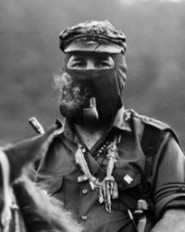
Zapatista territory, and the states of Tabasco, Veracruz, Puebla, the state of Mexico and, finally, in Mexico City. These are lands from where we’ve reported extensively for the past 14 years (11 of them via Narco News) and we can report to you already that there is a palpable excitement among many of the movements in the Mexican South for this upcoming visit, including yesterday’s communiqué from Zapatista Subcomandante Marcos reiterating “total support” for Sicilia and the movement (a statement that ought to be humbling to some who have accomplished far less yet who behave as more-radical-than-thou armchair critics of the world’s first ever mass movement to end the war on drugs).
How many news stories, essays, videos and other reports have you seen about the Egyptian Revolution that “began,” according to many breathless reports, on January 25 of this year and culminated in the February 11 resignation of the three-decade dictator Hosni Mubarak? And how many of those reports spoke in fearsome terms about an organization called the Muslim Brotherhood as if it were some monolithic force aspiring to impose an Iran-style theocracy on the country?
[Read more →]
August 29, 2011 Add Comments
Egypt: How We Did It When the Media Would Not
August 29, 2011 Add Comments
In the mind of the US war on Shia – Shia is Iran
The Revival of Shi’a Militancy in Iraq
By Ramzy Mardini
The U.S. military is required to completely withdraw its forces from Iraq no later than December 31, 2011, in accordance with the bilateral U.S.-Iraq Security Agreement signed in December 2008 by outgoing President George W. Bush and Iraqi Prime Minister Nuri al-Maliki. As Iraq struggles to normalize its institutions and international relations, renewed efforts by various insurgent groups have sought to showcase their influence on the backdrop of the U.S. withdrawal. In late July 2011, a report released by the U.S. inspector general for Iraq reconstruction asserted worsening security conditions as compared to the previous year, and a higher risk for U.S. personnel. Indeed, for the entire year of 2010, the U.S. military suffered 22 fatalities due to hostile fire. This year, and only as of July 2011, 31 U.S. soldiers have been killed in Iraq, mainly at the hands of Shi`a militants backed by Iran.
The severe political impasse in Baghdad, an increasingly frustrated population, and an unpopular and ineffective central government are contributing to anti-regime violence in Iraq, especially among Sunni insurgents such as al-Qa`ida in Iraq (AQI) and the Jaysh Rijal al-Tariq al-Naqshabandi (JRTN) movement. These factors, however, are not underlying the revival in Shi`a militancy in the country. Instead, the fundamental principle driving the unstable environment is the heightened level of uncertainty, both on the local and regional stage. The national debate surrounding the continuance of the U.S. presence dominates the local environment, while the regional factor is driven by the uneasiness ushered in by the upheavals of the “Arab Spring.” In the final analysis, both make available a strategic logic for Iran and its Shi`a proxies to exploit the Iraqi scene in hopes of influencing a particular outcome that favors their interests. …more
August 29, 2011 Add Comments
The Saudi Counter-Revolution
by, Samer Araabi -August 23, 2011
Right Web – Tracking militarists’ efforts to influence U.S. foreign policy
At the end of February 2011, it looked as though the old order was crumbling across the Arab world. Inspired by the self-immolation of a Tunisian street vendor, massive popular demonstrations ousted Tunisian President Zine El Abidine Ben Ali, and Egyptian President Hosni Mubarak was not long to follow. Similar uprisings began to swell in Algeria, Jordan, Bahrain, and Yemen, and the anciens regimes appeared helpless against the rising tide of popular anger and nonviolent resistance.
Saudi Arabia, meanwhile, actively worked to encourage the forces of counter-revolution throughout the region. From Morocco to Bahrain, Saudi financing, support, and intelligence has sought to prevent political turmoil, reinforce existing dynasties, and crush nascent democratic movements before they could reach critical mass. This reactionary tide has been supported by some ideologues in Washington, who worry that Arab democratization would be detrimental to U.S. policy objectives.
Though allowing Saudi Arabia to stifle change and suffocate democratic aspirations within the region may appear to serve U.S. interests in the short term, it will certainly have blowback down the road. At a watershed political moment, the United States has failed to act in accordance with its stated principles, and as a result, popular anger towards Saudi Arabia’s counter-revolutionary campaigns is causing increasing numbers of Arabs to turn against the United States as well. The fallout from Washington’s support for the Arab counter-revolution could haunt U.S. policy for decades to come.
The Wrong Side of History
The reaction of U.S. elites to the wave of Arab democratization has been lukewarm at best. While paying lip service to self-professed ideals of democracy and self-determination, government officials and policy analysts have expressed reservations about the long-term implications of Arab democracy to U.S. strategic interests.
Some pundits, like Daniel Pipes, the neoconservative director of the Middle East Forum, have worried about losing “our bastards” in the Middle East and the damage new regimes could do to themselves and their neighbors.[1] Others have been busy wringing their hands about volatility in energy markets, reduced access to oil and natural gas reserves, and the potential nationalization of corporate holdings.[2] There is little doubt, however, that one of the main strategic concerns is the potential damage that a new power dynamic could inflict on the two key U.S. regional allies: Israel and Saudi Arabia.[3]
Israeli fears have been apparent from the very beginning, which is not much of a surprise considering the anti-Zionist messages emanating from Egypt and Tunisia.[4] Prime Minister Benjamin Netanyahu was visibly distraught over the loss of a key regional ally in Hosni Mubarak, and Israeli entreaties have likely contributed to the lukewarm U.S. response to other uprisings.[5] However, Israel was helpless in stemming the tides of change in Egypt, and initially watched with trepidation as the unfriendly but reliable regime of Bashar Al-Assad has teetered on the brink of collapse.[6] Because of its limited regional reach, Israel has focused much of its energy on the halls of the U.S. Congress, counting on the faithful support of like-minded U.S. think tanks, journalists, and pundits.
The dirtier work of counter-revolutionary action, meanwhile, has fallen to the Saudi Arabian government.
Turning the Tides: Bahrain and the GCC Counter-Revolution
Nowhere has the outsized importance of Saudi interests been clearer than in the Obama administration’s response to the uprisings in the small island kingdom of Bahrain. Despite the apparently democratic, non-sectarian intentions of the protestors, both Riyadh and Washington were quick to play the sectarian card, inaccurately framing the conflict as one between Sunni and Shi’a, rather than between an entrenched regime and disillusioned citizenry.[7] As a result, the United States has significantly stepped back its support for Arab revolutions. “Not only is the U.S.—not to say the rest of the West—effectively deferring to Saudi policy, particularly in the Gulf, but it also appears to be hedging its bets against truly democratic change elsewhere in the region,” says Jim Lobe, Washington Bureau Chief of the Inter Press Service.
By rebranding the protestors as Iran-affiliated sectarian zealots, the Saudi-dominated Gulf Cooperation Council used a shared defense clause as a pretext to militarily assault the democratic movements.[8] On March 14, its Peninsula Shield Force moved thousands of troops into Bahrain in response to a rapidly-escalating protest movement. Despite assurances by Peninsula Shield force commander Mutlaq Bin Salem al-Azima that the military deployment intended to “bring goodness, peace, and love to Bahrain,” video footage and eye witness accounts detailed a grim scenario of mass arrests, beatings, and dozens of deaths.[9]
Though the Arab world, along with much of the international community, was visibly outraged at the invasion, Washington remained hesitant to interfere. At a press conference held during some of the worst violence against protestors, President Obama refused to openly condemn the Saudi offensive, stating instead that “each country is different, each country has its own traditions; America can’t dictate how they run their societies.”[10]
A week later, a spokesperson for chairman of the Joint Chiefs of Staff Admiral Mike Mullen praised the Bahraini government “for the very measured way they have been handling the popular crisis here.”[11] Many Washington insiders applauded the decision to defend the Bahraini monarchy, secure the U.S. naval base, and guarantee stability for the Saudi regime. Michael Rubin, a self-professed “Arab democracy expert” at the American Enterprise Institute, argued that Obama must “preserve the monarchies,” offering only enough reform to guarantee “renewed stability and preservation of regimes that are essential to U.S. national security.”[12]
[Read more →]
August 29, 2011 Add Comments
Iranian HIV doctor Arash Alaei has been released from jail in Tehran – positive sign of more to come???
Iran releases jailed HIV doctor: family source
By Kerry Sheridan (AFP) – 28 August
WASHINGTON — Iranian HIV doctor Arash Alaei has been released from jail in Tehran after spending more than three years behind bars for allegedly conspiring against the regime, his US-based brother said Monday.
“He got released today,” Kamiar Alaei told AFP in an email. “He was among 100 Iranian political prisoners who got a pardon today due to the coming end of the Ramadan religious holiday, Eid al-Fitr.”
Alaei also posted on a statement on his Facebook page, thanking his friends, colleagues and family for their “tireless help and support.”
The two brothers were arrested in June 2008 and accused of communicating with the United States in a bid to unseat the regime of Iranian President Mahmoud Ahmadinejad.
Kamiar, 37, was released from Tehran’s Evin prison earlier this year and returned to Albany, New York where he is completing a doctoral degree in public health.
He and Arash, 42, who was initially sentenced to six years in jail, were in June awarded the Global Health Council’s Jonathan Mann Award for Global Health and Human Rights.
Kamiar said he was detained when he took a summer break from his US studies and went to work in Iran for a few months.
He served two and a half years — a term he told AFP he remembered as “870 days, 20,800 hours” — and said upon receiving his award that he hoped Arash would be released soon because his elder brother had served half his sentence.
The pair are known for their efforts to help drug addicts infected with HIV and improve conditions for sick prisoners, and are regarded as pioneers of AIDS treatment in Iran, where discussions about sex and drugs are often taboo.
Data is scarce about the prevalence of HIV/AIDS in the Islamic republic, but according to UNAIDS there were 5,000-10,000 infections in 2009 and about nine percent of people with advanced HIV infection were being treated with antiretroviral drugs.
The brothers began treating HIV-positive patients in the late 1990s, and they developed a three-pronged program that integrated prevention, care and social support.
This “triangular” approach to AIDS care was first tried in a prison in their hometown of Kermanshah and later became recognized as a best practice model in the Middle East.
The duo were also featured several years ago in a BBC documentary, “Mohammad and the Matchmaker,” which showed how the doctors became closely involved in their patients’ lives and even helped introduce HIV-positive singles seeking marriage.
Physicians for Human Rights helped organize a letter-writing campaign across 80 countries urging the brothers’ release.
Kamiar said his brother ended up serving three years and two months in jail, and was now with their mother at the family’s home in Tehran.
“He is happy since his other political cellmates got released, too,” Alaei told AFP.
August 29, 2011 Add Comments
al Khalifa regime continues to choke off media to silence their crimes against the people of Bahrain
Bahrain: Authorities block website broadcasts live events on Twitter
August 29th, 2011 – BYSHR
Bahraini authorities have blocked a website that broadcasts live events on Twitter (http://twitcam.livestream.com/), after signing up on the site, it provides a link that the user can use to broadcast live events on the Internet and the broadcast is viewed on Twitter pages.
Bahrain Youth Society For Human Rights (BYSHR) believes that blocking the site because that the protesters in Bahrain broadcast live events on Twitter, especially the events of repression of the demonstrators demanding political reforms.
Since the protests in Bahrain (14 February), the demonstrators have used social networking websites extensively to call for the protests in the areas and the authorities have arrested many of the users of those social networking websites. The authorities have dismissed many of the students for expressing their political opinion on those sites.
BYSHR expresses its deep concern about blocking popular websites by Bahraini authorities to prevent exposing human rights violations. …source
August 29, 2011 Add Comments
Security Forces reduced to foreign thugs and flunkie cops, King Hamad directs massive assault on protesters after he forgives them
Bahrain troops attack protesters
Mon Aug 29, 2011 3:13PM GMT
Saudi-backed Bahraini forces have attacked anti-government protesters after the demonstrators took to the streets across the Persian Gulf sheikdom to protest a speech by the Bahraini king.
Thousands of anti-regime protesters took to the streets across Bahrain on Sunday shortly after the country’s King Hamad bin Isa Al Khalifa delivered a televised speech calling for national unity in a bid to bring normality back to the country.
The protesters rejected the king’s decision announced by him during his speech to pardon some of the anti-government protesters detained during the popular uprising in the country.
The anti-government protesters also accused the Bahraini king of ordering the brutal crackdown on the peaceful demonstrations in Bahrain, demanding an end to the rule of Al Khalifa dynasty.
Activists said the protests lasted into Monday morning and that regime forces fired tear gas and stun grenades to disperse the crowds in several regions including Sitra, where several people were also injured by the forces.
During his Sunday speech, the Bahraini king also said that he would “allow compensation to prisoners abused by security forces.”
The Bahraini ruler promised to reinstate employees and students who were dismissed for taking part in anti-regime protests.
He said, however, that the protest-related trials will continue in the tiny Persian Gulf sheikdom.
King Hamad’s remarks come more than six months after the Manama regime launched a brutal Saudi-backed crackdown on protests, killing scores of demonstrators and injuring hundreds far. …source
August 29, 2011 Add Comments
Bahrain tries to wow PetroChem partners in effort to build economic sheild against al Khalifa’s ouster
Top petrochem firm sets up base in Bahrain
Manama: Mon, 29 Aug 2011
Mena Energy DMCC, a major regional petroleum and chemicals products company has selected Bahrain as the headquarters for its new ‘Pörner Bitumen Packing System project in the Mena region.
Following support from the Economic Development Board (EDB), Mena Energy DMCC, has chosen the Bahrain Logistics Zone (BLZ) as the base for its project, with a view to gaining access from Bahrain to Africa, India and Asia.
The project is also expected to create around 40 new job opportunities in the kingdom, as well as potentially increasing cargo and load movements at Khalifa Bin Salman Port.
It has the potential to be a key customer for Bapco which has a strong working relationship with Mena Energy DMCC, as it will allow the development of more efficient bitumen production and transportation.
‘The EDB support for setting up new project by Mena Energy DMCC is part of the overall strategy to increase the role of private sector as an engine for growth,’ said EDB chief executive Shaikh Mohammed bin Essa Al Khalifa.
‘However, it also demonstrates the benefits of doing business in Bahrain with an established infrastructure, offering access to the trillion dollar Gulf market and other international locations as well as wide-ranging commercial and operational benefits.’
‘This key tenancy at the BLZ represents a milestone in the kingdom’s efforts to leverage our position as a multi-modal logistics leader serving the subcontinent, India, Africa and the northern Gulf countries,’ General Organisation of Sea Ports chairman Shaikh Daij bin Salman Al Khalifa.
‘We are seeing an increasing number of regional and international logistics organisations establishing their commercial bases here, and GOP are focused on facilitating this set up process for global companies.
‘Bahrain has not only geographical advantages, our set up costs are also lower than those of other Gulf countries, and the EDB is a unique body that supports and aids foreign investment.’ …more
August 29, 2011 Add Comments