got default, get guns – Obama turns US into Greece weapons whore
The U.S. approved to grant 400 M1A1 Abrams to Greece
October 3, 2011 – Army
According to information of the “Hellenic Defence & Technology” magazine, the U.S. authorities approved to grant 400 M1A1 Abrams tanks to the Greek Army, which will include options between simple refurbishment – worth tens of millions dollars for all the tanks- and upgrading to a higher level of operational capability, with a higher corresponding cost. The relative Letter of Offer and Acceptance (LOA) is expected soon.
Also according to exclusive information of the ‘Hellenic Defence & Technology’ magazine, a Price and Availability letter was sent to U.S. authorities regarding 20 AAV7A1 and a low cost upgrade program for them. This is the first step to cover an operational requirement for 75-100 vehicles.
Additional exclusive details on these requirements as well as for Bradley IFVs, in a forthcoming issue of the ‘Hellenic Defence & Technology’ magazine. …source
October 6, 2011 Add Comments
Urgent plea to world leaders with decency and conscience, please intervene on behalf of Amal Party leadeship
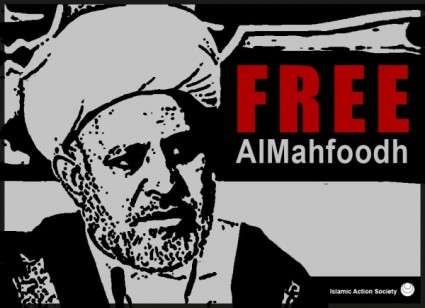
Sign Petition HERE
October 6, 2011 Add Comments
In effort to silence calls for democractic reform, King Hamad continues to hold tortured Amal Party leader, Sheikh Mohammed Ali al-Mahfoodh hostage on bogus charges following Military Tribunal
Daughter of jailed Bahrain opposition leader speaks about his torture whilst in detention
2011/10/06 – by bahrainjdm
A Bahrain military court today jailed Sheikh Mohammed Ali al-Mahfoodh, Chairman of the opposition Amal Party, for 10 years.
Daughter of jailed Bahrain opposition leader speaks about his torture whilst in detention(Ahlul Bayt News Agency) – A Bahrain military court today jailed Sheikh Mohammed Ali al-Mahfoodh, Chairman of the opposition Amal Party, for 10 years.
His daughter Hajar says whilst in detention he was tortured so badly she could barely recognize her own Father. She affirms there is no tangible evidence against him and his case is clear political persecution.
Another 13 members of the party received sentences of between 5 and 10 years at the same hearing.
Sheikh Mohammed Ali was first arrested on 2nd May 2011 but according to Hajar the Security Services had been trying to arrest him since one month before.
Sheikh Mohammed Ali al-mahfoodh
“They broke into my home four times and told me it’s either your husband or your daddy”. On April 2nd police arrested her husband in what she says was a ‘hostage situation’ to secure the arrest of Sheikh Mohammed Ali. In the same incident items were stolen from her home and she says she feared leaving the house in case they returned.
One month later when police finally caught up with Sheikh Mohammed Ali, they also arrested two of Hajar’s brothers at the same time.
By the end of May both brothers and the husband had been released but there was no word about Sheikh Mohammed Ali until the family received a call to say they could visit.
“I felt the man I met wasn’t my daddy. He couldn’t focus, his voice was different and he looked like a different man”. Hajar describes her visit to see her father in prison. “It was only later when I found out he had been tortured using electricity that I understood why he was in this state”.
A few days after the visit Sheikh Mohammed Ali’s first hearing began. The family was allowed to meet him for a few brief minutes after the hearing began and in this time he detailed his ordeal.
“He did not want to give full details, because he was worried about upsetting me, but he told me they wanted to kill him”. He told his daughter that he had been in solitary confinement for 45 days and given no food or water for the first 15 days, twice being admitted to hospital.
“They used mostly electricity and whipping to torture him and he is sure all those investigating were of Jordanian nationality”.
Since that first hearing Sheikh Mohammed Ali has faced a new hearing every 2 weeks until his sentencing today.
Hajar says from a legal point of view, as the defense lawyers pointed out, the trial is biased to say the least. “The defendants do not meet the lawyers regularly and the accused are not allowed to speak for themselves. She also says no tangible evidence of guilt has been offered according to the defense lawyers.
Sheikh Mohammed has been accused of trying to damage the image of Bahrain at an international level. There are 3 main prosecution witnesses, all claiming that he confessed his crime during detention. Something she categorically denies.
On the other hand there are “26 defense witnesses who all prove that there was no wrong doing on the part of the accused”. But in Bahrain the truth counts for nothing.”
Hajar says she fears for the future of Bahrain and thinks that unless real reform happens soon, violence will soon erupt.
“I am a peaceful person and my father is too. All we want is peace and unity in Bahrain. But the situation is getting worse and these military trials are pushing the country to the edge of breaking.”
Notes:
1- All raids happened without any permission from the prosecution.
2- We hope that the human rights organizations interfere in the case of Amal because it is a crime against freedom of speech and freedom of thought, both of which are global human rights according to the decent and creditable constitutions.
3- The detainees did not have the rights to speak during trials.
4- All false confessions have been taken under severe torture. The detainees are forced to confess under torture.
…source
October 6, 2011 Add Comments
..it’s about their future
October 6, 2011 Add Comments
look back at Central America – Contrast Bahrain, MENA
cb editor: The parallels between US policy and conduct in 1980s Central America and the MENA are worth a review. One of the darkest chapters from the 80’s was a Central America dominated by the Regan-Bush phenomena. Iran Contra was the culmination of corrupt and violent dealings by the US in Central America as it backed dictators and supplied covert funding and other support for massive Human Rights abuses. The Democrats took the Republicans to task for such dealings, indictments and convictions of those in the highest part of US government followed. Today in Bahrain and throughout MENA that which was forbidden in Central America is key in open US war profiteering that boasts jobs, domestic economic rescue and improved security as part of a “war on terror”. Perhaps the most interesting aspect to all of this is, the Democrats now Preside and facilitate remarkably similar dealings openly and unashamedly.
Noam Chomsky on Central America
October 5, 2011 Add Comments
Worldwide Moral Outrage forces King Hamad to overturn Medical Convictions – Civilian Courts maynot have any greater Integrity – Free your Hostages King Hamad!
Bahrain Orders Retrials for Medical Workers
By RICK GLADSTONE – Published: October 5, 2011 – NYT
Bahraini Judicial authorities on Wednesday nullified the convictions and harsh prison terms given to 20 medical workers last week by a special security court prosecuting cases arising from civil unrest in the country. The medical workers were ordered released from custody, with new trials scheduled in a civilian court.
Metro Twitter Logo.
Connect With Us on Twitter
Follow @nytimesworld for international breaking news and headlines.
The decision appeared to be at least a tactical retreat by Bahrain’s Sunni monarchy in the face of strong international protests over the punishments, including criticism from the secretary general of the United Nations, Ban Ki-moon. The special court had condemned some doctors and nurses among the defendants to terms as long as 15 years because they had treated demonstrators who were wounded by security forces. Most of the protesters are members of the Shiite majority in the tiny Persian Gulf country.
Bahrain’s attorney general, Ali Alboainain, said in a statement carried by the country’s official Bahrain News Agency that he had studied the judgment that the security court rendered Thursday and had “determined that the cases should be retried before the ordinary courts.”
Citing his department’s authority to ensure “rightful application of the law,” the attorney general also said: “No doctors or other medical personnel may be punished by reason of the fulfillment of their humanitarian duties or their political views. Pending the outcome of the retrials, the accused shall not be detained.”
The security court found that during the height of the protests, the medical workers took over the Salmaniya Medical Complex, Bahrain’s largest public hospital, and used it as a base for antigovernment plots, including the storage of fuel bombs and weapons. The defendants were also accused of stealing medical equipment and “fabricating stories and lies.”
Supporters of the defendants denied those charges and said the medical workers were put on trial simply because they had treated wounded protesters, out of a duty to treat anyone who came to the hospital.
In what seemed a tacit acknowledgment that the special court had denied the defendants their rights, the attorney general said, “By virtue of the retrials, the accused will have the benefit of full re-evaluation of evidence and full opportunity to present their defense.”
The prosecution of the medical workers has become a signature theme in the course of the Bahrain conflict, and a delicate issue for the monarchy, an important American ally and the host to the United States Fifth Fleet’s naval base. Rights groups have accused the monarchy’s security forces of trying to systematically deny medical services to wounded protesters by mistreating and intimidating doctors and nurses.
Physicians for Human Rights, an advocacy group that has strongly criticized the Bahrain government’s behavior in the protests, reacted cautiously to the attorney general’s announcement on Wednesday. “ We are glad for any kind of review of the grossly unjust convictions,” said Hans Hogrefe, the group’s Washington director. At the same time, Mr. Hogrefe said, “ the proof will be in the pudding.”
Mr. Hogrefe said he believed that the attorney general’s announcement reflected a “response to the international outcry.”
He and others also noted that the announcement came as Congress began to evaluate the planned American sale of $53 million worth of weapons to Bahrain, including bunker-busting missiles, night-vision technology and dozens of Humvee vehicles. Human rights groups have written to Congress urging that the deal be blocked because of rights abuses in Bahrain.
Rights groups estimate that since the unrest there began, at least 34 people have been killed, more than 1,400 arrested and as many as 3,600 dismissed from their jobs.
J. David Goodman contributed reporting. …source
October 5, 2011 Add Comments
Arab Spring Over, new Season of Discontent Erupts as Saudi Police Open Fire On Protesting Civilians
Arab Spring Makes An Autumn Return: Saudi Police Open Fire On Protesting Civilians
Submitted by Tyler Durden on 10/05/2011 – ZeroHedge
Today’s news that Greek protesters were back and getting occasionally violent caught nobody by surprise. However what may be unexpected is that not only is the Arab Spring back (almost in time for Christmas) but it is in the bastion of “stability”, not to mention crude oil, Saudi Arabia. As The Independent reports, “Pro-democracy protests which swept the Arab world earlier in the year have erupted in eastern Saudi Arabia over the past three days, with police opening fire with live rounds and many people injured, opposition activists say.” What? Never heard of this before? Yes, amazing how efficient the media veil is when it has an agenda.
Saudi Arabia last night confirmed there had been fighting in the region and that 11 security personnel and three civilians had been injured in al-Qatif, a large Shia city on the coast of Saudi Arabia’s oil-rich Eastern Province. The opposition say that 24 men and three women were wounded on Monday night and taken to al-Qatif hospital.
The Independent has been given exclusive details of how the protests developed by local activists. They say unrest began on Sunday in al-Awamiyah, a Shia town of about 25,000 people, when Saudi security forces arrested a 60-year-old man to force his son – an activist – to give himself up.
Mr Rayah added that “there have been protests for democracy and civil rights since February, but in the past the police fired into the air. This is the first time they have fired live rounds directly into a crowd.” He could not confirm if anybody had been killed.
The biggest loser when this spreads? Why the US of course.
The US, as the main ally of Saudi Arabia, is likely to be alarmed by the spread of pro-democracy protests to the Kingdom and particularly to that part of it which contains the largest oil reserves in the world. The Saudi Shia have been angered at the crushing of the pro-democracy movement in Bahrain since March, with many protesters jailed, tortured or killed, according Western human rights organisations.
Hamza al-Hassan, an opponent of the Saudi government from Eastern Province living in Britain, predicted that protests would spread to more cities. “I am frightened when I see video film of events because most people in this region have guns brought in over the years from Iraq and Yemen and will use them [against government security men],” he said. He gave a slightly different account of the start of the riots in al-Awamiyah, saying that two elderly men had been arrested by the security forces, one of whom had a heart attack.
“Since September there has been a huge presence of Saudi security forces in al-Qatif and all other Shia centres,” he said. Al-Qatif was the scene of similar protests in March, which were swiftly quashed by security forces.
We ask any of our readers who may be in the region (where unfortunately ZH is blocked), to send us video clips of any riots and any and all police intervention whether with or without use of deadly force. …source
October 5, 2011 Add Comments
Some Western leaders “wake-up” to understand al Khalifa regime has become political liability – King Hamad strings his own noose
Bahrain in danger of being ‘Berlin of the Middle East’ – Liam Fox
guardian.co.uk, Tuesday 4 October 2011 13.42 EDT – by Paul Owen
Tory defence secretary warns that Shia protests and Sunni government crackdown will turn nation into dangerous flashpoint
Defence secretary Liam Fox warned at the Conservative party’s conference that Bahrain is in danger of becoming a dangerous flashpoint, a ‘Berlin of the Middle East’. Photograph: Phil Noble/Reuters
Bahrain’s religious divide means it is in danger of becoming “the Berlin of the Middle East”, Liam Fox said on Tuesday.
The defence secretary told a fringe meeting at the Tory conference in Manchester that the Shia protests and Sunni government crackdown in the Gulf nation meant it was becoming a potential flashpoint in the ongoing Arab spring.
“My worry is that if we don’t get a resolution in Bahrain you can see, on a Sunni-Shia front, that it almost becomes the Berlin of the Middle East,” Fox said.
Noting that “we have a lot of our naval assets there”, the defence secretary went on: “We have tried to impress upon the king and the crown prince to embrace reform. If you break, it’s because you won’t bend. There has to be a recognition of respect for human rights, there needs to be economic reform,” and the rights of the Shia majority must be respected by the minority Sunni ruling class.
Fox said he had spent a lot of time trying to get “others in the region” to help encourage the country to reform. “If we can do that it’s a way to unlock some of the other tension in the region.”
Bahraini security forces have made hundreds of arrests recently as part of a crackdown on mostly Shia protesters seeking greater human rights. A court in the small Gulf nation on Tuesday sentenced 26 activists to prison for their part in anti-government protests, bringing to 60 the total number convicted over the past two days.
Fox also emphasised that “the military conflict is not over in Libya”. The National Transitional Council says the war will be won when Muammar Gaddafi’s hometown of Sirte is conquered. Fighting continues there.
“People talk as if it is all over,” the defence secretary said. “We’ve got some way to go to ensure the population are not threatened by the remnants of the Gaddafi regime. There is a lot of work ongoing … Nato will continue the mission as long as necessary.”
The new government may want security assistance and advice on governing during the months to come, “but they may not,” Fox said. “It’s up to the government of Libya to decide how much advice they want … We have been there protecting the population from the Gaddafi regime and its violence so they could determine their own future, not so we can determine it for them.”
Fox was notably hawkish about the threat posed from Iran, which he said was developing a nuclear weapons programme: “We know that.”
He said Mahmoud Ahmadinejad’s government was “a particularly nasty, brutal regime. It has an appalling human rights record that is getting worse … It is willing to export terror … It is developing a nuclear programme no reasonable person can believe is purely for civil use.
“If it was only the first two you could say: ‘Let’s try and manage and adapt.’ This programme will lead us into a very different world. If Iran becomes a nuclear weapons state it would not be very long before Saudi Arabia, Turkey, probably Egypt, would become nuclear weapons states. As I used to say to my patients: you can’t be a bit pregnant. It either is or it isn’t.”
Asked what actions Britain was prepared to stop this, Fox said: “We don’t want to rule anything out.
“We have said all along we do want to get a diplomatic solution … We continue with the process of diplomacy and sanctions, but … our negotiating position has to be that we do not rule anything out, because as soon as we started to do so it would strengthen the hand of the Iranian regime and weaken the chances of any settlement that would stop Iran becoming a nuclear weapons state.”
He called Iran “a major problem for the international community”.
But he was much less bullish about Saudi Arabia. “We have been long-time partners with Saudi Arabia. We have been encouraging them towards reform,” Fox said. “The steps towards reform have been small but welcome … The best way to proceed is not megaphone diplomacy, it’s to talk to our friends … rather than lecturing them from the pulpit, which unfortunately is all too common.”
Without Britain’s relationship with Saudi Arabia, on counter-terrorism especially, “our citizens would be a lot less safe”.
Fox stopped interviewer Peter Oborne when it was suggested the Saudis had “invaded Bahrain” earlier this year. “They didn’t invade Bahrain,” the defence secretary said. “There was a joint GCC [Gulf Co-operation Council] mission that went in at the invitation of the government of Bahrain.”
Fox was also asked whether Tony Blair was “fit for purpose” as the quartet’s Palestinian peace envoy. As many in the audience cried “No!” the defence secretary said: “I’m sure he means well, and I wouldn’t wish that anyone who might assist the process won’t succeed, but given his record as prime minister of the United Kingdom I’m not exactly sure what were the great qualities of Tony Blair that make him an exceptional international statesman.” …source
October 5, 2011 Add Comments
Obama, Clinton fail human decency in Bahrain
Protecting the US-Bahraini relationship
by Cole Bockenfeld – 04 October 2011 – Common Ground
Washington, DC – The United States has maintained a key security relationship with Bahrain since 1947, demonstrated most visibly by the headquarters of the US Navy’s Fifth Fleet located in Manama. As the political situation in Bahrain continues to deteriorate, however, the United States needs to re-energise its diplomatic efforts toward Bahrain, and prioritise real reform and accountability. Failure to do so risks an escalation of violence that could endanger the relationship both parties hold dear.
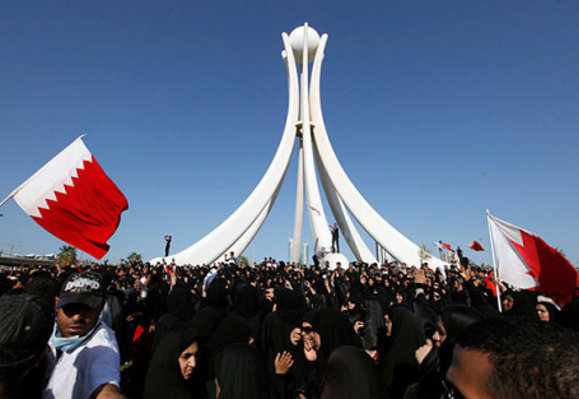
In February, an estimated 300,000 people – more than half of the nation’s citizens – marched for greater political freedom and respect for human rights. In response, the Bahraini government resorted to brute force that has torn the fabric of Bahraini society at its seams.
In the ensuing crackdown, at least six per cent of the Bahraini workforce has been suspended or fired, and at least four out of every 1,000 citizens have been jailed as political prisoners.
Months after the masses have been forced from the streets, the dialogue has largely been declared a farce. Members of the opposition remain in jail (some facing life sentences), and nightly skirmishes between protesters and riot police persist. On Saturday, Bahrain held a second round of by-elections to fill 18 seats in the parliament vacated by the opposition in protest of the government’s crackdown, amid dismally low turnout rates that indicate widespread disillusionment with the political process.
In a troubling development, the US Administration recently proposed a new $53 million arms sale to Bahrain. In response, the Project on Middle East Democracy has drafted a letter to Congress, warning that if the United States “resumes arms sales as though circumstances had returned to normal, Bahrain’s rulers will have no reason” to take “meaningful steps toward accountability or political reform.”
Some American diplomats fear too much pressure on the government could antagonise the monarchy to the point they would call for the Fifth Fleet to leave. At the same time, the chasm between the Bahraini opposition and the government continues to widen as the crackdown continues and trust-building measures appear elusive.
Chances for both sides to return to the negotiating table are slim, but not non-existent.
Given the vital Bahraini-US relationship, the Obama Administration has the opportunity to play a role in moving national reconciliation forward. One change they could use this influence to affect is the withdrawal of Gulf Cooperation Council forces from Bahrain, a presence that emboldens hardliners within the Bahraini government. In addition, the United States could expedite confirmation and deployment of Ambassador-designate Thomas Krajeski, tasked with the top priority of rebuilding trust and returning all parties to the negotiating table in a meaningful and substantive dialogue.
Bahrain also has incentive to take constructive steps because it highly values its image in the international community as a Gulf country that is stable, modern and business-friendly. The government’s reaction to peaceful protests risks its rulers joining a club of regional autocrats bent on preserving power through repression. To preserve its reputation as a country of tolerance and prosperity, the Bahraini government could release its political prisoners, dropping politically motivated charges against them, under the rights afforded them by rule of law.
Along a similar vein, Bahraini security forces could allow peaceful political protests, and the government could call for a process for meaningful accountability of Bahraini security forces involved in the arrest, torture, unlawful detention and deaths of prisoners of conscience. Accountability is a critical building block to restore protesters’ trust in the sincerity of the government’s devotion to reform, and allowing non-violent protests creates a peaceful channel for Bahrainis to express their demands – a much preferred option to the armed conflict that has occurred in Libya, and is quickly developing in Syria.
The government could reinstate all public and government-invested enterprises’ employees dismissed from their workplace for their perceived support of or participation in political protests, as another demonstration that they are willing to negotiate.
Failure by the United States to use its considerable leverage in Bahrain, and failure by Bahrain to reform and live up its desired reputation as stable, modern and business-friendly, would be short-sighted, and jeopardise their valued security relationship. The US Administration and the Bahraini government have a responsibility to act and deliver meaningful reform and accountability, or risk the very scenario both wish to avoid. …source
October 5, 2011 Add Comments
Obama, Clinton gagged in silence by Saudi Oil and job saving Weapons Sale
DUBAI, United Arab Emirates September 29, 2011, 09:31 am ET
DUBAI, United Arab Emirates (AP) — Bahrain’s special security court on Thursday sentenced a protester to death for killing a policeman, and gave doctors and nurses who treated injured protesters during the country’s uprising earlier this year lengthy prison sentences, a lawyer said.
Attorney Mohsen al-Alawi said the tribunal, set up during Bahrain’s emergency rule, convicted and sentenced 13 medical professionals each to 15 years in prison. In addition, two doctors were sentenced to 10 years each while five other medics got 5-year prison terms.
The harsh sentences in the two separate court cases suggest the Sunni authorities in the Gulf kingdom will not relent in pursing and punishing those they accuse of supporting the Shiite-led opposition and participating in dissent that has roiled the tiny island nation.
Earlier this year, the same special court sentenced two other protesters to death for killing a police officer in a separate incident.
Al-Alawi, who was the defense lawyer for several medics, said the 20 medical professionals, who were charged with various anti-state crimes, and the protester who got the death sentence on Thursday can all appeal their verdicts.
A Bahraini rights group identified the protester as Ali Yousef Abdulwahab al-Taweel. The Bahrain Youth Society for Human Rights said that another suspect, Ali Attia Mahdi, was convicted on Thursday as al-Taweel’s accomplice and sentenced to life imprisonment.
The tribunal’s military prosecutor, Yousef Rashid Flaifel, said the two men were convicted of premeditated murder in the killing of an officer in the oil hub of Sitra. In comments to the state-run Bahrain News Agency, Flaifel said the men committed a “terror act” by running over the policeman with two cars. He didn’t say when the incident occurred.
[Read more →]
October 5, 2011 Add Comments
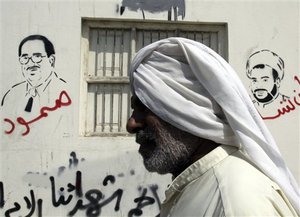
Steadfast, You will not be forgotten!
October 5, 2011 Add Comments
State Terror and violence deployed as a means to counter democracy movement
One woman’s story of the terror stalking Bahrain
29 September 2011 – Ivana Davidovic -WVoN co-editor – BCHR
It was 1.30 am on March 29 this year when a group of armed men broke into the family home of Jalila al-Salman in the Bahraini capital of Manama.
Some were wearing balaclavas and carrying machine guns. Others had batons.
There were at least 15 of them, ransacking the house, shouting at three terrified children whom they found in the bedrooms upstairs.
They barged into another bedroom where a woman was sleeping. “Don’t be afraid, we are the police!” – one of the men shouted as he held her by the neck, pressing a gun to her head.
You would be forgiven for thinking this was a raid on the house of an international terrorist when, in fact, they were after a female teacher.
“I was just in my nightdress. I had nothing to cover myself. I was on my bed and I thought I was dreaming. I could not believe what was going on.
“There were so many men inside that you could not catch a glimpse of the carpet on the floor. I heard a helicopter above my house.”
Al-Salman is still struggling to comprehend what has happened to her in the last six months – until then she was just the vice-president of the Teachers’ Association and a mother of three children under 12.
“They took me outside where there were over 15 cars parked. They wouldn’t let me say goodbye to my children. I was put on a minibus.
“As we were driving away, they told me to look outside the window as I would never see the outside world again. They hit me and called me horrible names. Names I can’t bring myself to repeat.”
Al-Salman is one of the symbols of repression of the Bahraini regime. Her crime – taking part in the recent non-violent protests at the Pearl Roundabout in Manama.
The protesters had had enough of a country run like a private company. Bahrain has had the same prime minister for 42 years and a large majority of the government and the judiciary belong to the ruling Sunni Al Khalifa family.
They are calling for an end to discrimination against Shias and a fairly elected government with genuine power.
Although parliamentary elections were held on September 24, only 13 nominally independent candidates participated. The opposition boycotted it.
On the night of her arrest the army men and the police were doing the rounds, collecting her colleagues from their beds, dragging them apart from their screaming families.
Al-Salman says that the teachers only went to the Roundabout on the sixth day, Sunday 20 March, after some of the protestors had already been injured and killed. As Bahraini citizens, they refused to accept that kind of treatment. …more
October 4, 2011 Add Comments
Nonviolence in protest and demonstration prevails as al Khalfa State violence, murder, torture and detention tries in desperation to maintain grip
9 sentenced in Bahrain court
Published: Oct. 4, 2011 at 10:49 AM – World News
MANAMA, Bahrain, Oct. 4 (UPI) — A Bahrain military court sentenced nine defendants Tuesday to 15 years in prison on charges of kidnapping a police officer.
Gulf News reported the court, set up by King Hamad bin Isa al-Khalifa in March, said the police officer, Mohammad Nayef Falah, was taken blindfolded to the house of one of the defendants, kept there illegally and threatened.
In a separate case, the court also sentenced four defendants to 10 years in prison on charges of assaulting and kidnapping a police officer, Saif Allah Mohammad Ebrahim. The court said he was taken from the Pearl Roundabout to the Samaniya Medical Complex and held.
The court also sentenced six defendants to 10 years and eight to five years on charges including “inciting for the toppling of the political regime through the use of force, promoting illegal rallies, resisting the authorities, civil disobedience, going on strike and disseminating false information to undermine the regime,” Gulf News said.
The verdicts can be appealed, the publication said.
Bahrain’s Sunni monarchy violently cracked down on peaceful protests in the spring, most by members of the repressed Shiite majority.
…source
October 4, 2011 Add Comments
King Hamad Bans Protest
Bahrain bans Shiite ‘human chain’ rally
3-Oct. 2011 – Middle East Online
Head of Public Security says protest could cause traffic bottlenecks, it will be difficult for organisers, security bodies to control human chain outside Al-Wefaq offices in Manama.
DUBAI – Bahraini authorities banned Tuesday the Shiite opposition from organising a demonstration against the jailing of medics and activists over their roles in pro-democracy protests quelled in mid-March.
The head of Public Security, Major General Tareq Mubarak bin Daina, turned down the request by Bahrain’s main Shiite opposition group Al-Wefaq to organise a “human chain” protest in Manama, BNA state news agency said.
The security chief said the location for the protest, which had been planned to take place outside the offices of Al-Wefaq in Zinj, west of Manama, “is not suitable security-wise.”
He said the protest “could cause traffic bottlenecks… while it will be difficult for organisers and security bodies to control the human chain, which might affect the safety of participants and those using the road.”
Bin Daina ordered security measures to ban the event, BNA said.
Al-Wefaq slammed the ban as “illegal” and an “indication of constraints on the freedom of expression,” in a statement posted on its Facebook page.
It said the “human chain for solidarity with the prisoners of conscience and medics” was planned to take place in a secondary road and not on the artery cited in the ban.
On Monday, a Bahraini special court established to try defendants accused of taking part in a month-long Shiite-led protests slapped jail verdicts ranging between 15 and 25 years on 36 Shiites.
The same National Safety Court outraged international human rights organisations by condemning 20 medics to up to 15 years in prison for charges including attempting to overthrow the regime.
It had also sentenced 21 opposition leaders and activists to between two and 25 years over plotting to overthrow the regime in the Gulf monarchy.
Scores of Shiites were also been tried in the quasi-military court, including at least five sentenced to death for killing policemen.
Authorities said in May that 405 detainees had been referred to courts, while 312 were released. …more
October 4, 2011 Add Comments
Democracy seekers held in cages – while real criminals called Security Forces assualt the people
October 4, 2011 Add Comments
al Khalifa Regime becomes more extremist, takes 60 more protesters and activists hostage in expansion of aggression against democracy movement
Bahrain sentences more activists to jail
Twenty-six more sentenced to jail, raising number to 60 in two days, as officials ban opposition “human chain” protest.
Last Modified: 04 Oct 2011 18:38
After months of protests in the island kingdom, more than 400 people were arrested for their participation [EPA]
A Bahraini security court has sentenced 26 activists to prison for their part in anti-government protests, raising to 60 the total number convicted over the past two days in stepped-up prosecutions.
Bahraini authorities on Tuesday also banned the largely Shia opposition from organising a “human chain” demonstration against the jailing of medics and activists.
The official Bahrain News Agency said Tuesday’s verdicts included members of a Shia political group, Al Amal, which was banned by the Sunni monarchy after pro-reform protests began in February.
The three cases involved the alleged kidnapping of policemen and calls to overthrow the Gulf kingdom’s regime during a month of demonstrations, the chief military prosecutor said.
Among those listed was cleric Mohammed Habib al-Muqdad, who was also convicted of inciting attacks on policemen in sermons delivered at Pearl Roundabout, the focal point of the protests against the Al Khalifa dynasty.
In another case, four defendants, including Muqdad, were jailed for 10 years after being found guilty of kidnapping policeman Saifullah Ibrahim and taking him to Pearl Roundabout, “parading him in front of people gathering there and then to Salmaniya Medical Complex to incarcerate him”, BNA said.
They were also guilty of “spreading false news” through different means including “falsifying images and providing them to satellite channels,” it said.
‘Human Chain’
A top security official on Tuesday rejected a request by Wefaq, Bahrain’s main Shia opposition group, to stage a “human chain” protest because the protest “could cause traffic bottlenecks”.
Major General Tareq Mubarak bin Daina, the head of Public Security, said the planned location of the protest was “not suitable security-wise”, and that the safety of those participating and using the road could be affected.
Wefaq slammed the ban as “illegal” and called it a constraint on freedom of expression, in a statement posted on its Facebook page.
It said the protest was planned to take place in a secondary road and not on the main road cited in the ban.
Second day in a row
Tuesday’s verdicts were issued a day after 36 other Shia were jailed up to 25 years in cases related to the month-long protest which was quashed in mid-March and followed by a wave of arrests.
The same National Safety Court outraged international human rights organisations by condemning 20 medics to up to 15 years in prison for charges including attempting to overthrow the regime.
It had also sentenced 21 opposition leaders and activists to between two and 25 years over plotting to overthrow the regime in the Gulf monarchy.
Scores of Shia were also been tried in the quasi-military court, including at least five sentenced to death for killing policemen.
Authorities said in May that 405 detainees had been referred to courts, while 312 were released.
October 4, 2011 Add Comments
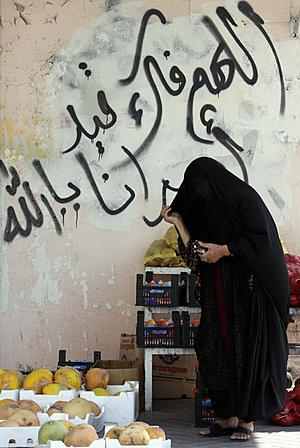
God, free our prisoners
October 4, 2011 Add Comments
Shut it Down
October 4, 2011 Add Comments
Bahrain regime jails Amal Society leadership as hostages in desperate move to retain power
Bahrain jails Shi’ite party members over protests
04 Oct 2011 12:24 – Source: Reuters – By Jason Benham
DUBAI, Oct 4 (Reuters) – Bahrain on Tuesday sentenced 14 members of a Shi’ite opposition party, including its chairman, to up to 10 years in jail for calling for forcible regime change during Shi’ite-led pro-democracy protests this year, state news agency BNA said.
In two separate cases, nine Shi’ites were sentenced to 15 years in prison and four to 10 years for kidnapping two policemen, BNA said.
The verdicts handed out by a military court are the latest in a series of lengthy sentences imposed since June on opposition figures and protesters involved in an uprising in February and March for reforms in the Sunni-ruled monarchy.
Bahrain quashed the protests in March, helped by troops from its Sunni neighbours Saudi Arabia and the United Arab Emirates.
At least 30 people were killed, hundreds wounded and more than 1,000 detained — mostly Shi’ites — during the uprising and a crackdown that has drawn fire from human rights groups.
Six members of Bahrain’s Islamic Action Society (Amal), six members received 10-year jail terms and eight were given five-year terms after being convicted of organising illegal protests, broadcasting false news and rumours, and transmitting pictures abroad which harmed Bahrain’s reputation, BNA said.
Nine members of the Shi’ite group were acquitted.
Amal chairman Sheikh Mohammed al-Mahfoodh, who was arrested with other party members in May, was tortured and held in solitary confinement for 45 days, his daughter said.
“He was tortured with electric shocks and whips,” Hajar al-Mahfoodh told Reuters by phone. “There was no tangible evidence to condemn my father or the others.”
She said the men’s access to lawyers was restricted to just five minutes at each of the six court sessions.
In April, the government said it would dissolve Amal and the main Shi’ite opposition group Wefaq, but held off after public criticism from the United States.
“The courts have looked at many cases of trying to ‘overthrow the regime’ since King Hamad came to power. This shows the situation in Bahrain is not stable and political reform is essential for stability,” Mattar Mattar, a member of Wefaq, told Reuters.
“The cases always lack evidence of physical weapons used on the ground. Is it enough to overthrow the regime just through statements?” he said.
BAN ON PLANNED PROTEST
In a separate statement, Bahrain’s Interior Ministry said it would block a planned “human chain” protest by Wefaq around its headquarters in the capital Manama later on Tuesday.
“This most recent attempt to disrupt life in Bahrain and further inconvenience its citizens follows recent weekend rioting in a popular mall and calls for a traffic blockade aimed at preventing people from reaching their places of employment,” the government’s Information Affairs Authority said.
Wefaq said the protest was intended to take place on the service road in front of its headquarters, not on the highway.
Bahrain faces almost daily protests by Shi’ites, angry over a crackdown in which thousands lost their jobs and over government reform plans that fall short of giving the Gulf state’s elected parliament full legislative powers.
Bahrain handed out life sentences on Monday for 14 Shi’ites for killing a Pakistani national in October and sentenced 22 for terms of up to 18 years for attempted murder, “spreading terror”, and inciting hatred of the regime.
Last week a military court sentenced doctors to jail for between 5 and 15 years for occupying a medical complex, using ambulances to transport protesters, storing weapons and other offences which the defendants denied. (Reporting by Jason Benham; Editing by Alistair Lyon)
October 4, 2011 Add Comments
How long must the cycle of oppression, detention and brutality repeat?
Crackdown in Bahrain Hints of End to Reforms
By THANASSIS CAMBANIS – NYT
This article was published just over one year ago – Published: August 26, 2010
The government said the detainees were suspected of security and terrorism violations, and were not being held for expressing dissident political views.
“The king said 10 years ago we would have freedom,” said Sheik Mohammed Ali al-Mahfoodh, a Shiite cleric and opposition leader who backs an election boycott. “The experiment is now over.”
Many detainees have been held without charge or access to lawyers and family members, human rights advocates said.
MANAMA, Bahrain — The three women in head scarves and black abayas surged into the main atrium of the Seef Mall at 11 p.m. the other night, unfurling a banner outside the Next clothing boutique that read, “It is forbidden to arbitrarily arrest and detain people.”
Three women in head scarves and black abayas surged into the main atrium of the Seef Mall at 11 pm the other night, unfurling a banner outside the Next clothing boutique that read, “It is forbidden to arrest, detain and exile people.”
A picture was taken, and in less than a minute they had dispersed. As they tried to leave, more than a dozen plainclothes and uniformed police officers surrounded one of them, Fakhria al-Singace, pinning her spread-eagled on a cafe table.
“You have no right to arrest me!” she shouted.
“Shut your mouth!” a female officer said as she tried to handcuff Ms. Singace, pulling off her cloaklike abaya in the process. Officers shooed shoppers away and questioned a journalist.
The arrest at one of Bahrain’s busiest late-night spots occurred in the second week of a sweeping crackdown in this island kingdom in the Persian Gulf, a strategic American ally that is home to the United States Navy’s Fifth Fleet and that appears to be reconsidering its decade-long flirtation with reform.
Contentious parliamentary elections, in which the Sunni governing family could lose some power to the restive Shiite majority, are scheduled for Oct. 23. Bahrain’s rulers worry that tensions between the West and Iran could provoke instability here, partly because of the close ties between the Shiites and Iran, and partly because of the American naval base, though Bahrain has said it will not allow any attack on neighboring countries from its soil.
Initially, the arrests seemed to single out high-profile Shiite political and human rights leaders, but by Thursday the number of detainees had swelled to 159, and appeared to include many young men not known as activists.
The government said the detainees were suspected of security and terrorism violations, and were not being held for expressing dissident political views.
“The king said 10 years ago we would have freedom,” said Sheik Mohammed Ali al-Mahfoodh, a Shiite cleric and opposition leader who backs an election boycott. “The experiment is now over.”
Many detainees have been held without charge or access to lawyers and family members, human rights advocates said. Local Web sites — blocked this week by the government but accessible through proxy servers — chronicled clashes with riot police officers and allegations of torture, supported by photographs circulated almost instantaneously by BlackBerry.
Supporters of the government have been clamoring for tough action all year. “The only thing the government did wrong was that it went too easy at first,” said Jamal Fakhro, a member of the Shura Council, a body appointed by the king to limit the power of the elected Parliament. “The government has taken hard measures to reinstate security and stability. The people want order.”
Around 3 a.m., at the same time that Ms. Singace was being questioned at the Sanabis police station, Mr. Fakhro received a picture on his BlackBerry of her hoisting the protest banner.
The government said this week that it would no longer tolerate unrest among the Shiite majority, who make up about two-thirds of the population but are barred from many government jobs and face a chronic housing shortage.
Detainees can be held in secret for 15 days under Bahrain’s anti-terrorism statutes, which are applied to people who criticize the government or take part in riots and tire burnings.
Those convicted of compromising national security or slandering the nation can be deprived of health care and other state services, the government said.
“The reform project leaves no excuse or justification, whatsoever, to illegally express opinions that harm the nation,” Deputy Prime Minister Ali bin Khalifa al-Khalifa said.
Bahrain’s royal family ruled under a state of emergency until the current king, Sheik Hamad bin Isa al-Khalifa, took power in 1999. He created a Parliament, and his security forces disavowed torture.
The kingdom beefed up its security forces with naturalized Sunnis, who are housed in brand new subdivisions in the island’s interior. Shiite opposition groups estimate that 65,000 to 100,000 Sunnis were added to voter rolls in the last decade as part of what they say was sectarian gerrymandering.
“If the Shias took control of the country, they would pop out one eye of every Sunni in the country,” said Amed Abdallah al-Boainain, 21, a resident of Askar, a coastal settlement for Sunnis employed by the security services and the royal court. Two of his brothers work for the police, and he is applying to join them.
Opposition leaders say the government is using a small number of acts of vandalism to fan public hysteria and justify taking down political rivals.
“The government wanted only decorative democracy,” said Khalil Ibrahim al-Marzook, a member of Parliament from the opposition Shiite party Al Wefaq. “Now it is hijacking everything.”
Allegations of torture and police brutality circulate daily. A 23-year-old man nicknamed Abu Maryam showed marks on his ankles and feet, which he said were struck with hoses when he was interrogated about tire burnings.
Still, Shiite youth are continuing to set the fires that so frustrate the government, burning electricity pylons, wiring and traffic lights as well as tires. On a recent night, one 24-year-old said the crackdown would only intensify Shiite anger. He spoke on condition of anonymity because he takes part in the nightly operations, posting photographs of burnings and clashes to opposition Web sites.
“We aren’t provoking violence,” he said. “All we do is burn tires. We don’t hurt anybody. The government won’t give us permits to protest peacefully.”
Shiite clerics and Wefaq leaders have condemned such acts but have rallied the anger of constituents against the government, which they maintain treats Shiites as second-class citizens.
This year, opposition politicians united across sectarian lines to investigate official corruption. Sunni and Shiite legislators collaborated on a report that accused the royal family of illegally appropriating one-tenth of Bahrain’s scarce public land.
Opposition leaders have also accused the United States of turning a blind eye. “Bahrain is important to the United States for security issues,” the American ambassador, J. Adam Ereli, said in a telephone interview. “But that doesn’t mean we don’t raise human rights issues as well.”
The crackdown began on Aug. 13, when the opposition leader Abduljalil al-Singace was arrested after returning from a conference in London, where he criticized Bahrain for rights violations. The arrests of three other prominent Shiite activists followed, and his sister Fakhria was later detained at the Seef Mall.
Thirteen days after Mr. Singace’s arrest, around midnight on Thursday night, his lawyer was allowed to see him for the first time, Mr. Singace’s daughter Zahra said. The public prosecutor had not yet brought any charges.
“The government is using anti-terrorism laws, but only against opposition members and human rights activists,” said Nabeel Rajab, director of the Bahrain Center for Human Rights. “Bahrain should be in the Guinness Book of World Records. This is a country that has discovered 20 supposed coup attempts in the last 20 years.”
This article has been revised to reflect the following correction:
Correction: September 16, 2010 …source
October 4, 2011 Add Comments
Bahrain: Deteriorating human situation as leaders and doctors jailed
Bahrain: Deteriorating human situation as leaders and doctors jailed
Bahrain Freedom Movement – 02/10/2011
The martyrdom of Jaffar LutfAllah, 74, from Abu Saibe’ village on Friday 30th September has enraged the people of Bahrain and called on the international community to take serious actions to stop the onslaught by Saudi and Al Khalifa forces on the country. Mr LutfAllah had inhaled large amounts of chemical gases fired by the regime’s security forces on Sunday 18th September and went into coma. He was taken to hospital and passed away 12 days later.
The family described in detail the crime to the Bissiouni committee supposedly investigating the crimes committed by the Al Khalifa against the people, but it failed to take serious action. The attack happened when the regime’s forces attacked a peaceful protest near the entrance of the village with large amounts of chemical and tear gases. It has now been established that those forces often throw gas canisters inside people’s homes where the effect of the gases become more lethal in confined spaces. This brings to four the number of martyrs in September. The earlier martyrs are: Ali Al Sheikh, Jaffar Hassan Yousuf and Sayyed Jawad Sayyed Ahmad.
Meanwhile it has been reported that the health of both Abdul Wahab Hussain and Dr Abdul Jalil Al Singace have deteriorated as a result of hunger strike and ill-treatment by the regime’s torturers. Today is the eighth day of the strike. The leading figures who had been incarcerated in Al Khalifa jails since the Saudis invaded Bahrain in March had gone on hunger strike to protest the vicious attacks on women that had taken place last week. News from inside the jail have confirmed that the hunger strikers have been severely punished in recent days. They have been denied medical care which is greatly needed as most of them suffer various illnesses due to relatively old age and ill treatment. More than 30 women had been arrested, shackled and thrown on the street before being taken to torture cells. Images of women, handcuffed and scattered on the roads had cause enormous anger and pain among the people who, unlike the Al Khalifa, hold women at high esteem and respect. Senior religious scholars had also staged a protest against the ill-treatment of Bahraini women by the Saudi-backed Al Khalifa forces. A rally was held on Thursday by Bahraini women to protest this crime and was addressed by former women hostages including the poet, Ayat Al Qurmuzi.
On another level the international community has been outraged by the death and lengthy prison sentences passed by the military court against a large number of Bahrainis. On Wednesday 28th September the Saudi and Al Khalifa clans, through their military court, confirmed the earlier prison sentences passed against the leading figures. Eight were given life sentences and 14 were given prison sentences ranging between 5 and 15 years. On Thursday 29th September, 20 doctors were sentenced to lengthy prison sentences. Most were given 15 years and the rest five to ten years. The doctors were released two weeks ago in response to international pressures only to be charged and summoned by the military court to serve their jail terms. The American President, as usual, expressed “concern” at these sentences while the British Foreign Secretary condemned them. Irish doctors who had staged hunger strike last month in support of Bahraini doctors, are planning to lobby the American professional bodies to take action in support of these victims whose main crime was performing their duties and treating the victims of the vicious attacks by the Saudi and Al Khalifa forces in March.
The Saudi and Al Khalifa forces have continued to arrest more Bahrainis. Among the latest are seven from Bilad Al Qadeem, arrested on Friday 30th September: Abd Ali Hayat, his daughter, Fathiya and two sons: Jassim, Mohammad . Three brothers were also arreste; Ahmad Al Madani and his two brothers; Hussain and Abdulla. Demonstrations have continued in various parts of the country. Last night the people of Dair took to the streets but were severely attacked by hooded members of the Death Squads when they reached Zakariya Al Ahsiri Square.
Bahrain Freedom Movement
2nd October 2011
October 4, 2011 Add Comments
We are all ‘concerned’, words without Actions are but meaningless blather, time for Nations to stop al Khalifa’s travesty of justice, trampling on democracy and contempt for Human Rights
International concerns over sentencing activists and 20 medical professionals by the military court in Bahrain – BCHR
US Statement on the sentencing of 20 medical professionals by the National Safety Court in Bahrain
We are deeply disturbed by the sentencing today of 20 medical professionals by the National Safety Court in Bahrain. We understand that the cases can be appealed and transferred to a civilian appellate court. We continue to urge the Bahraini Government to abide by its commitment to transparent judicial proceedings, including a fair trial, access to attorneys, and verdicts based on credible evidence conducted in full accordance with Bahraini law and Bahrain’s international legal obligations. …more
October 3, 2011 Add Comments
Months later, harsh and unjust sentences previal as torturous al Kahlifa’s regime remains unchecked by it’s Western Democratic Allies
Bahrain: Activist Bears Signs of Abuse
Concerns About Ill-Treatment in Military Court Hearings for 14
May 10, 2011 – Human Rights Watch
(Washington, DC) – A prominent rights activist who was active in Bahrain’s pro-democracy street protests appeared before a special military court on May 8, 2011, bearing visible signs of ill-treatment and perhaps torture, Human Rights Watch said today.
The activist, Abdulhadi al-Khawaja, was one of 14 defendants, most active with opposition political movements, charged with attempting to “topple the regime forcibly in collaboration with a terrorist organization working for a foreign country.” His wife and daughter spoke with him briefly after the court session, the first time they had been allowed to see him since he was arrested and badly beaten on April 9. They observed multiple facial injuries, and he told them he had four fractures on the left side of his face, including one in his jaw that had required four hours of corrective surgery.
“It appears that Abdulhadi al-Khawaja’s jailers tortured him during the month they held him in incommunicado detention,” said Joe Stork, deputy Middle East director at Human Rights Watch. “Torture or ill-treatment is a serious crime, and Bahraini officials who did or authorized this treatment need to be held accountable.”
Human Rights Watch has documented the routine use of torture by Bahraini security officials during similar interrogations in political and security-related cases.
The National Safety Lower Court postponed resuming the trial until May 12 to allow defense lawyers to meet with their clients, and in some cases to appoint their own lawyers. The case was brought by the military prosecutor, and a military judge presides over the sessions. Bahrain’s police and military have operated under martial law, termed a “state of national safety,” since March 15.
The 13 defendants who appeared before the special court with al-Khawaja are Abd al-Wahab Hussain, Ebrahim Sharif, Hassan Mushaima, Abd al-Jalil al-Singace, Mohammed Habib al-Saffaf (al-Moqdad), Saeed Mirza Ahmed, Abd al-Jalil al-Moqdad, Abd a-Hadi Abdullah Mahdi Hassan, Al-Hurr Yusif Mohammed, Abdullah Isa al-Mahroos, Salah al-Khawaja, Mohammed Hassan Jawad, and Mohammed Ali Ismael.
Seven others being tried in abstentia in the same case are Akeel Ahmad al-Mafudh, Ali Hassan Abdullah, Abd al-Ghani al-Khanjar, Saeed Abd al-Nabi Shihab, Abd al-Rauf al-Shayeb, Abbas al-Umran, and Ali Hassan Mushaima. Several are in hiding, presumably in Bahrain, while others have been living abroad.
Prior to the May 8 court session, Bahrain’s military public prosecutor, Col. Yusif Rashid Feleyfel, had formed an investigative committee composed of several public prosecutors who questioned the 14 suspects, the state-run Bahrain News Agency (BNA) announced.
Prosecutors have accused the defendants of a variety of national security crimes under Bahrain’s 1976 Penal Code and the 2006 Counterterrorism Law. These alleged crimes include “organizing and managing a terrorist group for the overthrow and the change of the country’s constitution and the royal rule,” “seeking and correspond[ing] with a terrorist organization abroad working for a foreign country to conduct heinous acts” against Bahrain, funding a foreign terrorist organization, insulting the army, “broadcasting false news and rumors” that threatened public security, inciting sectarianism, and organizing and participating in rallies without having obtained the necessary permits.
“Some of these charges, like insulting the army, should not be crimes at all, and it looks like at least in Abdulhadi-al-Khawaja’s case the authorities have tried to beat a confession out of him rather than come up with evidence to support these charges,” Stork said. …more
October 3, 2011 Add Comments
Mr. Secretary-General Ban Ki-moon the moral high road in Bahrain demands tangible actions against the al Khalifa Regime not more hollow words
Bahrain: UN voices concern at sentences given to medical staff, activist
Rupert Colville, spokesperson for the UN High Commissioner for Human Rights (OHCHR)
30 September 2011 –
Secretary-General Ban Ki-moon and the United Nations human rights office today voiced concern at the harsh sentences handed down this week by a court in Bahrain to medical professionals, teachers and others as a result of pro-democracy protests earlier this year.
The sentences range from three years’ imprisonment to the death penalty, Rupert Colville, spokesperson for the Office of the UN High Commissioner for Human Rights (OHCHR), told a news conference in Geneva. The Court of National Safety, effectively a military court, also upheld the sentences of 21 others.
“For such harsh sentences to be handed down to civilians in a military court with serious due process irregularities raises severe concerns,” said Mr. Colville, who noted that the court is headed by three judges, all of whom are appointed by the chief of the Bahrain Defence Force, and cases are prosecuted by military public prosecutors.
Mr. Ban voiced concerns about due process irregularities in a statement issued by his spokesperson.
“The Secretary-General calls for the release of all political detainees and reiterates his appeal to the Bahraini authorities at the highest level to ensure the application of due process and respect for international human rights norms,” the statement said. “This will contribute to conditions for national dialogue, reconciliation and reform as sought by all the Bahraini people.”
The World Health Organization (WHO) also spoke out today, with a spokesperson stressing that health-care workers must be able to carry out their duty to treat injured people, regardless of their political affiliation, and even in times of conflict.
Fadéla Chaib told reporters that health-care workers should never be punished for doing what is morally and ethically required, and that medical facilities must also be protected.
OHCHR understood that defendants have had limited access to lawyers and that lawyers had insufficient time to properly prepare the defence of their clients in most cases. Also, the court has not been investigating torture allegations and does not permit recording of the proceedings, all of which caused serious concern.
“We call on the Government to ensure that every detained person is charged with a recognizable criminal offence and has enough time to prepare a defence case,” said Mr. Colville.
The Government, which has been has engaged in a violent crackdown against protesters calling for greater democracy, has announced that all cases will be referred to civilian courts in October.
While OHCHR welcomes this announcement, it said that it is unclear how appeals by those who have been convicted in military courts will be handled in the civilian courts.
The Office has spoken out repeatedly in recent months over harsh sentences issued by the court against protesters with charges ranging from participating in an illegal gathering, or expressing hatred of the Government, to actual crimes such as murder and destruction of property. …source
October 3, 2011 Add Comments
Bahrain regime beligerent and harsh sentences against Medicals tip of iceberg in abuses
October 3, 2011 Add Comments