Post Colonial Bahrain and it’s legacy of the ruling al Khalifa regime
Special Report Bahrain: British Protectorate, Close Ally
Janet Salmon reviews the deep-running links between Britain and the Bahraini regime, and provides an update on the situation in the country, as the persecution of pro-democracy doctors and activists continues.
The Background
The Khalifas migrated from Najd to Kuwait in the early eighteenth century and are members of the Utub tribe. Hamad bin Isa Al Khalifa proclaimed himself King of Bahrain in 2002. About half of the Cabinet positions since 2010 have been held by members of the Khalifa family. The Prime Minister, the king’s uncle, Khalifa bin Salman al –Khalifa has been the un-elected Prime Minister since 1971.
Britain concluded a treaty with the Khalifas in 1820, granting them the title of ‘Ruler of Bahrain’. The 1861 Perpetual Treaty of Peace and Friendship was revised in 1892 and 1951. Ian Henderson was recruited by the British in 1970s to establish the security regime and only retired when the EC condemned his use of torture in 1998.
Britain signed similar treaties with the other Gulf Princes. Rulers can’t dispose of territory other than to the U.K., nor can they develop foreign relationships without ‘our’ consent. In return the U.K. will protect these Princes from attack by sea or land.
Why is this relevant today?
The majority Shiite population have campaigned for democracy since 2006. The Khalifas usually arrest the leaders and activists and then offer a Royal Pardon.
In 2011 the demonstrations were so huge, the Saudis and UAE sent in 1600 troops. 400 citizens are in prison for taking part in peaceful pro-democracy demonstrations. 208 have been sentenced, including 81 last week. They went through military courts with little access to lawyers or any sort of legal defence, receiving sentences of 10 years to Life.
Politicians and Lawyers who lost their appeal on 28th October include:
– Hassan Mushaima, 63, Secretary General of Haq. LIFE.
– Ebrahim Sharif, 53, Secretary General of Waad. LIFE.
– Abdul Wahhab Hussein, 57, Spokesperson, Al Wafa. LIFE. Heart problems.
– Dr Abdulijalil Al Singacem, 49, Board Member, Haq and Head of Human Rights. LIFE. Paralysed
– Abdul Hadi Alkhawaja, 50, prominent human rights lawyers, ex-President of Bahrain Centre for Human Rights and Frontline M.E. co-ordinator. LIFE
– Mohammed Hassan Mohammed Jawad, 63, well-known human rights lawyer who campaigns for prisoners’ rights. 15 YEARS.
40 prisoners, including Mushaima, Sharif, Hussein and Alkhawaja are currently on hunger strike to demand the freeing of the ladies jailed for 45 days for demonstrating. The regime is providing no doctors to monitor their health.
One of the hunger strikers, Mr Sharif, is moderate, speaks well and has Shia and Sunni followers. This has made it difficult for the Government to divide his supporters into two camps. He ran for election in 2010 and would have won had the regime not packed his seat with soldiers’ votes and votes of recently naturalised immigrants.
Shiite Clerics have also been persecuted: Mohammed Al Miqdad received Life and Abdullah Isa Al Mahroos, 15 years. A noteworthy case is that of Mr Al Guraifi, who’s been so severely tortured that he’s partly paralysed and can’t speak. His family couldn’t locate him for 6 months until Mr Kaled of The Independent Commission visited him on 15th July. He’s now in the Suleimaneya Medical Centre but needs to go abroad for urgent treatment.
King Hamed Al Khalifa has said all civilians will be tried in civilian courts. It is not clear if all military cases will also be re-evaluated in the civilian courts. Cases that have gone to Appeal can go to the Court of Cessation which focuses on the fairness of the legal procedures, not the sentences themselves.
The U.N. Secretary General, Ban Ki-moon, called for the release of all political prisoners on 30th September 2011. He stated that “the Bahraini authorities at the highest level” must ensure “respect for international human rights norms.” The World Health Organisation issued a statement declaring that “Health care workers must be able to carry out their duty to treat injured people, regardless of political affiliation and in time of conflict. They should never be punished for doing what is morally and ethically required.”
Catherine Ashton, the EU’s High Representative for Foreign Affairs expressed, on 6th October 2011, her “deep concern about the recent trials of civilians in Bahrain’s courts of National Safety. Harsh prison terms have been re-confirmed. These sentences risk exacerbating tensions in Bahrain,” before calling for “dialogue between the regime and the opposition as the only way to promote national reconciliation. The EC is ready to extend support.”
An International Campaign helped to release the medics and get thei cases moved to civilian courts. However, this campaign must continue until all prisoners are released and negotiations take place.
Contact your M.P. and The Bahrain Minister for Health, and sign the new Global Petition: HERE
October 12, 2011 Add Comments
Elected Government is Solution to Impasse
Bahrain opposition demands elected govt
(AFP) – 9 hours ago – October 12,2011
DUBAI — Bahraini opposition groups called in a new declaration on Wednesday for an elected government and for ending discrimination against the Shiite majority in order to break the political stalemate.
In “The Manama Paper”, a document described as Bahrain’s “path to freedom and democracy,” the five groups, including the largest Shiite formation Al-Wefaq, called for restructuring the political system while “preserving the monarchy.”
“The reality is that Bahrain resembles any non-democratic country; it is a copy of (ousted) Zine El Abidine (bin Ali’s) Tunisia, (deposed Hosni) Mubarak’s Egypt, or (embattled President) Ali Abdullah Saleh’s Yemen,” said the document, presented at a press conference.
Nearly seven months after a deadly crackdown on a month-long pro-democracy protest, the groups repeated their demand for “an elected government” in the tiny island nation that is ruled by the Al-Khalifa Sunni dynasty.
King Hamad’s uncle, Prince Khalifa bin Salman, who is widely despised among the Shiites, has been prime minister for 40 years.
The list of demands also includes “a fair electoral system,” redrawing constituencies to guarantee better representation and “a legislative authority with a single chamber that would have exclusive legislative, regulatory, financial and political authorities.”
In addition to the elected chamber, the current parliament also has the all-appointed Shura Council, which can override legislation from the lower chamber.
A chief complaint of the opposition is the naturalisation of foreigners “on political grounds,” suspected as being an attempt to change the demographic balance in favour of the Sunnis.
The document demanded an end to this policy as well as reversing “all kinds of tribal, sectarian and political discrimination.”
It also called for a international guarantees for a “genuine dialogue” after the opposition pulled out in July of a high-profile national dialogue called for by King Hamad to discuss reforms in the kingdom.
“We call upon the international community to support the reformists within the government and the removal of the extremists from the political scene through political means,” the statement added.
Authorities say 24 people, including four policemen, were killed in a month of unrest. The opposition puts the death toll at 31. …source
October 12, 2011 Add Comments
Shamelss Weapons Sales line the Pockets of US Companies, supports trampling of Human Rights and Crimes Against Humanity
U.S. Defense Firms Make Billions from UAE and Bahrain Dictatorships
Sunday, June 12, 2011
Tiny oil-rich sheikdoms of the Persian Gulf have been great customers for U.S. defense contractors, which have enjoyed arms deals worth billions of dollars from the region.
In order to become a stronger military presence in the Gulf and challenge potential threats from Iran, the United Arab Emirates (UAE) has made huge military and defense investments. American defense companies have been the beneficiaries of this effort by the UAE, which was the largest foreign purchaser of U.S. arms in 2009.
But the deals began before that. In 2008, Raytheon agreed to sell $3.3 billion in Patriot missiles to the UAE.
This year, the company is working on another billion-dollar deal involving the Theatre High Altitude Defense (THAAD) system in partnership with Lockheed Martin.
Other UAE agreements include Boeing selling four C-17 aircraft, Lockheed Martin delivering 12 C-130 transport planes and General Atomics Aeronautical Systems making its first sale of the Predator drone to a foreign buyer: the UAE.
In addition to the UAE, Bahrain has opened its wallet to U.S. arms merchants, buying $200 million in military equipment in 2010—only months before the government began cracking down on protesters fed up with the country’s authoritarian rule…with the help of 500 police from the UAE. The sales to the Bahraini government included aircraft, military electronics, assault weapons, and rifles.
-Noel Brinkerhoff …source
October 12, 2011 Add Comments
Scandalous – DOJ must be held accountable for reckless fabrication to terrorize Americans as pretext to Israel-Saudi attack against Iran – Obama uses Bushian lies and methods that justified war in Iraq
U.S. Accuses Iranians of Plotting to Kill Saudi Envoy
By CHARLIE SAVAGE and SCOTT SHANE – October 11, 2011 NYT
WASHINGTON — The United States on Tuesday accused Iranian officials of plotting to murder Saudi Arabia’s ambassador to the United States in a bizarre scheme involving an Iranian-American used-car salesman who believed he was hiring assassins from a Mexican drug cartel for $1.5 million.
The alleged plot also included plans to pay the cartel, Los Zetas, to bomb the Israeli Embassy in Washington and the Saudi and Israeli Embassies in Argentina, according to a law enforcement official.
The plotters also discussed a side deal between the Quds Force, part of Iran’s Islamic Revolutionary Guards Corps, and Los Zetas to funnel tons of opium from the Middle East to Mexico, the official said. The plans never progressed, though, because the two suspects — the Iranian-American and an Iranian Quds Force officer — unwittingly were dealing with an informant for the Drug Enforcement Administration, officials said.
Attorney General Eric H. Holder Jr., who announced the murder plot at a news conference in Washington, said it was “directed and approved by elements of the Iranian government and, specifically, senior members of the Quds Force.” He added that “high-up officials in those agencies, which is an integral part of the Iranian government, were responsible for this plot.”
The charges heightened tensions in an already fraught relationship between Iran and the United States.
The Iranian ambassador to the United Nations, Mohammad Khazaee, said his nation was “outraged” about the accusations. In a letter to Secretary General Ban Ki-moon, Mr. Khazaee said that Iran “strongly and categorically rejects these fabricated and baseless allegations, based on the suspicious claims by an individual.”
Saudi Arabia and Iran are locked in a bitter regional rivalry, one that has intensified as they have jockeyed for influence since the political upheavals of the Arab Spring. The Saudi Embassy in Washington denounced the plot against the ambassador, Adel al-Jubeir, as “a despicable violation of international norms, standards and conventions.” …more
October 12, 2011 Add Comments
Clinton says some Arab changes may come slowly – Especially if the US isn’t selling you weapons or pumping your oil – No payolla for US hegemony, sorry no democracy
Clinton says some Arab changes may come slowly
By Bradley Klapper – Associated Press – October 11, 2011
WASHINGTON—The Obama administration’s top diplomat suggested Tuesday that the Arab Spring has entered difficult and uncharted territory between dictatorship and democracy, and that some changes would have to come slowly.
In an interview with The Associated Press, Secretary of State Hillary Rodham Clinton said the United States would continue to pressure long-time leaders to leave power in Syria and Yemen, and ensure chaos is averted in Egypt, where demonstrators have succeeded in ousting an autocrat. But she cautioned against overly optimistic forecasts for how quickly each country could make its break with the past.
“How long? When?” Clinton said about possible regime change in Syria. “I cannot predict these to you.”
The message was similar for ending Yemen’s civil strife as for ensuring that Egypt makes a successful transition in its post-Hosni Mubarak era toward real democracy. She said each country faces difficult challenges.
On Syria, she voiced support for the burgeoning opposition against the regime of Syrian President Bashar Assad, but said the primarily Sunni protesters “have a lot of work to do internally” toward becoming a truly national opposition movement that also represents the aspirations of Syria’s minorities.
“It is not yet accepted by many groups within Syria that their life will be better without Assad than with Assad,” Clinton said. “There are a lot of minority groups that are very concerned.”
She urged the anti-Assad camp to maintain the “moral high ground” of nonviolence and reach out to Syria’s minorities, and expressed optimism that the tide was turning against Syria’s government.
She pointed specifically to last week’s assassination of Mashaal Tammo, a Kurdish opposition leader. Tammo’s son has since called on members of his ethnic group to join the 7-month uprising against the Assad regime, and Clinton predicted a similar shift from Druze, Christians, business leaders and other groups who have so far been reluctant to join the revolution.
Tammo’s killing “seems to have been just a spark to the tinder because that goes right at one of those groups that up until now had been kind of on the sidelines,” she said. “As this goes on, I really believe there will be more support for change.”
But the U.S. cannot speed that process along. “It cannot be accelerated from the outside,” Clinton told the AP. “The single message that comes through loudly and clearly from everyone associated with the opposition is that they do not want foreign intervention.”
Clinton suggested the U.S. was facing a similar period of waiting with Yemen, where American, Arab and European officials are trying to persuade President Ali Abdullah Saleh to leave power.
Eight months of mass protests has evolved into an armed standoff between government and opposition forces, though Clinton said the situation hasn’t descended into an all-out civil war. Saleh, in power since 1978, recently returned from three months of treatment in Saudi Arabia after being severely wounded in an attack on his presidential palace, and has offered no concrete indication that he is willing to step down. …more
October 11, 2011 Add Comments
Reality Check – Hey DOJ! enough fabrication and exageration, American doesn’t want more of this… it’s idiocy
October 11, 2011 Add Comments
Iran/Mexican Drug Cartel Terror Plot Disrupted – FBI and DEA on crack? Aren’t these the same crazy bastards that were selling guns to the cartels?
Iran/Mexican Drug Cartel Terror Plot Disrupted
By: David Dayen Tuesday October 11, 2011 12:18 pm – FireDog Lake
As Marcy Wheeler says, this plot has it all – Mexican drug cartels, Iran, assassinations, attacks on the Saudi AND Israeli embassies. You name it, it’s in there.
FBI and DEA agents have disrupted a plot to commit a “significant terrorist act in the United States” tied to Iran, federal officials told ABC News today.
The officials said the plot included the assassination of the Saudi Arabian ambassador to the United States, Adel Al-Jubeir, with a bomb and subsequent bomb attacks on the Saudi and Israeli embassies in Washington, D.C. Bombings of the Saudi and Israeli embassies in Buenos Aires, Argentina, were also discussed, according to the U.S. officials.
U.S. Attorney General Eric Holder said in an announcement today that the plan was “conceived, sponsored and was directed from Iran” by a faction of the government and called it a “flagrant” violation of U.S. and international law.
“The U.S. is committed to holding Iran accountable for its actions,” Holder said. He said the White House will be meeting with federal agencies before announcing “further action” in regards to Iran.
Holder pushed the Iran issue hard in his announcement. It all seems very convenient, a kind of Legion of Doom of perceived US enemies rolled into one, attacking perceived US allies on US soil. And they throw in Buenos Aires for good measure, the site of a 1992 bombing of the Israeli embassy, claimed by Hezbollah in concert with Iran.
Two Iranians who are dual citizens of Iran and the US — Manssor Arbabsiar, and Gholam Shakuri – have been charged in the case. The plot was broken up after Arbabsiar unwittingly hired a DEA informant to carry out the attack for $1.5 million. While Arbabsiar has been captured, Shakuri is still at large.
A couple other things here. One, this is yet another example of intelligence and law enforcement work disrupting a terrorist plot, assuming this all turns out to be true. Fighting in Iraq and Afghanistan had nothing to do with disrupting this plot.
The second is that this also appears to be another example of US law enforcement agents sticking themselves into a plot and turning it from something aspirational to something more. We’ve seen this over and over again in the post-9/11 age, and I’m not sure it makes us safer to have DEA or FBI find and pump up low-lifes who had no ability to carry out attacks in the first place. Josh Marshall has more on this aspect.
I don’t know if the disruption of this plot makes America safer, but it sure does help out an argument about perceived enemies in Mexico and Iran. ..source
October 11, 2011 Add Comments
The Iranian Plot: Bank Transfers of Mass Destruction
The Iranian Plot: Bank Transfers of Mass Destruction
Posted on October 11, 2011 by emptywheel
I’m sorry, but I’m having a really difficult time taking this latest terrorist plot seriously. Not just because the story is so neat, tying together all the enemies–the drug cartles and Iran–we’re currently supposed to hate, but because it elicited such comical lines from Eric Holder and NY US Attorney Preet Bharara about assassinating other government’s officials (like, say, Qaddafi’s son) and doing battle on other country’s soil (like, say, the entire world) and not taking sufficient precautions to prevent civilian casualties.
But just to unpack what the government claims it found, here’s the amended complaint.
The big action that, the government suggests, proves the case involves two bank transfers:
On or about August 1, 2011, MANSSOR ARBABSIAR, a/k/a “Mansour Arbabsiar,” the defendant, caused an overseas wire transfer of approximately $49,960 to be sent by a foreign entity from a bank located in a foreign country to an FBI undercover bank account (the “UC Bank Account”). Before reaching the UC Bank Account, the funds were transferred through a bank in Manhattan, New York.
On or about August 9, 2011, ARBABSIAR caused an overseas wire transfer of approximately $49,960 to be sent by a foreign entity from a bank located in a foreign country to an FBI undercover bank account (the “UC Bank Account”). Before reaching the UC Bank Account, the funds were transferred through a bank in Manhattan, New York.
And based on those transfers, one unsuccessful attempt to enter Mexico, and a lot of talk between an informant and one of the defendants, we’ve got another terrorist plot.
Admittedly, there’s a backstory to how that $100,000 got transferred.
As the FBI tells it, back in May, Manssor Arbabsiar traveled to Mexico to meet with a guy he thought was a member of Los Zetas but was instead a narcotics convict-turned-informant I’ll call “Narc.” As always with these narratives, the FBI doesn’t explain how Arbabsiar happened to choose Los Zetas for his hit squad, as implausible as that is. It says only that Arbabsiar’s cousin told him that people “in the narcotics business … are willing to undertake criminal activity in exchange for money.” How plausible would a drug hit on the Saudi Ambassador be? Furthermore, don’t Iranians have their own more subtle ways of working?
Nevertheless, we’re led to believe it is plausible and not at all overdetermined that the cousin of an Iranian spook would launder their assassination through a Mexican drug cartel. …more
October 11, 2011 Add Comments
Uber-Plot: Iran, Mexican Drug Cartels, Koch Brothers, and Republicans
Uber-Plot: Iran, Mexican Drug Cartels, Koch Brothers, and Republicans
Posted on October 11, 2011 by emptywheel
This plot has it all: an informant posing as a member of a Mexican drug cartel, Iranians targeting Saudis in DC’s streets, and even its own “Operation” name already.
FBI and DEA agents have disrupted a plot to commit a “significant terrorist act in the United States” tied to Iran, federal officials told ABC News today.
The officials said the plot included the assassination of the Saudi Arabian ambassador to the United States, Adel Al-Jubeir, with a bomb and subsequent bomb attacks on the Saudi and Israeli embassies in Washington, D.C.
[snip]
The new case, called Operation Red Coalition, began in May when an Iranian-American from Corpus Christi, Texas, approached a DEA informant seeking the help of a Mexican drug cartel to assassinate the Saudi ambassador, according to counter-terrorism officials.
You couldn’t make up a more convenient plot if you tried!
But I’m going to push it further. As Bloomberg reported last week, the Koch Brothers have illegally traded with Iran, selling them petrochemical equipment Iran needs to keep pumping oil to pay the state’s bills. So doesn’t think make the Koch Brothers accessories to this alleged terrorist plot?
Further, the Koch brothers are dumping big money into Republican causes. So doesn’t that mean the Republican Party is being funded by terrorists?
That’s the way material support laws work, after all, at least if you’re a brown person.
Ah well, I assume everyone will ignore the corporations (which include JP Morgan Chase) that have been doing business with Iran and instead march off towards the next war. …source
October 11, 2011 Add Comments
Two Men Charged in Alleged Plot to Assassinate Saudi Arabian Ambassador to the United States
Two Men Charged in Alleged Plot to Assassinate Saudi Arabian Ambassador to the United States
U.S. Department of Justice October 11, 2011
New York field office
Office of Public Affairs (202) 514-2007/TDD (202)514-1888
— filed under: New York Top Stories, Press Release
WASHINGTON—Two individuals have been charged in New York for their alleged participation in a plot directed by elements of the Iranian government to murder the Saudi Ambassador to the United States with explosives while the Ambassador was in the United States.
The charges were announced by Attorney General Eric Holder; FBI Director Robert S. Mueller; Lisa Monaco, Assistant Attorney General for National Security; and Preet Bharara, U.S. Attorney for the Southern District of New York.
A criminal complaint filed today in the Southern District of New York charges Manssor Arbabsiar, a 56-year-old naturalized U.S. citizen holding both Iranian and U.S. passports, and Gholam Shakuri, an Iran-based member of Iran’s Qods Force, which is a special operations unit of the Iranian Islamic Revolutionary Guard Corps (IRGC) that is said to sponsor and promote terrorist activities abroad.
Both defendants are charged with conspiracy to murder a foreign official; conspiracy to engage in foreign travel and use of interstate and foreign commerce facilities in the commission of murder-for-hire; conspiracy to use a weapon of mass destruction (explosives); and conspiracy to commit an act of international terrorism transcending national boundaries. Arbabsiar is further charged with an additional count of foreign travel and use of interstate and foreign commerce facilities in the commission of murder-for-hire.
Shakuri remains at large. Arbabsiar was arrested on Sept. 29, 2011, at New York’s John F. Kennedy International Airport and will make his initial appearance today before in federal court in Manhattan. He faces a maximum potential sentence of life in prison if convicted of all the charges.
“The criminal complaint unsealed today exposes a deadly plot directed by factions of the Iranian government to assassinate a foreign Ambassador on U.S. soil with explosives,” said Attorney General Holder. “Through the diligent and coordinated efforts of our law enforcement and intelligence agencies, we were able to disrupt this plot before anyone was harmed. We will continue to investigate this matter vigorously and bring those who have violated any laws to justice.”
[Read more →]
October 11, 2011 Add Comments
The Iranian-Saudi cold war heats up
The Iranian-Saudi cold war heats up
Posted By David Kenner Tuesday, October 11, 2011 – 5:36 PM Share
With Attorney General Eric Holder’s announcement today that the U.S. government had thwarted an Iran-backed plot to assassinate the Saudi envoy to the United States in a Washington restaurant, we asked FP contributor Simon Henderson for his take on the implications of this surprising escalation. Here’s what he had to say:
By Simon Henderson
Baker Fellow, Washington Institute for Near East Policy
The extraordinary detail of the alleged Iranian-backed plot to assassinate Saudi ambassador to the United States, Adel al-Jubeir, revealed today by Attorney General Eric Holder, raises all sorts of questions. Why would Iran have wanted to carry out such a killing here in the United States, where its “fingerprints” on such a plot would have had – indeed, will have — such an impact on U.S. policy toward Iran?
If, as the now-unsealed amended complaint reveals, there had been “a hundred, a hundred and fifty” people killed and injured, including “senators”, there would have been huge political pressure on the White House to order a retaliatory military strike on Iran. An Iranian spokesman has responded by rejecting the charges as a “ridiculous show” – but will the Islamic Republic persist in what certainly appears to be a newly aggressive policy?
And what will be the reaction of Saudi Arabia – where Prince Nayef’s Interior Ministry last week warned rioting Saudi Shiites not to act “at the behest of a foreign country” (code for Iran) and promised that Saudi Arabia “would strike with an iron fist” against disaffected citizens to preserve the “security and stability” of the kingdom. The news of the Iran plot may have already driven the United States and Saudi Arabia closer together: King Abdullah and Jubeir met with National Security Advisor Tom Donilon on Oct. 1 to discuss “a number of issues of mutual interest” — we now know what at least one of those items must have been.
More trivially, one could facetiously point out that targeting Jubeir would have problematic because he often seems to be out of Washington. Indeed, he seems to spend a huge amount of time back in Saudi Arabia, where he is King Abdullah’s favorite English-language translator.
And, the issue that will intrigue Washington society as well as its political class: Which was the restaurant where Jubeir was going to be “hit” where he ate “like two times a week,” according to the indictment. My bet is on Café Milano in Georgetown. It’s known to be one of al-Jubeir’s favorite haunts — even if prosciutto di parma and Pinot Grigio aren’t obvious fare for a Saudi diplomat.
…source
October 11, 2011 Add Comments
If is sounds like horse shit and looks like horse shit, well it’s probably…
Iranians charged in U.S. over assassination plot
By Jeremy Pelofsky and Basil Katz – WASHINGTON/NEW YORK – Oct 11, 2011
WASHINGTON/NEW YORK (Reuters) – The United States accused Iran on Tuesday of backing a plot to kill the Saudi ambassador to Washington, escalating tensions with Tehran and stirring up a hornet’s nest in the Gulf, where Saudi Arabia and Iran have long jostled for power.
U.S. authorities said they had broken up a plot by two men linked to Iran’s security agencies to assassinate Saudi Ambassador Adel al-Jubeir. One was arrested last month while the other was believed to be in Iran.

DOJ wins Royal Horse Shit Award
Iran denied the charges. But President Barack Obama called the plot a “flagrant violation of U.S. and international law” and Saudi Arabia said it was “despicable.”
Revelation of the alleged plot, and the apparent direct ties to the Tehran government, had the potential to further inflame tensions in the Middle East, and the United States said Tehran must be held top account.
Secretary of State Hillary Clinton, in a Reuters interview, expressed hope that countries that have hesitated to enforce existing sanctions on Iran would now “go the extra mile.”
At a news conference, FBI Director Robert Mueller said the convoluted plot, involving monitored international calls, Mexican drug money and an attempt to blow up the ambassador in a Washington restaurant, could have been straight from a Hollywood movie.
U.S. Attorney General Eric Holder alleged that the plot was the work of the Islamic Revolutionary Guard Corps, which is the guardian of Iran’s 32-year-old revolution, and the Quds force, its covert, operational arm.
“High-up officials in those (Iranian) agencies, which is an integral part of the Iranian government, were responsible for this plot,” Holder told the news conference.
“I think one has to be concerned about the chilling nature of what the Iranian government attempted to do here,” he said.
QUDS FORCE CONNECTION
The primary evidence linking the Iranian government to the planned attempt on al-Jubeir’s life are the words of one of the alleged plotters, who told U.S. law enforcement agents after his arrest that he had been recruited and directed by men he understood were senior Quds Force officials.
The Quds Force has not previously been known to focus on targets in the United States.
Senate Intelligence Committee Chairwoman Dianne Feinstein, was said she was briefed on intelligence about the plot, said “it looks like it’s the Quds Force, the IRGC.”
“We do not know that it went up above the IRGC” to higher levels of the Iranian government, Feinstein told reporters. “I just don’t see how this could be done any other way, that even the Quds force would go out and do something on their own to assassinate somebody who represented a country, not even in that country but in a third country.
There are no formal diplomatic ties between the Islamic republic and Washington, which accuses Tehran of backing terrorism and pursuing nuclear arms, a charge Iran has denied.
Iran already faces a raft of tough economic and political sanctions and Washington slapped further economic sanctions on five Iranians including four senior members of Quds.
Iran and Saudi Arabia have likewise long been at odds. The Saudis, who see themselves as the center of the Sunni sect of Islam, have been alarmed by what they see as expansionist tendencies by majority Shi’ite Iran, whose people are primarily Persian rather than Arab.
U.S. officials said there had also been initial discussions about other alleged plots, including attacking the Saudi and Israeli embassies in Washington, however no charges for that were revealed on Tuesday.
Rejection the allegations, Iran’s state English language Press TV said: “The Islamic Republic of Iran has rejected U.S. accusations of the country plotting to assassinate the Saudi envoy to Washington as a prefabricated scenario.”
Last month hopes were raised of improved ties when Iran released two U.S. hikers accused of spying when they were arrested on the Iran-Iraq border in 2009. Holder said there was no link between the hikers’s case and the alleged plot.
U.S. SAYS AMBASSADOR NEVER IN DANGER
U.S. officials identified the two alleged plotters as Gholam Shakuri, who is a member of the Quds force, and Manssor Arbabsiar, who was arrested on September 29 when he arrived at John F. Kennedy International Airport from Mexico.
Arbabsiar, 56, who is a naturalized U.S. citizen and holds an Iranian passport, initially cooperated with authorities after being arrested at John F. Kennedy International Airport in New York on September 29.
He made calls to Shakuri after being arrested and acted as if the plot was still a go, court documents said.
Arbabsiar made a brief appearance in a Manhattan courtroom on Tuesday where he was ordered detained and assigned a public defender. He appeared in blue jeans and a dress shirt, thinning gray hair and a scar on the left side of his face.
Officials said that the Saudi ambassador, Al-Jubeir, who is close to King Abdullah bin Abdul-Aziz and has been in his post since 2007, was never in danger. President Barack Obama was briefed in June about the alleged plot and through a spokesman expressed gratitude for it being disrupted.
The assassination plot began to unfold in May 2011 when Arbabsiar approached an individual in Mexico to help, but that individual turned out to be an informant for the U.S. Drug Enforcement Administration.
The confidential source, who was a paid informant but not identified, immediately tipped law enforcement agents, according to the criminal complaint. Arbabsiar paid $100,000 to the informant in July and August for the plot, a down payment on the $1.5 million requested.
LIKE A “HOLLYWOOD MOVIE”
Shakuri approved the plan to kill the ambassador during telephone conversations with Arbabsiar, the complaint said.
As part of the plot, the informant talked to Arbabsiar about trying to kill the ambassador at a Washington, D.C. restaurant he frequented, but warned him that could lead to dozens of others being killed, including U.S. lawmakers.
The criminal complaint said that Arbabsiar responded “no problem” and “no big deal”.
After Arbabsiar was arrested in New York, he allegedly confessed and provided U.S. authorities with more details about the Iranian government’s alleged involvement, Holder said.
Court papers say in a monitored phone call Shakuri allegedly confirmed to Arbabsiar the plot should move forward as quickly as possible, stating “just do it quickly, it’s late.”
Mueller said in this case “individuals from one country sought to conspire with a drug trafficking cartel in another country to assassinate a foreign official on United States soil.”
He added: “Though it reads like the pages of a Hollywood script, the impact would have been very real and many lives would have been lost,” he said.
The men are charged with one count of conspiracy to murder a foreign official, two counts of foreign travel and use of interstate and foreign commerce facilities in the commission of murder for hire and one count each of conspiracy to use a weapon of mass destruction and conspiracy to commit an act of terrorism.
Authorities said no explosives were acquired for the plot and the weapon of mass destruction charge can range from a simple improvised device to a more significant weapon. They face up to life in prison if convicted.
(Additional reporting by James Vicini, Mark Hosenball, Tabassum Zakaria, Matt Spetalnick and Andrew Quinn in Washington; Editing by David Storey)
October 11, 2011 Add Comments
US DOJ owes public and world more than hearsay and innuendo – where is tangible verifiable proof of grave allegations against Iran?
More Details About Iranian Cousins Accused in Assassination Plot
by: Farrah Fazal – by: Jordan Williams – Last Update: 5:54 pm – KRGV TV
Federal officials say an assassination attempt on a Saudi ambassador in the United States was planned right here in South Texas and in Reynosa.
Two cousins, Manssor Arbabsiar and Gholam Shakuri, and a group of Iranians came up with a plan to kill Saudi ambassador Adel al Jubair. One of them met a DEA informant in Reynosa.
We started digging into Arbabsiar’s background and here’s what we found out. He has dual citizenship; he is an American and an Iranian. He has a Texas driver’s license and lives in Round Rock. His roommate may be a man from Mexico.
Federal prosecutors say Arbabsiar met twice in July with a DEA informant in Reynosa. He thought the informant was a Zeta Cartel member. Investigators say he negotiated a $1.5 million payment for the assassination of the Saudi ambassador. He didn’t know he was putting the money in an FBI undercover bank account.
“This case illustrates we live in a world where borders and boundaries are increasingly irrelevant, a world where individuals from one country sought to conspire with a drug cartel in another country to assassinate a foreign official on U.S. soil. And though it reads like a Hollywood script, the impact would have been very real and many lives would have been lost,” says FBI Director Robert Mueller.
Investigators say Shakuri, the other cousin, is on the run. Investigators say they have no idea where he is. They know he was getting his assassination orders directly from the Iranian government. Federal investigators believe he is hiding somewhere in Iran.
According to a federal criminal complaint, Shakuri is a member of Iran’s special forces called the Qods, though it’s also sometimes spelled Quds. The Qods are a faction of the Iranian Revolutionary Guard.
The revolutionary guard is an arm of the Iranian military. According to the feds, the Qods conduct covert operations abroad, including terrorist attacks, assasinations and kidnappings. They provide weapons and training to Iran’s terrorist and militant allies, including the Taliban.
The Qods are also accused of carrying out attacks on coalition forces in Iraq. Experts say the Qods are also connected to Hezbollah. That’s significant because Hezbollah is funded by the Iranian government. Hezbollah is a very sophisticated terrorist organization. We’ve told you Hezbollah has operations in Mexican border towns, including Reynosa. …source
October 11, 2011 Add Comments
It doesn’t add up – DOJ fabricates Iran Mexico Assassination Plot to Terrorize US Public and to help justify further invasion of and attack on Iran?
Iran assassination plot: Terrorists join forces with Mexican drug cartels?
It’s doubtful, experts say, despite reports that Iranian plotters tried to hire members of a Mexican drug cartel to assassinate the Saudi ambassador to the US in Washington.
By Sara Miller Llana, Staff writer / October 11, 2011
Journalists wait outside Manhattan federal court Tuesday, where two people, including a member of Iran’s special operations unit known as the Quds Force, were charged in what Justice Department officials say was a plot to assassinate Saudi Arabia’s ambassador to the United States.
Mexico City
Looking to carry out an assassination or set off a bomb on US soil? Look no farther than Mexico, where murderous drug traffickers abound, ready and willing to take money for brazen acts of violence.
Skip to next paragraph
That may be the takeaway for those in the US increasingly wary of the security threat posed by its southern neighbor, after news that the agents tied to Iran sought the help of a Mexican drug trafficking group to carry out a plot to assassinate the Saudi ambassador to the US.
Already, presidential hopeful Gov. Rick Perry (R) of Texas had said he would consider sending troops to Mexico to contain drug violence.
But are Mexican cartels really linking up with terrorists?
Mexicans, fiercely opposed to any type of US military intervention despite its growing violence, say the connection between terrorism and drug traffickers is already being overblown, and this will just add to the fodder.
“For a long time the US security apparatus … has been trying to see if there is any connection between organized crime in Mexico and terrorist organizations,” says Alejandro Schtulmann, head of research at the Emerging Markets Political Risk Analysis consulting firm in Mexico City. “Mexican criminal groups have no interest in upsetting the US.”
Plot foiled
US officials say the two agents contacted the drug trafficker in northern Mexico, offering $1.5 million for the assassination. But that trafficker turned out to be an informant for the Drug Enforcement Agency, foiling a plot that FBI director Robert Mueller said today could have cost many lives.
One of the agents reportedly met twice with the trafficker during the summer in the violence-ridden northern city of Reynosa. The accused plotter was unaware that he was actually dealing with an informant.
Little information is known about the informant. ABC News reports that he was a member, or posing as a member, of the Zetas cartel. …more
October 11, 2011 Add Comments
US duplicitous arms dealing creates confrontation with Russia over backing Human Rights abusers
U.S. Arms Bahrain While Decrying Russian Weapons in Syria
By Thalif Deen – IPS
UNITED NATIONS, Oct 11, 2011 (IPS) – Peeved at Russia’s Security Council veto derailing a Western- sponsored resolution against Syria last week, U.S. Ambassador Susan Rice implicitly accused the Russians of protecting the beleaguered government of President Bashar al-Assad primarily to safeguard their lucrative arms market in the Middle Eastern country.
But around the same time, the United States was evaluating a 53- million-dollar weapons contract with Bahrain, where political unrest has claimed the lives of 34 people, mostly civilians, at least 1,400 others have been arrested, and more than 3,600 dismissed from their jobs for participating in street demonstrations demanding a democratic government.
“The U.S. government appears hypocritical when it condemns the use of force against Syrian protestors but condones similar behaviour in Bahrain,” Dr. Natalie J. Goldring, a senior fellow with the Center for Peace and Security Studies in the Edmund A. Walsh School of Foreign Service at Georgetown University, told IPS.
Sadly, she said, the administration of President Barack Obama is on shaky ground when it lectures other countries about their arms transfers.
“Its recent announcement of proposed weapons sales to Bahrain signals business as usual, at a time when we should be doing the opposite,” she said.
The proposed arms contract, which has triggered strong protests from human rights groups, includes 44 armoured high mobility multipurpose wheeled vehicles (HMMWVs), wire-guided and other missiles and launchers, along with related equipment and training.
Maria McFarland, deputy Washington director at Human Rights Watch, said, “It will be hard for people to take U.S. statements about democracy and human rights in the Middle East seriously when, rather than hold its ally Bahrain to account, it appears to reward repression with new weapons.”
Goldring pointed out that Ambassador Rice said the opponents of the U.N. resolution would rather sell arms to the Syrian regime than stand with the Syrian people.
“Transferring weapons to Bahrain leaves the U.S. government vulnerable to the same accusation that we would rather sell arms to the Bahrain regime than to stand with the people of Bahrain.” she added.
The Obama administration would be in a much stronger position to influence other countries behaviour if it stopped selling weapons to countries that abuse their citizens’ human rights, Goldring said.
Although a majority of the Security Council members – nine out of 15 – voted in favour of last week’s resolution, qualifying it to be adopted, the two vetoes by Russia and China negated the positive result.
The draft resolution, which strongly condemned the continued grave and systematic human rights violations by Syrian authorities, drew positive votes from Bosnia and Herzegovina, Colombia, France, Gabon, Germany, Nigeria, Portugal, the UK and the United States.
The countries abstaining were India, Brazil, South Africa (collectively known as IBSA) and Lebanon.
The resolution, which was co-sponsored by France, Germany, Portugal and the UK, also called on Syria to immediately cease the use of force against civilians.
If Syria failed to do so within 30 days, the Security Council would consider “other options”, a euphemism for economic and military sanctions.
Pieter Wezeman, a senior researcher in the Arms Transfers Programme of the Stockholm International Peace Research Institute (SIPRI), told IPS Russia is Syria’s most important arms supplier.
In the past five years, he said, Russia delivered an estimated 36 Pantsyr-S1 mobile air defence systems and a quantity of Igla-S man portable surface-to-air missiles.
All indications are that more is on order and to be delivered, including reportedly 24 MiG-29SMT combat aircraft, a Bastion coast defence system with Yakhont missiles, several Buk longer range surface-to-air missile systems and an unknown number of YAK-130 combat trainer aircraft.
“Altogether the Syrian orders make up a significant amount in revenues for the Russian arms industry,” Wezeman said. …more
October 11, 2011 Add Comments
al Khalifa regime efforts toward reform, reaching out to communities
October 11, 2011 Add Comments
Resistance and Art
Index on Censorship
Art or Vandalism?
by Yasmine El Rashidi – October 10, 2011
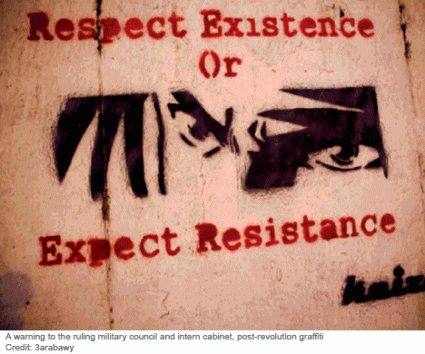
Ayman handed himself in at noon on 27 April 2009. The police had been searching for him for three days, and his name had made headlines in the local press. He was the criminal still at large – his two accomplices had already been caught. They were held in an unknown location, under investigation. We all knew they were being interrogated, maybe even tortured.
The phone call had come the night before.
‘We need your help.’
‘They’re looking for him.’
‘He’s scared to go alone.’
‘I’m not sure what to do. Nobody wants to touch this case. I need you on this one, can you go with him?’
Ayman was a friend and I had worked with him on projects in the past. Maybe the presence of a woman would lessen the brutality he might face.
…more and more Great Stencil ART HERE
October 10, 2011 Add Comments
America’s Shame, Nearly 12,000 Prisoners Join California Hunger Strike To End Torture Conditions
Nearly 12,000 Prisoners Join California Hunger Strike To End Torture Conditions
By Jeffrey Kaye – The Public Record – Oct 3rd, 2011
According to a report published Saturday by Prisoner Hunger Strike Solidarity (PHSS), the Federal receiver’s office has indicated that “nearly 12,000 prisoners were on hunger strike, including California prisoners who are housed in out of state prisons in Arizona, Mississippi and Oklahoma.”
This is the second hunger strike in less than four months, with prisoners at the Supermax Pelican Bay Prison and other California state prisons protesting the use of long-term solitary confinement, in addition to four other main demands, including provision of adequate and nutritious food, an end to administrative abuses (such as group punishments), and expansion, and in some cases provision, of “Constructive Programming and Privileges for Indefinite SHU Status Inmates.”
But besides an end to state-sanctioned isolation, which amounts to torture, the most salient demand is an end to the hated “debriefing” system, which places inmates in solitary if prison officials determine they are “gang members.” As I noted in an article last July, determination of “gang” status includes “acquisition or exchange of personal or state property amounting to more than $50…. tattooing or possession of tattoo paraphenalia…. possession of $5 or more without authorization…. [and] refusal to work or participate in a program as assigned,” among others. Indeed, even refusal to submit to “debriefing,” i.e., interrogation of prisoners to get them to “snitch,” or give names of other “gang” members, is reason to label someone a gang member and put them in solitary indefinitely. The prisoners call this “snitch, parole, or die.”
Both isolation and forced confessions are illegal forms of incarceration. The 2006 Commission on Safety and Abuse in America’s Prisons, co-chaired by former Chief Judge of U.S. Court of Appeals, Third Circuit, John Gibbons and former Attorney General Nicholas de B. Katzenbach, called for an end to isolation in U.S. prisons. (See summary of findings and recommendations, PDF.)
A Fight for Dignity, Justice, and Humanity
California prisons are a stinking mess, a scandal of gigantic proportions. The health care component of the California prison system has been in federal receivership for years because of the awful, insufficient care provided to the sick and mentally ill. As reported in a McClatchy article last May, the U.S. Supreme Court “cited ‘serious constitutional violations’ in California’s overcrowded prisons and ordered the state to abide by aggressive plans to fix the problem.” The court rejected state pleas to put off the necessary changes, and ordered the prison system to lower its population by approximately 37,000. (A plan to implement the changes is meeting some skepticism.) …source
October 10, 2011 Add Comments
Bahrain’s King Hamad follows Saudi King Abudullah’s lead, hides behind pretense of feminism and reform while State violates Human Rights with wide scale murder, torture, press, denial of education, sackings to democracy seekers
Bahrain’s king hails national developments
Published: Oct. 10, 2011 – UPI
MANAMA, Bahrain, Oct. 10 (UPI) — Bahrain’s king, in a keynote address to Parliament, praised the emerging role of women in the government and thanked the GCC for its help during an uprising.
King Hamid al-Khalifa, speaking at the opening session of Parliament, welcomed the inclusion of new female members to the assembly.
He said the three new female members — Somaya al-Jowder, Ebtisam Hijris and Sawsan Taqawi — now stand beside Latifa al-Gaoud, the first woman elected MP in Bahrain, as an example of the perseverance of the Bahraini people.
He also offered praise for members of the Gulf Cooperation Council who provided security assistance to his country as it struggled to control the violence during a Shiite uprising this year against the country’s minority Sunni leadership.
“The strength of the GCC is rooted in cohesion of its people and leaders,” the government declared in a statement.
Bahrain in early July started a dialogue process meant to examine possible improvements in the political structure.
Several Bahraini doctors and nurses were given prison sentences ranging from 5-15 years for spreading “stories and lies” and for trying to topple the regime during the country’s failed uprising early this year. Bahrain’s attorney general said last week, however, that they would be retried before a civilian court. …source
October 10, 2011 Add Comments
King Hamad shows his contempt for Human Rights and Dignity, sentences three Bahraini’s to death on World Day Agains tDeath Penality
Bahrain in the World Day Against the Death Penalty: Three citizens sentenced to death after unfair military trials
10 October, 2011 – BCHR
The trials lacked the conditions of a fair trial and held its sessions in the absence of lawyers and ignored investigation into the torture of suspects to force them to confess, despite the death of a defendant in custody.
BCHR – The Bahrain Center for Human Rights expresses its concerns that the military court (court of national safety) has issued more death sentences against peaceful demonstrators, bringing the total number to three civilians, whom were sentenced to death after swift trials that lacked the terms of a fair trial, and relied on coerced confessions taken under torture as the only evidence, disregarding completely the criticism of the international and human rights community regarding the military trials that violate the right of civilians in a competent court. On the World Day against the Death Penalty the BCHR appeals to the international bodies and human rights organizations to immediately intervene to save the lives of these defendants, to stop the implementation of these sentences, and to guarantee a fair trial for the accused.
On the 29th September 2011, the national safety court (which is a special court, headed by a military judge) ruled the death sentence to Ali Yousef Abdulwahab Al-Taweel (22 years old), who was accused in the case of murdering the policeman Ahmed Al-Muraysi in Sitra, by hitting him with a car, and sentenced the other defendant Ali Attya Mahdi to life imprisonment[1]. The court did not show the details of the rulings or the reasons for the variation in the rulings of the defendants, and ignored the obvious breaches for the right of the accused in a fair trial, where three sessions were held in the absence of Ali Al-Taweel’s lawyer, as well as ignoring the torture allegations that forced him to confess, despite his appearance at the court in a state that was difficult for him to stand as a result of being subjected to beatings on sensitive areas of his body.
Prior to this ruling, the same military court has ruled the death penalty on four defendants[2] on the 28th of April, in a court that lasted less than two weeks, before withdrawing from executing two of them and changing the sentence to life imprisonment on the 22nd of May, while confirming the death penalty on the other two defendants AbdulAziz AbdulRedha and Ali Al-Singace, without providing an explanation for this exception. …more
October 10, 2011 Add Comments
Anxious hours await mdeics retrial as they tell of their detentions, torture and abuse
Bahraini medics tell of torture ahead of retrial
By Richard Hall – 10/10/2011
Bahraini medical workers who were handed lengthy jail terms for their alleged support of pro-democracy protests hope they will get a fair trial now they have had their sentences overturned.
Appearing to buckle under international pressure, Bahrain’s Attorney-General ordered retrials in a civilian court for the 20 doctors, nurses and paramedics who treated injured protesters during demonstrations against the ruling Sunni al-Khalifa dynasty. Ali al-Boainain said that “the accused will have the benefit of full re-evaluation of evidence and full opportunity to present their defences”.
The medics were sentenced in a quasi-military court to terms ranging from five to 15 years for alleged offences including the possession of weapons, stealing medical equipment, and “fabricating stories to disturb public security”. They protested their innocence, saying they were tortured during interrogation to extract false confessions.
Their sentencing provoked outrage from human rights organisations, medical associations and the United Nations, which called for the convictions to be overturned. Roula al-Saffar, who had been sentenced to 15 years in prison, said told the Independent that the ruling represented a “new start” and called on the authorities to review the cases of other medical professionals who had been convicted of similar charges.
“I am shocked, but at the same time I am very happy. It is a new start for us,” said Saffar, the head of the Bahrain nursing union. “I hope that they will hear us out this time. Last time we were not heard. The military court screamed at us. “Our confessions were forced out of us and we were forced to sign in handcuffs.”
A government spokesman, Sheikh Abdul Aziz, said of the decision yesterday: “We’ve always said that all cases that have been tried in the National Safety Court will be transferred to the civilian court for review, and all sentenced people will have the right to appeal where a full review will be considered in regards to evidence procedures.” Bahrain’s ruling Muslim Sunni monarchy has waged sweeping crackdowns against mostly Muslim Shia protesters calling for greater rights.
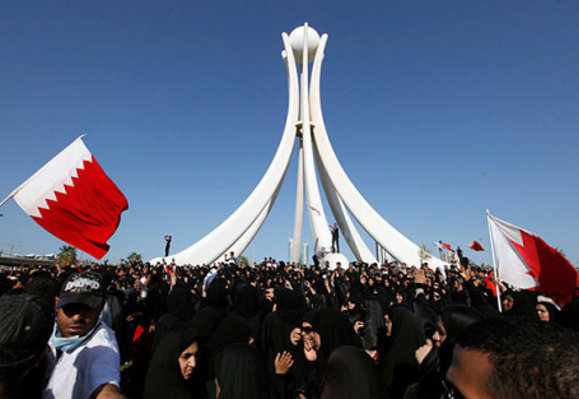
The doctors and nurses worked at the state-run Salmaniya Medical Centre close to the capital’s Pearl Square, which became the epicentre of Bahrain’s uprising, inspired by other revolts across the Arab world. The authorities saw the hospital’s mostly Shia staff as protest sympathisers, although the medics claimed they treated all who needed care.
October 10, 2011 Add Comments
Free Almahfoodh, Amal members and All political prisoners in Bahrain
To: President Barack Obama
Urgent Action is required to save Amal Society from Injustice
Dear Mr. President,
We are writing for you on the behalf of Amal Society, legally registered under the Bahrain Society Law since 2002. In brief, 23 members of Amal are detained through several night raids, and after spending more than 45 days under severe torture and dwelling in solitary cells, the Bahraini regime is putting Amal society under trail. The detainees are headed by the Chairman of Amal, Sheikh Mohammed Ali Almahfoodh. The legal conditions are drastic since the detainees are denied any access to the lawyers except for two to five minutes after every trial session. After the hearings of Prosecution witnesses and the Defense witnesses, no evidence was found to condemn Amal of any charge against the law. However, it seems that the verdicts of the National Safety Court (Military court) are ready-made packages, sentencing the detainees from 5 to 25 years of imprisonment.
Abiding to your speeches on May 19th and September 21st, we want to call for an immediate action to create pressure on this regime and free Amal Society and all the other detainees, whose guilt is only to call for more democracy and freedom. Therefore, we are writing this letter to appeal to your conscience and pledge your immediate interference to the Society’s trial, which will take place on October 4th, 2011. We are sure about your conscience and support for democracy in Bahrain, but excluding Amal from the political scenes raises many questions. The society is officially registered and all the society’s moves and actions are within the law of Bahrain. Yet, the detainees of Amal, headed by the chairman, Sheikh Mohammed Ali Almahfoodh were subjects to severe torture without any tangible evidence to charge them.
Dear Mr President,
Amal is the second largest legitimate society in Bahrain, and its members and board are under sever attack, and subject to harsh verdicts, with all these factors that would bring the world attention, we wonder why Amal Society is excluded from your attention and support.
Finally, we would like to thank all parties and organizations that has been supporting us and still support our case, and we are grateful to all of those who support the transition to a more democratic and liberal Bahrain, away from any sectarian tensions and polarizations. We want to also thank you for your constant help and precious time in advance.
Sincerely,
sign petition HERE
October 10, 2011 Add Comments
Bahrain URGENT: Civilian ‘retrial’ of medics set for 23 October
Civilian ‘retrial’ of medics set for 23 October
Amnesty International – Bahrain Date: 7 October 2011
URGENT ACTION
civilian ‘retrial’ of medics set for 23 october
The appeal for t wenty health professionals sentenced by a military court in Bahrain on 29 September to between five and 15 years has been set for 23 October . It will take place before a civilian court .
On 5 October Bahrain’s Public Prosecutor announced that he had appealed against last week’s verdict on 20 health professionals, in which Bahrain’s National Safety Court of First Instance, a military court, announced prison sentences ranging from five to 15 years. There will be an appeal before the High Criminal Court of Appeal, a civilian court, on 23 October, which will be considered as a “retrial“.
At the military trial, the military prosecution is reported to have failed to provide any substantive evidence that the accused used or advocated violence during the popular protests in February and March. Amnesty International believes that the real reason the health professionals were charged may be because some of them had denounced the government crackdown on protesters in interviews to international media.
In order for the “retrial“ to be a fair trial, certain conditions must be met: the court must start a fresh investigation into the charges levelled against defendants and must re-evaluate all the evidence; the court must dismiss all previous statements given by defendants which were said to have been coerced through torture or other ill-treatment. Finally, it must hear all defendants and allow lawyers to bring in witnesses.
more on actions you can take HERE
October 10, 2011 Add Comments
Bahrain braces for more crushing and extreme sentences against journalist and deeper repression of journalistic freedom by al Khlaifa regime
Judicial nightmare for journalists in new wave of prosecutions
Published on Monday 10 October 2011.
Printable version PrintSend this article by mail Send français Partager8
Reporters Without Borders is alarmed by a wave of trials involving journalists although the government lifted the state of emergency and announced the start of a “national dialogue.”
In the most high-profile case, three senior journalists with Al-Wasat, the country’s only opposition newspaper – editor Mansour Al-Jamari, managing editor Walid Nouihid and local news editor Aqil Mirza – are to appear in court tomorrow on charges of disseminating false information and undermining the country’s image. All three were forced to resign in April when the newspaper was temporarily banned.
Jamari admits that several articles contained false information but he points that all of this information was sent from the same IP address and he suspects that the newspaper was set up, especially as it has been target of a major smear campaign in the government media in recent months.
Reporters Without Borders urges the court to drop all the charges against these three journalists in line with the spirit of the national dialogue that King Hamad II proposed at the start of July.
As already reported, the prison sentences imposed on 14 Shiite activists including the blogger Abdeljalil Al-Singace were upheld on appeal on 27 September. According to the Bahrain Centre for Human Rights (BCHR), they have begun a hunger strike to protest against the arrests of 40 women activists who staged a protest on 23 September to demand their release.
Around 20 of the women protesters, including Noor Aqeel Al-Ghasra, a journalist with the daily Al-Ahad, have been charged with illegal assembly, disturbing public order by using violence, and inciting a revolt. According to some sources, Al-Ghasra was tortured by the police during her first night in detention. Her lawyer has condemned the conditions in which they are being held and the court’s refusal to let defence witnesses testify. …source
October 10, 2011 Add Comments
al Khalifa continues charade of democratic reform against backdrop of mockery of justice and “full on” State violence against opposition
(AP) MANAMA, Bahrain — Officials in violence-wracked Bahrain began work Monday on proposed political reforms that include boosting the powers of parliament, but the steps were dismissed by an opposition leader as too little after more than eight months of clashes in the Gulf kingdom. The package of changes would transfer some new powers to elected lawmakers, but leaves intact the sweeping controls of Sunni rulers. Bahrain’s majority Shiites began protests in February seeking more rights and demanding an end to the monarchy’s grip on the country’s affairs.
The reforms are likely to be approved, but they appear unlikely to ease a crisis that has left about 35 people dead and delivered a serious blow to the economy of the strategic island nation — home to the U.S. Navy’s 5th Fleet.
The official Bahrain News Agency said the prime minister met with government officials to discuss the reform package. The final report will be submitted later for approval to Bahrain’s King Hamad bin Isa Al Khalifa. The proposed reforms include allowing parliament to vet Cabinet ministers. They also call for a review of voting districts — which Shiite leaders claim are gerrymandered to undercut Shiite political strength.
Shiite’s account for about 70 percent of Bahrain’s population, but say they have faced decades of discrimination such as being blocked from top political and security posts.
The main Shiite political party, Al Wefaq, walked out of national reconciliation talks in July. Months earlier, their 18 members in parliament had resigned en masse to protest crackdowns that included hundreds of arrests and Shiite workers purged from jobs. The Wefaq leader, Sheik Ali Salman, scoffed at the proposed reforms as doing nothing to reduce the powers of the 200-year-old dynasty. He said the measures “keep Bahrain as a dictatorship, not a democratic state.” “We can go and ask the people of Bahrain,” he told reporters. “Do they want a referendum to decide whether to have an elected government or not?” …source
October 10, 2011 Add Comments