Should the U.S. Still Ally Itself with Saudi Arabia?
As Iran Rattles Its Saber, Should the U.S. Still Ally Itself with Saudi Arabia?
By Ishaan Tharoor – 3 January 3, 2012 – Global Spin
The White House’s Dec. 29 announcement of a $30 billion sale of 84 F-15SA fighter jets to Saudi Arabia came with a lot of subtext. The deal, part of an earlier $60 billion arms agreement between Washington and Riyadh, is slated to pan out over the course of a decade, bolstering the Kingdom’s defense forces and creating some 50,000 American jobs at home. It followed a day after regional bogeyman — and longtime Saudi foe — Iran rattled a blunt saber, threatening to close off the Strait of Hormuz, a strategic passage that sees much of the world’s oil exports flow past. On Jan 2., the Iranians raised temperatures further after successfully testing a naval cruise missile during a ten-day exercise in the Strait; the next day, officials in Tehran warned the U.S. to keep an aircraft carrier away from the Persian Gulf.
Saudi Arabia’s enmity and rivalry with Iran is well documented and, in many respects, shapes much of the Middle East’s geopolitical landscape. But the question begs: following a year of uprisings for democracy worldwide, should the U.S. still be so much in bed with the repressive Saudi monarchy?
D.C. hawks answer “of course!” The oil-rich Saudis have long served as moneyed, America-friendly interlocutors in the Middle East, supposed fellow combatants in the war against terror and a bulwark against the Shi’a theocracy in Iran. The cloistered Saudi monarchs are known entities in Washington and the tacit consensus forged between the two sides dictated much of the political status quo in the region until the seismic upheavals of the Arab Spring.
Iran’s behavior, meanwhile, may prove increasingly erratic. Tehran’s isolation has deepened following new rounds of sanctions aimed at curbing its nuclear program. A looming power struggle within the regime — most recently, authorities arrested the daughter of reform-friendly former President Akbar Hashemi Rafsanjani for “making propaganda” against the state — may lead to more public displays of chest-thumping bravado such as the recent missile tests. A stronger Saudi Arabia, then, hedges against whatever threat the Islamic Republic may pose. Andrew Shapiro, the U.S. State Department’s assistant secretary of state for political-military affairs, said the arms deal “will send a strong message to countries in the region that the United States is committed to stability in the gulf and broader Middle East.”
But that commitment to “stability” comes, in effect, with a moral price. The Saudis played a conspicuous role during the democracy uprisings in the Arab world last year: they offered safe haven to ousted Tunisian autocrat Zine el Abidine Ben Ali; attempted to exert pressure on the U.S. and other actors to protect Egyptian dictator Hosni Mubarak, who eventually was forced out; and spearheaded a military intervention into restive Bahrain, helping quash widespread protests against the ruling Sunni monarchy there. The country’s draconian religious laws are among the world’s most stifling and its rulers have occasionally curious ideas about human rights. And, in some respects, Saudi Arabia is part of the strategic dilemma — not solution — facing policy planners in Washington. After all, private Saudi donations and funds from other pliant Gulf states are at the heart of the fundamentalist radicalization seen in countries like Afghanistan and Pakistan.
…more
January 7, 2012 Add Comments
Bahrain regime maintains ‘choke hold’ on journalists and free press
Despite government’s promises, journalists continue to be harassed and attacked
7 January 2012. – Reporter without Borders
Reporters Without Borders deplores the way the Bahraini security forces continue to intimidate and attack journalists despite the undertakings that the government gave after an independent commission of enquiry released its report on the crackdown on anti-government protests during the first half of 2011.
The international community must not be taken in by the duplicity with which the government expresses a desire to punish those responsible for the abuses while continuing to crack down on dissent.
In one of the latest incidents, DPA photographer Mazen Mahdi was beaten by police in front of the police station in Samaheej, northeast of Manama, on 3 January, despite wearing a vest with the word “Press” on it.
He had gone to cover a protest by a crowd that had gathered outside the police station in response to a youth’s arrest, and was taking photos when the police charged the protesters at around 12:30 pm. Two of the policemen challenged him, although he was clearly identifiable as a journalist, and the officers he was arguing with failed to intervene when he was hit violently on the head. After being taken inside the police station, he was released 20 minutes later, but the police refused to register his complaint, he told Reporters Without Borders.
It was the fourth time Mahdi had been attacked or harassed by the police in the space of three weeks. …more
January 7, 2012 Add Comments
“The Timoney” makes US direct partner in al Khalifa regime Human Rights Abuse
“The Timoney” makes US a direct partner in al Khalifa regime Human Rights Abuse
07 January, 2012 – Phlipn Pagee – Crooked Bough
Running headlong into disaster, the former police chief of Philadelphia and Miami, John Timoney, has arrived at Bahrain’s Interior Ministry to “advise” the Bahrainis on more effective use of concussion grenades, pepper spray, tear gas, rubber bullets and baton charges and how to masquerade Human Rights abuse as policing strategies. While the opposition looked to Washington for a constructive intervention, Secretary Clinton delivered ‘The Timoney’.
“The Timoney’s” militarized crowd control methods made him a fascist legend in his own mind and apparently that of the al Khalifas, who have “choosen” him from Seceratray Clinton’s “short list” of one. He brings with him a record of miserable failure in the pubic relations with disaster, after disaster and a trail of blood and brutality. He is sure to be in good company with the al Khalifas. Perhaps this time he is deployed far enough away from home to kept the ugly shit out of the US press.
Bahrain’s keystone cops will now be aided by a Bahrain’s military unit, recently trained in the US on the latest tips and tricks of ‘crowd control’, during a police training exercise called “Urban Shield 2011”. The Israeli Border Police thugs were there along with the Human Rights Champions from the US Oakland Police Department and the Alameda County Sheriff’s Department, who recently brutalized the US Occupy Oakland protesters.
This strategy apparently hatched through collaboration between the State Department and the al Khalifas, has put a direct ‘command and control’ apparatus in Secretary Clinton’s hands. It’s the “riot control” equivalent of flying a drone and “killing terrorists” en-remote. All quite sanitary, augmented with a cadre of Public relation experts to manage Obama’s reelection image and do damage control. If it goes bad, Clinton can blame “the contractors” and stay clear of the real ugly shit, while she spins success as necessary, to boost the US economy and create jobs at home, through weapons and security service sales, to another “vertically integrated US trading partner” called “friends”.
It’s way past time to hold President Obama accountable for killing and brutalizing innocents en-remote control. This “ain’t no video game” Mr. President, your in a serious need of a reality check – layoff the “joy stick” because it isn’t one.
January 7, 2012 Add Comments
Chief Timoney in Review – Crackdown to become Lockdown
Miami crowd control would do tyrant proud
30 November 30, 2003 – By ROBYN E. BLUMNER – St. Petersburg Times
Miami police Chief John Timoney must be mighty proud of the social order he maintained during the Free Trade Area of the Americas summit a couple of weeks ago in Miami – sort of the way Saddam Hussein was proud of quieting dissension in his country.
Timoney has a well-deserved reputation for using paramilitary tactics to turn any city where large protests are planned into a place where the Constitution has taken a holiday. During the FTAA meeting on Nov. 20, Timoney dispatched 2,500 police officers in full riot gear against a crowd estimated at 8,000 people, mostly union members and retirees.
The result was a show of force that would have made a Latin American dictator blush.
Slavish public officials such as Miami Mayor Manny Diaz touted Timoney’s handiwork as “a model for homeland defense,” and the Miami Police Department has responded to complaints by saying that officers demonstrated “a tremendous amount of restraint.”
But this is hardly the way eyewitnesses described it. The scene was a “massive police state,” according to the president of the United Steelworkers of America, who has demanded a congressional investigation. Congress gave Miami $8.5-million for security during the FTAA meetings – funds slipped inside the $87-billion measure for Iraq. The steelworkers called it money for “homeland repression.”
The National Lawyers Guild, a liberal legal organization, said the day was punctuated by “indiscriminate, excessive force against hundreds of nonviolent protesters with weapons including pepper spray, tear gas, and concussion grenades and rubber bullets.”
Observers said the provocation for officers to shoot rubber bullets and paint balls filled with pepper spray at the predominantly peaceable crowd was often one person lobbing an orange in the direction of police or lighting a trash can on fire.
Nikki Hartman, a 28-year-old Pinellas County resident, was shot three times with rubber bullets – once, she said, when a police officer fired point-blank at her behind after she stooped to pick up a bandanna she’d dropped. The officer had kicked it her way before shooting her. She was later shot in the back while retreating from police lines. Her friend Robert Davis was shot seven times while trying to help Hartman to her feet.
In addition to such shootings, police abandoned any legitimate basis for searching and arresting people. Miles Swanson, 25, a legal observer for the lawyers guild, was punched numerous times while being taken in by officers for pointing out undercover police dressed up as protesters. Eight of 60 guild observers were arrested that day; they wore distinctive green hats and were apparently targeted. When Swanson was grabbed off the street by three Broward County sheriff’s deputies – two of whom were in ski masks – he said they told him “this is what you get when you f– with us.” Then, Swanson said, the deputies drove him around while looking for another legal observer to arrest. He ultimately pleaded no contest to one charge of obstructing justice so he could return to law school in Washington, D.C. …more
January 7, 2012 Add Comments
Sectarian conflict flares in Iraq against back drop of Sunni Assassination plot
Sectarian conflict flares in Iraq
By Brian M Downing – 5 January, 2012 – Asia Times
Sectarian conflict in Iraq is again a concern as the Shi’ite government seeks the arrest of a Sunni vice president whom they tie to an assassination team.
Implicit in the accusation is the charge that Sunni politicians were complicit in a number of bombings over the past two years that have killed hundreds of Shi’ites. At present, the conflict is political and judicial, but it may not be settled by dialogue and legal rulings.
Sunni Iraqis want to establish an autonomous region in central Iraq; regional Sunni powers, who oppose Iranian-Shi’ite influence, support that goal. Shi’ite Iraqis want to keep the Sunnis a weak minority; their Iranian ally seeks to punish the Sunni powers conducting clandestine warfare against it. There is considerable danger of a return to sectarian warfare and also of regional conflict.
The sectarian situation
Conflict between Sunnis and Shi’ites has been part of the Mesopotamian region ever since the time of the Ottoman Empire, when Sunnis, though a minority, were politically dominant. Sunni pre-eminence continued as the British installed the Hashemite monarchy after World War I and various politicians and generals, including Saddam Hussein, came and went.
Saddam’s ouster in 2003 led to an insurgency aiming to prevent Sunni marginalization and Shi’ite dominance. Mollified temporarily by United States and Saudi bargaining in the troop “surge”, the Sunnis later faced systematic arrests and exclusions at the behest of the Shi’ite government.
Over the past two years, a deadly bombing campaign has been directed against the Shi’ite population and security forces, killing scores of people every month.
The Sunni resistance differs from the old Sunni insurgency. It has no prominent leaders or bold manifestoes; it has moved from dozens of tribal, Ba’athist and army movements to a reasonably unified entity of nebulous leadership and uncertain size. It generally eschews firefights and ambushes – commonplaces during the insurgency – in favor of bombs. Puzzlingly, it only rarely attacked US troops, though they were prime targets during the insurgency. …more
January 6, 2012 Add Comments
The resurrection of the US Mercenary force Al Qaeda, in Libya
On 1 May 2011, Barack Obama announced that, in Abbottabad (Pakistan), the US Navy’s SEAL Team Six had taken out Osama bin Laden, about whom no reliable news had been heard for almost 10 years. The announcement padlocked the Al-Qaeda file and enabled the revamping of the jihadists into the renewed allies of the United States as in the good old days of the Afghanistan, Bosnia, Chechnya and Kosovo wars [7] On 6 August, all the members of SEAL commando 6 perished in the crash of their helicopter.
After the fall of Tripoli, Abdel Hakim Belhadj opened the gates of the Abu Salim prison, liberating all the Al-Qaeda jihadists who were still detained. He was appointed military governor of Tripoli. He currently demands an apology from the CIA and MI6 for the treatment inflicted on him in the past [8]. The National Transitional Council has put him in charge of training the army of the new Libya.
How Al Qaeda men came to power in Libya
by Thierry Meyssan
Voltaire Network has received letters from many readers enquiring about Al-Qaeda in Libya. To respond to them, Thierry Meyssan has assembled the main data available on the issue. The facts confirm his analysis, defended since the events of September 11, that Al Qaeda is a hotbed of mercenaries used by the United States to fight in Afghanistan, Bosnia, Chechnya, Kosovo, Iraq, and now Libya, Syria and Yemen.
Historical leader of Al Qaeda in Libya, Abdel Hakim Belhadj, is now the military governor of “liberated” Tripoli and in charge of organizing the army of the “new Libya”.
In the 80s, the CIA instigated Awatha al-Zuwawi to create an agency in Libya to recruit mercenaries for the jihad against the Soviets in Afghanistan. As from 1986, recruits were trained in the Salman al-Farisi Libyan camp in Pakistan, under the authority of anti-Communist billionaire Osama bin Laden.
When bin Laden moved to Sudan, the Libyan jihadists followed him there, and regrouped in a compound of their own. In 1994, Osama bin Laden dispatched Libyan jihadists back to their country to kill Muammar Gaddafi and reverse the Socialist People’s Libyan Arab Jamahiriya.
On 18 October 1995, the group reassembled under the label of Libyan Islamic Fighting Group (LIFG). During the three years that followed, the LIFG attempted to assassinate Muammar Gaddafi on four occasions and to establish a guerrilla in the Southern mountainous region. Following these operations, the Libyan army – under the command of General Abdel Fattah Younes – waged a campaign to eradicate the guerrillas, and the Libyan judicial authorities issued an arrest warrant against Osama bin Laden, disseminated internationally through Interpol as from 1998.
[Read more →]
January 6, 2012 Add Comments
Explosions Across Iraq Kill Dozens Amid Political Crisis
Explosions Across Iraq Kill Dozens Amid Political Crisis
by MICHAEL S. SCHMIDT – 5 January, 2012 – New York Times
BAGHDAD — Insurgents unleashed a fierce string of bombings against Iraq’s Shiites on Thursday, attacking pilgrims marching through the desert and neighborhoods in Baghdad, in an attempt to stir sectarian violence. The attacks come amid a political crisis that has brought the government to a halt less than three weeks after American troops withdrew.
According to security officials, 68 people were killed in the attacks and more than 100 wounded, marking the second devastating and apparently coordinated attack in Iraq over the past month. The most lethal attack occurred near the southern city of Nasiriya where a suicide bomber detonated an explosive vest amid a crowd of pilgrims as they waited to pass through a check point, killing 44 and wounding dozens, including several Iraqi army officers, according to security officials.
The pilgrims were making a trip to the holy city of Karbala leading up to holiday of Arbaeen, which marks the end of the 40-day mourning period for the death of Imam Hussein ibn Ali, the grandson of the Prophet Muhammad. …more
January 6, 2012 Add Comments
US begins resurrection of Taliban on exit from Afghanistan
Talibaan Opening Office in Qatar resurrection
Jafria News – 05 Janaury, 2012
US releasing Talibaan Prisoners from Guantonamo Bay to get a share of a future Taliban Govt in Afghanistan
JNN 04 Jan 2012 Kabul : Afghanistan’s President Hamid Karzai has agreed to the opening of a liaison office by the Taliban militant group in Qatar, his office has announced. While The United States is set to release several Taliban leaders from the Guantanamo Bay prison after Washington struck a deal with the militant group agreeing to their opening of an office in Qatar.
“Afghanistan agrees with the negotiations between the United States and the Taliban, which will lead to the establishment of an office in Qatar,” Karzai’s office said in a statement on Wednesday.
According to the statement, the talks could save the country from “conflict, conspiracy and the killings of innocent people.”
The statement comes after American and Taliban officials made a deal, in which the Taliban agreed to open an office in Qatar in return for the release of several high-ranking Taliban figures.
Under pressure from the White House, Karzai agreed to a US proposal to let the militants establish an office outside Afghanistan.
The Afghan president strongly rejected the idea previously, saying that he was not consulted with about the potential venue of a Taliban office.
The US-led war on Afghanistan was launched under the pretext of toppling the Taliban regime. Now after a decade, Washington has decided to hold negotiations with the militants.
Former Taliban Interior Minister Mullah Khair Khowa and senior Taliban military commander Noorullah Noori are among the Taliban officials, The Guardian reported on Tuesday.
The US may release “high-risk detainee” and former Taliban Deputy Defense Minister Mohammed Fazl, held at Guantanamo since 2002, but hand him over to Qatar, the newspaper said.
January 6, 2012 Add Comments
In Review – Presidential Succession Scenarios in Egypt and Their Impact on U.S.-Egyptian Strategic Relations
Presidential Succession Scenarios in Egypt and Their Impact on U.S.-Egyptian Strategic Relations
by Gregory Aftandilian – September 30, 2011 – Strategic Studies Institute US Army War College
Download complete document PDF HERE
Although this monograph was written before the pro-democracy demonstrations in Egypt in January 2011, it examines the important question as to who might succeed President Hosni Mubarak by analyzing several possible scenarios and what they would mean for U.S. strategic relations with Egypt. The monograph first describes the importance of Egypt in the Middle East region and gives an overview of the U.S.-Egyptian strategic relationship. It then examines the power structure in Egypt to include the presidency, the military, and the ruling party. The monograph next explores various succession scenarios. Although some of the scenarios outlined in this monograph are no longer viable–for example, President Mubarak is now on trial for complicity in the deaths of protestors during the uprising that resulted in his ouster from power–other scenarios remain plausible, particularly given what we see as the more prominent role of the Egyptian military in this fluid political situation. In addition, some of the possible presidential successors that the author mentions have now risen to higher positions in the Egyptian government. The author also discusses the sensitive issue of the Muslim Brotherhood, Egypt’s most organized opposition group that is opposed to many U.S. policies. He examines a scenario of a Muslim Brotherhood-dominated government, but notes that this is unlikely to occur unless both the Brotherhood and the Egyptian military split apart.
January 6, 2012 Add Comments
Egyptian Anarchists and Revolutionary Socialists under attack
Egyptian Anarchists and Revolutionary Socialists under attack
by Libertarian Socialist Movement – Egypt – Anarkismo.net
It’s about time! For weeks, several internet sites, and facebook pages that belong to the Muslim Brotherhood, either officially or administered by its members, launched an attack against Anarchists and Revolutionary Socialists in Egypt trying to single them out as inciters of violence and propagandists of state demolition. Today, a member of the Brotherhood filed a lawsuit against three socialists, one of them is comrade Yaser Abdel Kawy, a well known anarchist and a member of the Egyptian Libertarian Socialists Movement. The General Attorney forwarded the lawsuit to the State Security GA, an exceptional apparatus of the legal system that works only under a state of emergency.
It sure was expected. While small in numbers, Anarchists in Egypt have been quite prominent amongst the different revolutionary forces taking part in the Jan25 Egyptian revolution. Anarchists are distinguishably vocal on the social media sites, but more importantly they are always in the front lines on the streets whenever revolutionaries take a stand in the face of the brutal crackdown of the state.
The uneasy but strong alliance between the Brotherhood and the ruling military junta has been evident since the very beginning. The Brotherhood was the only political force that had one of its members in the legislative committee responsible for preparing the modifications of the 1971 constitution approved by a referendum on March 19th. The brotherhood refused to take part almost in any rally against the Supreme Council of Armed Forces (SCAF), and in many cases sought to tarnish these rallies and attack those who called for them.
The Brotherhood, had also taken an aggressive stance against laborers in their continuous struggle against the masters backed by the military junta. It has always condemned workers rallies, sit-ins, or occupations, and described the workers fight for their rights as counter-revolutionary and incited by clients of Mubarak’s regime.
Poised for a landslide victory in the current parliamentary elections along with the more radical Salafi Islamists, the Brotherhood is keen on getting rid of future opposition, namely socialists. It’s easy to know why if one takes a look at the policies that their counterparts in Tunisia have adopted once confident in their new seats in the parliament. It’s even clearer when one takes notice of their prominent leaders’ (mostly businessmen) statements to the media, especially ones describing the neoliberal financial and economic policies of Mubarak’s regime as good and effective, if not coupled with corruption and crony capitalism.
We are sure that these new attacks by the SCAF and its Islamist allies are nothing but an early beginning. A new phase of the Egyptian Revolution is already starting to take shape. This time the true conflict lines will be clear for all after being only clear for some. The Egyptian Revolution will take its true face of a class war of us the proletariat against them, the masters, the military junta, and the conservative fascist Islamists.
January 6, 2012 Add Comments
Egypt Defends Storming Civilian Groups
Egypt Defends Storming Civilian Groups
02 January, 2012 – Associated Press -by Aya Batrawi
CAIRO – A top Egyptian official responsible for overseeing civil society groups has defended sweeps through the offices of 10 human rights and pro-democracy organizations, rejecting denunciations from the U.S., U.N. and Germany.
Sunday’s comments were the first from the Egyptian government since the sweeps Thursday that targeted, among others, U.S.-based groups invited to observe Egypt’s months-long election process. Reports of heavily armed police and soldiers storming into offices, sealing the doors, rifling through files and confiscating computers set off a wave of international protest against Egypt’s rulers.
International Cooperation Minister Faiza Aboul Naga defended the operation as a legitimate investigation into organizations suspected of operating without permits and receiving “political funding” against the law.
Aboul Naga pointed to repeated complaints from the judiciary and the ruling military about civil society groups accepting foreign funds to promote protests and instability and “influence public opinion in non-peaceful ways.” She said the order to investigate the groups came from independent judges.
The military has pointed to “foreign hands” behind clashes with protesters who are demanding that the military hand over power to civilians. More than 100 people have been killed in the clashes since the military took over in February.
Rights groups dismiss the charges as an attempt to taint the reform movement that led to the ouster of longtime President Hosni Mubarak in a popular uprising that demanded democracy and human rights. …more
January 6, 2012 Add Comments
Opportunism and Fractures in the Revolution
The Ugly Face of the Muslim Brotherhood
By As’ad AbuKhalil – 05 January, 2012 – Angry Corner – Al-Akhbar
It is the season of the Muslim Brotherhood. They are now everywhere. Their rise is not spontaneous, of course.
Qatar is now officially sponsoring the emergence and promotion of the Muslim Brotherhood around the world. Qatar seems to have abandoned its Arab nationalist pretensions and settled instead on various trends and currents of Islamism (even the Taliban now has a base in Doha, Qatar).
In Egypt, the New York Times uncovered an intensive flirtatious relationship between the US government and the Ikhwan. But the newly found love is two-sided: varieties of Islamists from Tunisia to Palestine (exemplified by Hamas) are now sending signals of reassurance and moderation to the US and even Israel. Hamas is now (deceptively and in contradictory messages) expressing willingness to abandon armed struggle against Israeli occupation and to settle its aspirations for 22 percent of Palestine (Hamas is now officially following in the footsteps of Fatah – and Fatah was launched by individuals inspired by Ikhwan thinking).
It is now clear that the Ikhwan (and variants of them) will dominate the new political arena vacated by the ouster of a few Arab dictators. In Egypt, there is a competition between the Ikhwan (sponsored by Qatar) and the Salafites (sponsored by Saudi Arabia). They are, more than any other political current – or as much as the liberal right-wingers – willing to compromise with the remnants of the ousted regime and with US and Israel. The signs are evident now. …more
January 6, 2012 Add Comments
The Only “Existential Threat” to Israel Is Its Own Irrationality
The Only “Existential Threat” to Israel Is Its Own Irrationality
By Paul Mutter – 5 January, 2012 – FPIP
Wouldn’t it be nice if the heads of our own national security agencies spoke truth to power like this? Tamir Pardo, head of Mossad, had this to say to a roomful of Israeli ambassadors last week:
“What is the significance of the term existential threat?” the ambassadors quoted Pardo as asking. “Does Iran pose a threat to Israel? Absolutely. But if one said a nuclear bomb in Iranian hands was an existential threat, that would mean that we would have to close up shop and go home. That’s not the situation. The term existential threat is used too freely.”
Not only is Pardo going on the record to say that this language, favored by the very Prime Minister who appointed him to head Mossad, is overblown, but he did it in front of a roomful of Avigdor Lieberman’s people. This takes guts: Defense Minister Ehud Barak recently found himself in trouble for going off message on Iran when he suggested that Israel is not the sole motive force behind Iran’s nuclear talk. …more
January 6, 2012 Add Comments
Hezbollah slams ‘US-led’ terror in Iraq
Hezbollah slams ‘US-led’ terror in Iraq
By shiapost – 5 January, 2011
Hezbollah has strongly condemned a new spate of terrorist attacks in Iraq that killed scores of people and left many more wounded in a single day, Press TV reports. “A new series of terrorist crimes has been committed by the evil, criminal, black hands against the sons of Iraq, which led to the spread of death and destruction in many cities and the killing and wounding of hundreds of people,” Hezbollah said in a statement on Thursday.
The Lebanese resistance movement blamed on the United States, and described it as a n act of vengeance over Washington’s eventual withdrawal from Iraq after nine years of costly war in the country. “These crimes are the new face of the American project of vengeance after the miserable defeat of the occupation forces which led to their humiliating withdrawal from Iraq,” the statement noted. “The terrorists who committed these horrible crimes, those who planned and executed, are merely cheap tools in the hands of the Americans,” it added.
The Islamic movement called for further solidarity among the Iraqi people and warned them against the “infernal plot.”
Hezbollah said the grizzly bombings, particularly as some of these blasts targeted pilgrims visiting holy sites, were to create sedition and discord amongst the Iraqi nation in order to serve the foreigners.
At least 45 people were killed on Thursday on the outskirts of Iraq’s southern city of Nassiriya when after a bomb attack targeted a group of Shia pilgrims walking to the holy shrine city of Karbala. …more
January 6, 2012 Add Comments
Two Heros on a Bad Day
Disturbingly, Nabeel has confirmed earlier reports that his “family and house were attacked by teargas” whilst he was in hospital.
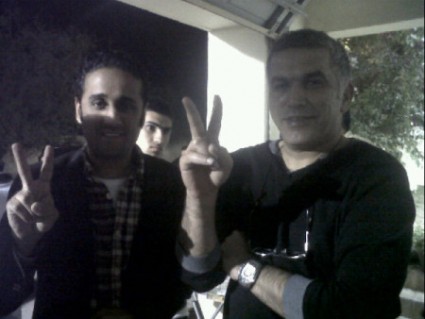 Two Heros on a Bad Day by Zainab
read more at EA WorldView HERE
January 6, 2012 Add Comments
Direct Targeted attack by Regime Security Forces on Human Rights defender Nabeel Rajab
Nabeel Rajab has been released after being interrogated at the hospital.
On Fri, Jan 6, 2012 at 4:20 PM, confirmed
Bahrain: Vicious Attack on Human Rights defender Nabeel Rajab
06 Jan 2012
The Gulf Centre for Human Rights, the Bahrain Centre for Human Rights and Cairo Institute for Human Rights Studies hold the authorities in Bahrain full responsibility for the life and safety of human Rights defender Nabeel Rajab.
The President of Gulf Centre for Human Rights (GCHR) and Bahrain Centre for Human Rights (BCHR) Nabeel Rajab was beaten severely by the security forces in Bahrain then moved in an ambulance to Salmaniya hospital after participating in a peaceful protest in Manama earlier tonight (video of the attack on the protest). He has told his lawyer on a phone call following the attack that the policemen gathered around him suddenly and started to beat him. He informed the lawyer that while lying on the ground he was beaten all over his body and specially on his back and face and that his face injuries are serious. He has an injury just below his right eye. He was then taken to Salmanyia hospital which is still controlled by a heavy security presence since last March. Human rights activists from Bahrain Youth Society for Human Rights (BYSHR) and his lawyer Mohammed Al-Jishi who have headed immediately to the hospital were prevented from seeing him. His Son Adam Rajab saw his dad in the hospital, carried by police, he said Nabeel’s face was swollen. When Adam tried to take a picture of his dad he got pushed and his phone was taken from him. Dr Alaa AlShehabi reported from the hospital that Nabeel is surrounded by 8-10 security officers and that he is suffering from concussion, back pain and bruises to his back and face. He told Dr Alaa that he was attacked by a group of police officers with sticks, he was kicked, punched & beaten all over his body and especially on the face. BCHR member Said Yousif AlMahafdha was able to see Nabeel for a moment by was then asked by Minister of interior officers to leave immediately.
BCHR knew that Nabeel is being interrogated right now, though he can’t talk and is currently on a wheel chair. His family was not allowed to stay with him.
Following the same attack, Sayed Yousif AlMahafdha, active member of the BCHR, was also injured with a stun grenade in his leg and arm. In addition, supporters gathered in solidarity outside Nabeel’s house in Bani-Jamra were attacked with tear gas.
This is an urgent appeal, the fact that the ministry of interior is controlling access to Nabeel with heavy security presence around him and preventing taking photos is very worrying and we are concerned about his health and life. Rajab is believed to be under arrest, until authorities with the Ministry of Interior allow visitation or reveal Mr. Rajab’s status.
There is an imminent fear of torture, in case Rajab was transferred to a detention facility, particularly that there is a trend of targeting human right defenders in Bahrain, who are frequently subjected to torture and other ill treatment while in detention.
GCHR, BCHR and CIHRS believe that the security forces attack on human rights defender Nabeel Rajab is directly related to his legitimate work in defense of human rights and democracy in Bahrain.
We are deeply concerned that this latest attack comes as part of an increasingly hostile environment that human rights defenders in Bahrain are facing which has included the repression of peaceful demonstrations in the villages of Bahrain, the arbitrary arrest of nonviolent protesters on daily basis, and the attacks and intimidation of human rights defenders who are defending the people’s rights in Bahrain.
We condemn in the strongest possible term this vicious attack on a well known human rights figure inside Bahrain and on the regional and international levels. GCHR, BCHR and CIHRS, are gravely concerned for the physical and psychological integrity of Nabeel Rajab and hold the government of Bahrain responsible for his safety.
Report on previous attacks on Nabeel Rajab by the security forces in Bahrain , May 2011
undisclosed verified source
January 6, 2012 Add Comments
2011 Ion Ratiu Democracy Award winner Nabeel Rajab Brutally Beaten by Regime Security Forces

Nabeel Rajab
New developments in the tiny Gulf Kingdom of Bahrain have reached boiling point after reports have surfaced that prominent human rights activist, president of the Bahrain Centre for Human Rights and 2011 Ion Ratiu Democracy Award winner Nabeel Rajab was brutally beaten and injured during his participation in a peaceful protest. Bahrain has exploded with calls for the immediate release of Nabeel Rajab with opposition group Al Wefaq condemning the incident and demanding an apology along side his release.
Nabeel was reportedly present at a peaceful protest alongside prominent human rights activist Zainab Al Khawaja who was also recently arrested and released pending trial. Nabeel was taken to hospital as witnesses say that he was severely beaten on the face, arms, eyes and back, to the point when “he he was not able to see”, just after tying to calm the situation with officers present at the scene of the protest. Lawyer Mohamed Al Jishi, after speaking with Mr. Rajab, claims that the attack came as a surprise to him as officers gathered around him and began beating him.
It has been reported that Mr. Rajab is now being detained in the hospital where his lawyer and other activists have been refused entry to see him. Maryam Al Khawaja, Head of the Foreign Relations Office Bahrain Center for Human Rights, has expressed her concern that his lawyer has been refused entry to see Mr. Rajab. The Ministry of Interior has released a statement claiming that police took Mr. Rajab to the hospital when they found him on the ground as they were scouring the area.
Ahmed Ali
Arab Uprising Channel Manager HumanRights TV
@ahmedali_
06/01/12
…source
January 6, 2012 Add Comments
URGENT BREAKING Assassination Attempt by Security Forces: Nabeel Rajab Severly Beaten in Hospital inaccessible, Sayed Yousif injured by Stun Grenade
Bahrain Center for Human Rights president Nabeel Rajab was beaten severely then moved to the hospital. According to eye witnesses he was injured in his head back and chest. Human rights activists from BYSHR and his lawyer Mohammed AlJishi are being prevented from seeing him at the hospital.
Sayed Yousif, active member of the BCHR, was injured with a stun grenade in his leg and arm.
This is an urgent appeal, the fact that the ministry of interior is not allowing anyone in to see Nabeel Rajab, including his lawyer, is very worrying and we are concerned about his health and life.
undisclosed verified source
January 6, 2012 Add Comments
Awkward moment at UN Security Council, Pakistan backs Russia’s move for probe into civilian casualties in Libya
At UN Security Council, Pakistan backs Russia’s move for probe into civilian casualties in Libya
06 January, 2012 -TermX
UNITED NATIONS, Jan 5 (APP): Pakistan is backing a Russian push for an investigation into civilian casualties in Libya during NATO’s bombing campaign to help the Libyan dissidents overthrow Col. Muammar Gaddafi’s regime from power, diplomatic sources told APP. During close-door Security Council consultations on Libya on Wednesday, Pakistan’s UN Ambassador Abdullah Hussain Haroon said his delegation would support such a Council-mandated probe, the sources said.
The United States and France are resisting any investigation into NATO’s human rights abuses in Libya. In fact, US Ambassador Susan Rice dismissed Russia’s demand for an investigation as a cheap stunt to distract attention away from the Syrian government’s crackdown on protesters.
Earlier, Russia’s UN Ambassador Vitaly Churlin told his last month’s year-end press conference that an investigation is the only way to support NATO claims that it was not responsible for civilian deaths in Libya that occurred during a bombing campaign ostensibly designed under the aegis of the United Nations to protect civilians.
On Wednesday, the coming president of the Security Council also called for such an investigation. Ambassador Baso Sangqu of South Africa, who holds the rotating Security Council presidency for January, said he believed NATO overstepped its mandate in Libya enforcing a no-fly zone, killing an untold number of innocent civilians.
“We were alive to the fact that the implementation of the resolution itself would have its own problems, but we now hear strong voices that talk about many mistakes that were made. They were supposed to be precision strikes, but it was clear that those were not that precise.” …source
January 6, 2012 Add Comments
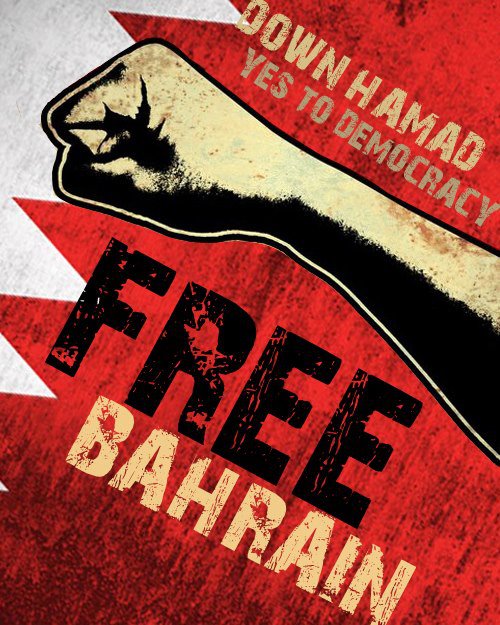
Down Hamad – Freedom for Bahrain
January 5, 2012 Add Comments
Eman Oun, Diaries of an expelled Polytechnic student !
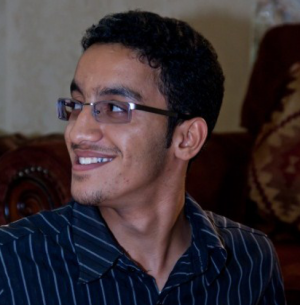
Hussain Almoumen, a 21 year old Mechanical Engineering student at Bahrain Polytechnic, was arrested on Wednesday, January 4th 2012. His arrest came after the police raided his grandfather’s house after a rally commemorating one of the martyrs who was killed a few days before.
..see more at this great blog HERE
January 5, 2012 Add Comments
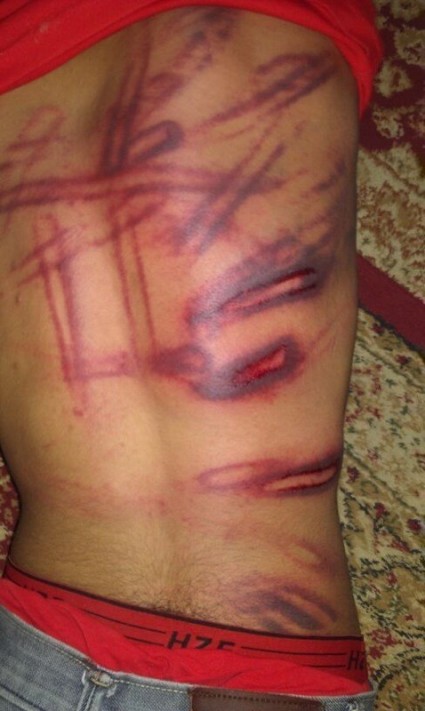
Paying the Price for Street Protests and “being in wrong place at wrong time” – witness the brutality at the hands of King Hamad
January 5, 2012 Add Comments
Reckless Endangerment by Security Forces
January 5, 2012 Add Comments
King Abdullah assures President Obama, “Witches will not fly our new F15s”
The Most Absurd Human Rights Violations: Witchcraft in Saudi Arabia
4 January, 2012 – by Filip Spagnoli – P.a.p.-Blog
danziger saudi witchcraft execution
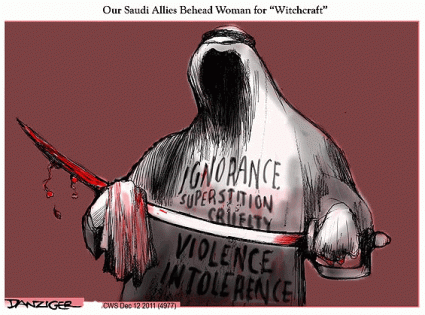
Witchcraft is a capital offense in Saudi Arabia. Recently, another person was executed:
The Saudi Interior Ministry announced on Monday that it had beheaded a woman named Amina bint Abdul Halim bin Salem Nasser for practicing “witchcraft and sorcery.” The London-based al-Hayat newspaper, citing the chief of the religious police who arrested the woman after a report from a female investigator, claims Nasser was tricking people into paying $800 per session to have their illnesses cured. (source)
How do prosecutors prove that someone is in fact a witch?
[T]he bar for proving someone guilty isn’t very high. Witch hunting is fairly institutionalized in Saudi Arabia, with the country’s religious police running an Anti-Witchcraft Unit and a sorcery hotline to combat practices like astrology and fortune telling that are considered un-Islamic.
But institutionalized is not the same thing as codified. A top official in the kingdom’s Ministry of Justice told Human Rights Watch in 2008 that there is no legal definition for witchcraft (Saudi Arabia doesn’t have a penal code) or specific body of evidence that has probative value in witchcraft trials.
Instead, judges have wide latitude in interpreting Sharia law and sentencing suspected criminals. And Amnesty International claims these judges use witchcraft charges to arbitrarily ”punish people, generally after unfair trials, for exercising their right to freedom of speech or religion.” A Human Rights Watch researcher tells The Media Line that foreigners in particular are often the targets of sorcery accusations because of their traditional practices or, occasionally, because Saudi men facing charges of sexual harassment by domestic workers want to discredit their accusers.
The evidence arrayed against witchcraft suspects typically revolves around statements from accusers and suspicious personal belongings that suggest the supernatural, in a country where superstition is still widespread. (source)
In 2007, Saudi authorities beheaded an Egyptian pharmacist who had been accused by neighbors of casting spells to separate a man from his wife and placing Korans in mosque bathrooms. “He confessed to adultery with a woman and desecrating the Koran by placing it in the bathroom,” the Saudi Press Agency reported, adding that books on black magic, a candle with an incantation “to summon devils,” and “foul-smelling herbs” had been found in the pharmacist’s home. …source
January 5, 2012 Add Comments
King Hamad buys more influence signs-up British Powerhouse, Freshfields Bruckhaus Deringer, to polish Bahrain’s new Human Rights image
Freshfields and leading silks advise Bahrain Govt on human rights reform
by: Suzi Ring – 5 January, 2012 – legalweek
Freshfields Bruckhaus Deringer and two leading silks have won roles advising the Government of Bahrain on human rights reforms following the Arab Spring uprisings last year.
Sir Daniel Bethlehem QC from 20 Essex Street and Blackstone’s Sir Jeffrey Jowell QC are leading the advice to the Bahrain Government.
Freshfields international arbitration and public international law co-head Jan Paulsson – who is based in Bahrain – and City-based associate Tariq Baloch are also advising the state.
The appointments have been made following recommendations put forward by the Bahrain Independent Commission of Inquiry (BICI) – an international committee set up last year in light of alleged torture of a number of Bahrain civilians during the uprising.
Bethlehem (pictured) and Jowell will be advising the Government with support from Freshfields on measures to improve accountability including the creation of a national body to investigate police officers responsible for torture, death or mistreatment of civilians.
Bethlehem was previously the primary legal adviser for the UK Foreign Office from 2006-11, before returning to private practice. Jowell was until recently the UK’s member of the Council of Europe’s Venice Commission, an advisory body of senior experts in constitutional law.
The Bahrain Government has pledged that the BICI’s recommendations will be implemented by the end of February this year with some reforms already in place. Key reforms include dropping charges against protestors related to freedom of speech; the removal of law enforcement and arrest powers from Bahrain’s National Security Agency; and the creation of a judicial panel to review convictions against protestors.
The news comes after Bahrain’s King Hamad Al-Khalifa visited the UK in December last year at which point Prime Minister David Cameron urged him to implement concrete reforms and offered UK support. …source
January 5, 2012 Add Comments