Bahrainis are dying to bring you the Grand Prix – because King Hamad is having them murdered. DON’T COME!
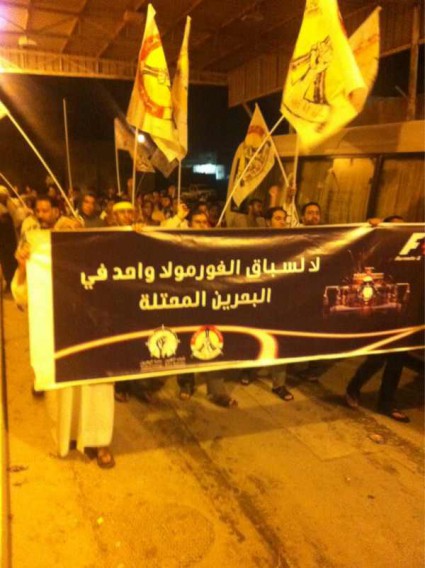
Two more Murders today as Bahrain’s MOI and US John Timoney perfect the use of tear gas as a lethal weapon
March 24, 2012 Add Comments
Bahrain MOI under advice of US, Top Cop John Timoney, hone skills in use of tear gas as lethal weapon
editor: The MOI is responsible for scores of death as a result of abuse of less-than-lethal tear gas intended for use to disperse riotous crowds. Security forces, as a practice use tear gas in deliberate assaults against homes transforming them into gas chambers. MOI Police have established a clear pattern of targeting the sick, elderly and homes with infants. The MOI has a clear practice of “saturation bombing” of villages often at night or in the early morning hours, when people are sleeping or in the day when large protests are occurring leaving the villages more vulnerable to attack.
In the MOI attacks, ransacking homes and theft of personal property and food have become a routine practice. These are not isolated incident these are a daily occurrences and well documented frequent events. The apartheid policies of King Hamad have established that a deadly and systematic collective punishment and genocide has emerged. The al Khalifa regime has ensured the destruction of any remaining hope for the so called “reforms” they have so loudly proclaimed in recent weeks.
The regime reforms are now being seen as clear ploy by the regime, to talk of reform and willingness to “reconcile” but all the while they maintain an intense campaign of collective punishment, escalation of state violence against the opposition, their villages and those least able to defend themselves.
The intensity of lethal nature of these practices have clearly increased under consultation of US, John Timoney and UK, John Yates. When Western governments support “free enterprise murder” unchecked by the Members of Parliament and our Congressional Representatives the moral crisis calls their constituents to hold them accountable. Phlipn.
Tear gas kills two Bahrainis: opposition
AFP, 24 March, 2012
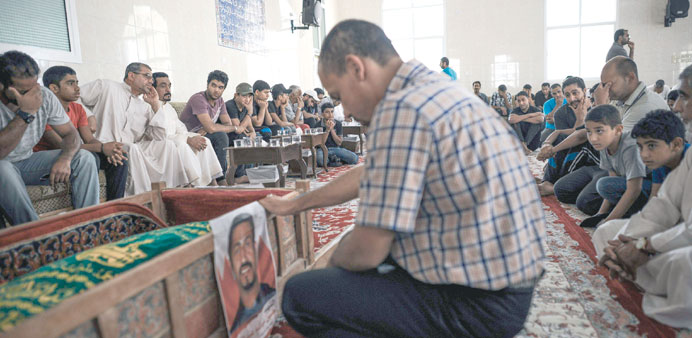
A Bahraini gestures during the funeral of 59-year-old Abda Ali Abdul Hussein in the village of Jidhafds, west of Manama, March 23, 2012. (Photo: Reuters)
Ahmed Abdul Nabi, 31, died after a tear gas grenade landed in his family’s house in the village of Shahrakan, said a statement by Al-Wefaq, citing family members.
The Shiite opposition group said he died due to the “poisoning and asphyxiating gases” used by security forces against Shiite youths, who stage frequent protests against the regime of the Sunni Muslim Al-Khalifa dynasty.
It provided a picture showing a broken window through which the canister is claimed to have entered the house.
Meanwhile, a woman named Abda Ali Abdul Hussein died on Friday after inhaling gases in the village of Jid Hafs, near the Bahraini capital Manama, Wefaq said, again citing family members.
The cause of the deaths could not immediately be confirmed.
Thousands demonstrated on Friday after the Shiite-led opposition called for several simultaneous protests across villages near Manama, in an act of defiance despite a brutal crackdown last March which quelled a month-long uprising demanding democratic change.
The UN High Commissioner for Human Rights on Tuesday criticised Bahraini forces for their “disproportionate use of force” as they sought to quell protests, saying their use of tear gas may have led to over 30 deaths.
“We have been receiving worrying reports of the disproportionate use of force by Bahraini security forces, including the excessive use of tear gas, the use of birdshot pellets and rubber bullets,” said spokesman Rupert Colville. ...more
March 24, 2012 Add Comments
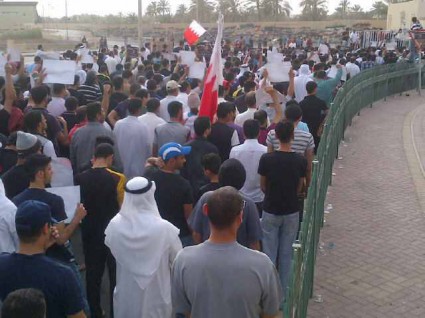
Funeral March for Ahmed Abdulnabi killed in Massive MOI Gas attack on Shahrakan
March 24, 2012 Add Comments
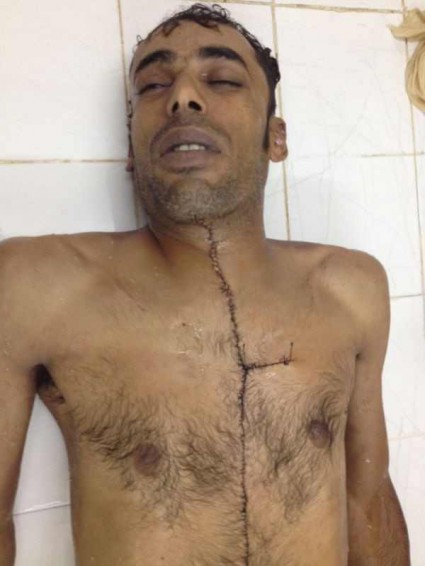
MOI Police suffocate Ahmed Abdulnabi to death in Shahrakan as Village made into gas chamber
March 24, 2012 Add Comments
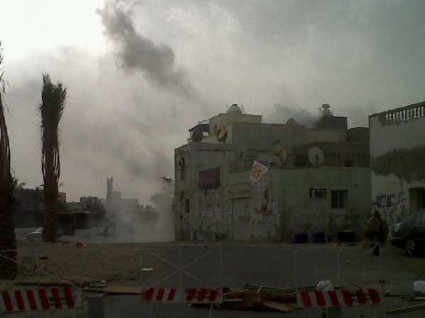
Bahrain Villages continue under assault transforming many home into gas chambers
March 24, 2012 Add Comments
Arguing Salvage of the Unsalvageable – Bahrain Showboat Reform as a meme of Saudi Fascism
U.S. Urged to Leverage Security Cooperation with Bahrain
By David Elkins – 23 March, 2101 – IPS
WASHINGTON, Mar 23, 2012 (IPS) – As government crackdowns continue, Bahrain is attracting more international visitors than just those coming in preparation for next month’s Forumla One Grand Prix.
King Hamad bin Isa al-Khalifa recently hosted Dr. Jimmy Gurulé, a law professor at Notre Dame University and former U.S. assistant attorney general, to “assess the country’s pretrial detention policies and procedures”.
Dr. Gurulé’s delegation, which was sponsored by the American Bar Association and the U.S. State Department, included a visit to Jawa prison, a major detention facility in Bahrain.
The Bahraini government is “in the process of implementing the necessary legislation, the necessary authority of judicial inspections of prisons”, Dr. Gurulé told IPS.
“They are sincere and intent to implement the recommendations of the Bahrain Independent Commission of Inquiry report and intend to implement them fully…the fact that they brought me out suggests that they’re acting in good faith and wanting to implement the recommendations,” he said.
“The most effective way of preventing instances of torture is to ensure that detainees are afforded rights of consul immediately after detention…but there is a dearth of human rights lawyers in the country,” Gurulé said.
Despite reports of increasingly deadly government tactics to suppress protestors and unofficial detention facilities where security forces beat and torture civilians, the Bahraini government has remained, rhetorically, committed to implementing reforms – a claim Western governments, particularly the U.S., seem unwilling to contest publicly.
“(T)he government is taking some actions, but it doesn’t seem to be acting very effectively,” Bill Marczak, a director at Bahrain Watch, a human rights group, told IPS.
“Yes the government issued a police code of conduct on Jan. 30, and set up an Interior Ministry ombudsman, but there are concerns about the independence of the ombudsman, and police still continue the same abuses with impunity.”
A “major non-NATO ally” of the U.S., the Saudi-backed al-Khalifa monarchy has housed the U.S. Navy’s fifth fleet and U.S. Naval Central Command since 1971 – the base for most of the U.S. naval operations in the Persian Gulf as well as the U.S. war in Afghanistan.
Of primary concern for U.S. policy makers are strategic and political rivalries between Saudi Arabia and Iran – however exaggerated or understated these rivalries may be – as well as regional security issues, according to some experts.
“The vast majority of connection and effort and diplomacy has been between through the White House and the Pentagon…that is significant because it means that the security architecture is how it gets it leverage,” Dr. Toby C. Jones, a professor of modern Middle East History at Rutgers University told IPS.
“But it can be argued that that leverage has not been used effectively,” Jones added.
Saudi Arabia, which has largely avoided the popular demands for political change in the region, has a large interest in preventing religious and ethnic tensions in Bahrain from spilling over into its eastern provinces that serve as major hubs for oil production and transportation – tensions that the Saudi monarchy has attributed to Iranian machinations. …more
March 23, 2012 Add Comments
Bahrain MOI Police transform village home into deadly Gas Chamber using less-than-lethal CS Gas
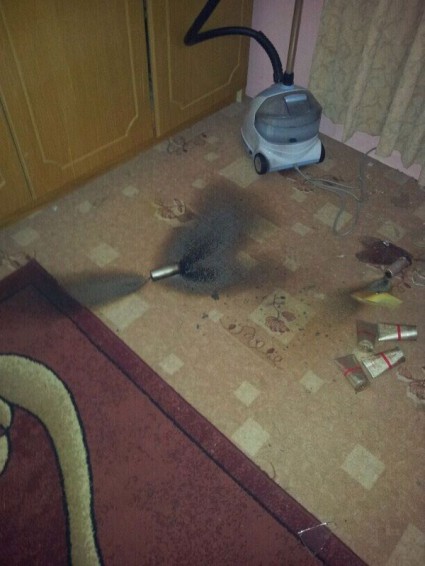
Typical scene in Village Homes following Bahrain MOI Collective Punishment Raids
March 23, 2012 Add Comments
Gas claims another life in A’ali as Bahrain MOI transforms Villages into Gas Chambers
Bahraini woman dies from inhaling tear gas fired by regime forces
23 March, 2012 – PressTV
The victim, identified as Abde Ali, aged 59, died on Friday after she inhaled tear gas fired by Saudi-backed Al Khalifa regime forces at protesters in the A’ali village, situated about three kilometers (1.8 miles) southeast of the capital, Manama.
The development comes a day after security forces used tear gas and rubber bullets to disperse anti-government protesters in several towns and villages outside Manama.
The protesters were chanting slogans against the regime, demanding the ouster of its rulers.
Meanwhile, Bahraini activists have released new footage showing a handcuffed child who, they said, was beaten and sexually harassed by the Saudi-backed forces.
The boy was left unconscious with his hands tied behind his back and was found lying in a street by residents in the Sanabis village near Manama.
Bahrain has been witnessing a revolution since anti-government protests broke out in February 2011.
Forces loyal to the Al Khalifa ruling family have ever since killed scores of protesters and arrested thousands more. …more
March 23, 2012 Add Comments
King Hamad gives “green light” for 2012 F1, says, “we’ve been preparing for this all year”
March 23, 2012 Add Comments
MOI Police make lethal use of less-than-lethal weapons in Karranah
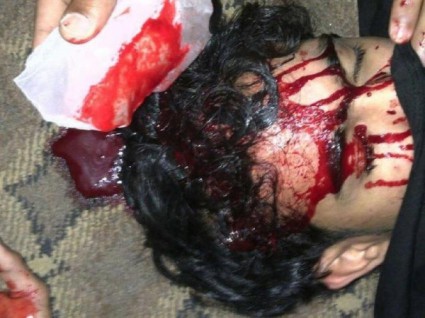
MOI Police continue to shoot CS Gas Canisters at “point blank” with intention to kill.
March 23, 2012 Add Comments
Gassing the Masses in Bahrain as another day of protest and dissent sweeps the country
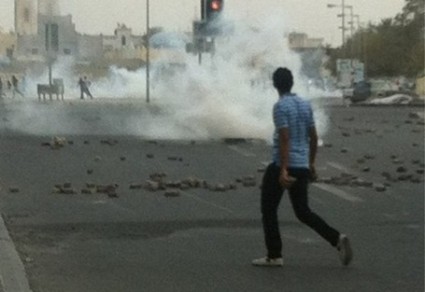
Police target thousands of protesters with tear gas across Bahrain
23 March, 2012 – BlottR
Police riots fired tear gas to disperse a huge rally in Sitra, an island in the Central Governorate of Bahrain. According to S.Yousif Almuhafda, a human rights defender, thousands of protesters demonstrated to demand the overthrow of the regime.
Besides Sitra, 9 other marches were organised across the kingdom today. People protested in Sanabis, Al-Dair, Aali, Tubli, Bilad, Samaheej, Bilad Alqadim, Karzakan and Nuwaidrat as well as in neighbouring villages. According to Maryam Al-Khawaja, a prominent activist, each of these protests were attacked by security forces and dispersed with large amounts tear gas.
Activists reported a heavy presence of security forces with armoured vehicles and jeeps roaming around many villages. Violent clashes also erupted between protesters and police forces in different areas, young demonstrators retaliated throwing rocks at police officers including in Sitra.
On twitter protesters reported that police attempted to run them over, one tweeted: “Just escaped from SUV almost ran over us”. Others said on their twitter account: “And as I expected: it is raining #teargas outside! #Bahrain10Marches #Bahrain”
As the protests terminated activist Al-Khawaja sent a tweet saying: “Several residential areas facing collective punishment right now bcz of earlier protests #bahrain #feb14 #dailyoccurrence”.
This wave of violence comes as the Bahraini Kind claimed “significant and broad progress” toward reforms in a report following up earlier recommendations to correct widespread abuse committed during the government’s crackdown on pro-democracy protests last year.
Since the beginning of the uprising 13 months ago, activists claim that 70 people have died across Bahrain due to abuses committed by security forces and the use of tear gas. …more
March 23, 2012 Add Comments
No Dialogue with Killers
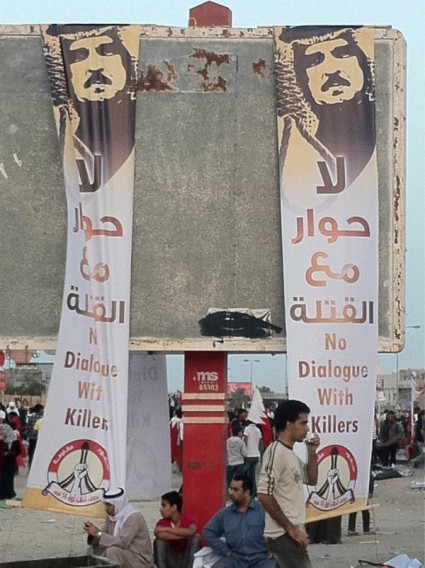
Saudi Arabia “reaching out to Bahrain opposition”
22 March, 2012 – World Bulletin
The leading Shi’ite opposition party Wefaq was involved in backroom talks during a pro-democracy uprising last year on reforms offered by Crown Prince Salman, but the they were cut short when Saudi troops rolled in and martial law was imposed.
Saudi Arabia wants Bahrain’s government and opposition to resolve a political crisis that it fears could worsen because of the sectarian fallout of fighting in Syria and destabilise its Eastern Province, a diplomat and opposition politician said.
Bahrain has been in turmoil since the Arab Spring protest movement first erupted a year ago. Clashes have become a daily occurrence, usually in districts populated by majority Shi’ite Muslims who have dominated the protests.
“We heard that at end of January the Saudis were reaching out to Wefaq and wanted to hear how Wefaq – if Act 1 was last year – how they were going to play their role in Act 2,” a senior Western diplomat said.
The leading Shi’ite opposition party Wefaq was involved in backroom talks during a pro-democracy uprising last year on reforms offered by Crown Prince Salman, but the they were cut short when Saudi troops rolled in and martial law was imposed.
The revolt was led by Shi’ite Muslim majority population on an island which is important to Washington as the base for the U.S. Navy’s Fifth Fleet.
The Shi’ite majority has called for sweeping democratic reforms that would reduce the Sunni ruling family’s monopoly on power and allow parliament real powers to legislate and form governments.
One year on clashes between riot police and youths in Shi’ite districts have escalated, with heavy use of petrol bombs against police who in turn use large amounts of tear gas. Activists say at least 32 have died since martial law ended, though police question the causes of death.
In January Wefaq members met with Royal Court Minister Khaled bin Ahmed for preliminary discussions on a formal dialogue on democratic reforms.
The diplomat said Wefaq, which faces radicalisation among many Shi’ite youth who oppose the monarchy, had met for a second time with the minister in recent weeks.
“There is stuff going on but it’s getting more difficult than they imagined it would be. They are finding it difficult to get common ground,” he said, citing government fears that Wefaq would command a parliamentary majority.
“You can foresee a political solution here that would keep the Saudis very happy, but I think the red lines would be slightly tighter than last year,” he added.
Analysts say Riyadh sent troops last year because of alarm that Bahrain had not contained protests that had the potential to spill over into the Shi’ite Eastern Province region, where major Saudi oilfields are located.
An opposition politician, who did not wish to be named, said Saudi Arabia now feared that the conflict in Syria could sharpen Bahrain’s sectarian divide – detracting attention from Syria and firing up Saudi Shi’ites.
“The Saudis are worried (the stalemate) could push the Shi’ites towards Iran… and at what could emerge as a consequence of Syria,” he said. …more
March 22, 2012 Add Comments
Stop Bahrain’s F1 “Race of Disgrace” – Don’t Come

March 22, 2012 Add Comments
Seamless Integration of Tyrany and Deceit – al Khalifa and al Saud
The opposition in Saudi Arabia is calling for democratic and social reforms – but the movement is ignored by the international media and Western governments.
Saudi Arabia: protests in the centre of counter revolution
22 March 2012 – by Joseph Daher – Counter Fire
Thousands of students at the all-female King Khaled University in Saudi Arabia boycotted classes last week to protest against poor services and demand reform. Following the suppression of the demonstrations, protests have spread to a number of cities in Saudi Arabia. The anger of students spread and gone beyond the city of Abha to larger parts of the Kingdom, where several protests took place in the cities of Riyadh, al-Namas, Ar’ar, Qatif and al-Rabeeah.
Saudi authorities responded to the protests with violence, killing one female student and injuring 54 others.
In Taibah University in the city of Medina, one student was expelled for publicly criticising the deteriorating conditions on campus during an open meeting with the director. In the eastern province of Qatif, one civilian was killed and several injured after security forces clashed with protesters demanding political reform.
The Ministry of Interior released a statement in which it vowed to address ‘acts of terrorism’ and described the protesters as ‘a deluded minority.’
Protests started with the self-immolation of a man in Samtah, Jizan, on 21 January 2011 and demonstrations of a few hundred people in late January in Jeddah and throughout February and early March in the cities of Qatif, al-Awamiyah, Riyadh and Hofuf.
In April 2011, several small protests over labour rights took place in front of government ministry buildings in Riyadh,Ta’if and Tabuk. Protests continued in late March and April in Qatif and smaller cities in the Eastern Province such as al-Awamiyah, and Hofuf, which are majority composed of Saudi Shia citizens who are discriminated by the authorities because of their religion.
The protestors called for the release of prisoners, the withdrawal of the Peninsula Shield Force from Bahrain and equal representation.
Uprisings have continued in the Qatif region. During protests in May, October and November, police shot live ammunition at protestors calling for the Eastern Province to have its own constitution and legislative assembly, and for the Society for Development and Change to be legally registered. The protests continued in December in Riyadh and Buraidah, calling for the release or trial of prisoners. …more
March 22, 2012 Add Comments
King Hamad’s Apartheid in Bahrain
March 22, 2012 Add Comments
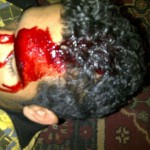
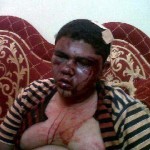
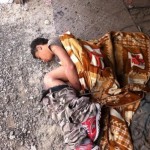
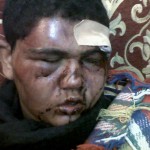
STOP BAHRAIN CHILD ABUSE AND MURDER – STOP KING HAMAD
US CONGRESS VOTED NOT TO LET JOHN KONY GET AWAY WITH CHILD ABUSE AND MURDER
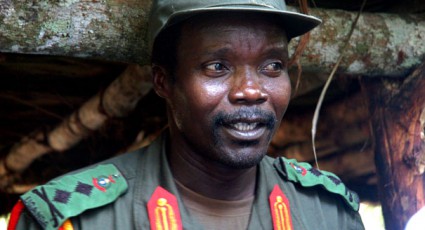
BUT THE US CONGRESS WON’T STOP KING HAMAD AND PRESIDENT OBAMA CALLS HIM FRIEND
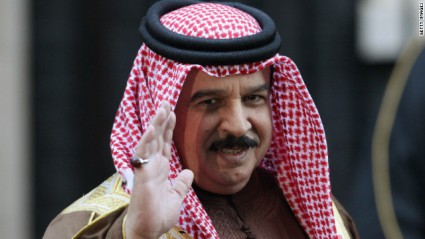
NO MORE VICTIMS – HAMAD MUST GO – INSIST UPON IT





March 22, 2012 Add Comments
Hope lights the path of the Revolution
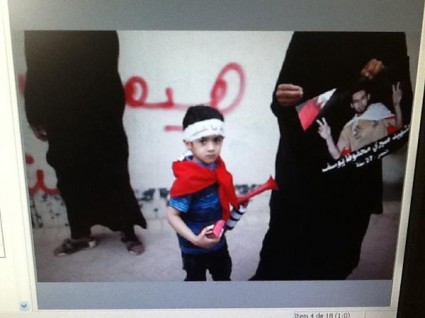
March 22, 2012 Add Comments
Ali Hashem Al Jazeera Journalist Explains Resignation over Syria and Bahrain Coverage
Al Jazeera Journalist Resigns over Syria and Bahrain Coverage
by grtv
Ali Hashem: Al Jazeera has become a “media war machine” and is “committing journalistic suicide”.
In the middle of February, something called the Syrian Electronic Army—hackers in Syria that support the government—hacked into Al Jazeera’s servers and found some emails. Some of them were written by Ali Hashem, who was a Middle East correspondent for the Arab Al Jazeera channel. In those emails he expressed his concern about the way Al Jazeera was covering the conflict in Syria. It later led to his resignation.
Ali Hashem is a television journalist who recently resigned from his post as a war reporter for Al Jazeera. While working for Al Jazeera, he covered the revolution in Libya, Lebanese politics, and tension related to the Syrian uprising on the Syrian Lebanese borders. He also worked for the BBC and led the production team at Manar TV. …source
March 22, 2012 Add Comments
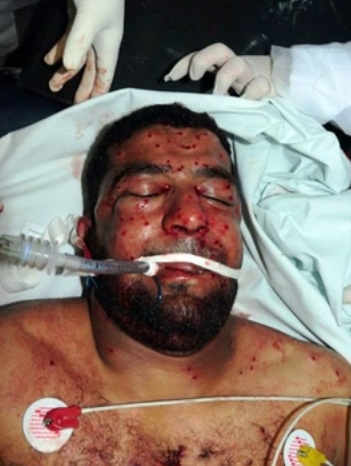
King Hamad Free Jafer Salman Maki Now!
Jafer lost one of his eyes due to a birdshot and he’s about to lose his second eye of not treated ASAP. #FreeJafer #bahrain
March 22, 2012 Add Comments
Bahrain “Police Cameras” – no matter Police impunity is justice dead
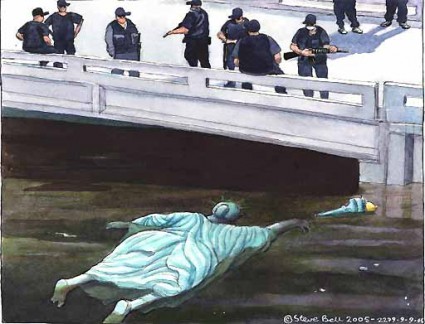
Bahrain police install cameras to curb abuse
By Andrew Hammond – 22 March, 2012 – Reuters
MANAMA (Reuters) – Bahrain is installing video cameras in police stations to try to clean up its human rights image after crushing a pro-democracy uprising last year, but activists say off-camera abuse continues in other locations.
At al-Hoora station in Manama, closed circuit television will record police interrogations in rooms with padded grey walls. Rooms without cameras are set aside for detainees to consult lawyers. Other areas of the station are also monitored.
“We chose the color grey because it’s an international standard and it calms people. Anyone in a state of violence has to be calmed down,” said Brigadier Mansour Alhajeri, a police officer conducting a tour for journalists.
He said seven other stations were now being fitted with the monitoring system and all 33 stations would be covered by October.
But the cameras, introduced after an inquiry led by international jurists uncovered five deaths under torture last year, will not be installed in at least five riot police bases where activists say youths have been beaten.
“They don’t detain anyone, any arrests will be handed over to police,” police chief Tareq al-Hassan said when about the absence of cameras in the bases from where riot police using jeeps and armored vehicles move to handle protests.
The United States, which sees Bahrain as an ally in its conflict with Iran, has held up arms sales, including anti-tank missiles and armored humvees, until the Gulf island state shows progress in implementing human rights reforms.
Bahrain has been in turmoil for over a year as opposition parties dominated by the Shi’ite majority population demand an end to the Al Khalifa family’s hold on power and Shi’ite youths clash daily with Sunni-dominated riot police, many of them foreign hires.
Banking, tourism and real estate have slowed as the unrest scares off investors and strains the economy, while the clashes have intensified in the past three months.
Police say they show restraint in the face of rioters who attack them with petrol bombs and iron bars, damaging vehicles and wounding personnel.
But opposition and rights activists say 32 civilians have died since June, many from the effects of tear gas or direct hits by tear gas canisters and sound bombs.
The government questions the causes of death and their attribution to the political conflict.
The U.N. High Commission on Human Rights said this week it was concerned about a disproportionate use of force and excessive use of tear gas and would investigate the death toll.
OFF-CAMERA BEATINGS?
Bahraini rights activists list three informal detention centers where Shi’ite youths are beaten up by riot police before release, while others are beaten in the street.
“More than 160 people have been beaten in these places,” said Mohammed al-Maskati, head of the Bahrain Youth Society for Human Rights, naming one site as a youth hostel in Sanabis which police acknowledge has been transformed into a riot police base.
Maskati said abuse had moved out of the range of cameras.
“In the past four months I never heard of anyone abused in a police station. They are hit before they reach there, that is the technique they use now,” he said, citing 10 teenagers mistreated in an unused building in Dar al-Kulaib this week.
A 16-year-old was abducted on Wednesday in Sanabis and found unconscious several hours later with his hands tied, underpants removed and trousers pulled down. His family filed a complaint to public prosecutors, blaming plainclothes detectives.
The interior ministry said it was investigating the incident.
John Timoney, a former Miami police chief hired to advise on the reforms, acknowledged that monitoring of detainees before they arrive in police stations was a relevant concern.
“If an arrest is effected, they should be taken to the nearest police station in that area. I take your point – police officers are directed to take them to the nearest police station,” he said when questioned at a news conference.
He added: “If anybody has any information on secret locations of that nature, we want to hear it.” …source
March 22, 2012 Add Comments
Bahrain Medics Show Trial: This Is Not Syria, Therefore No Western Outcry
Historically, to maintain this excruciating state of inequality, the Bahraini rulers developed a system of governance and state security apparatus that is “bullet-proof to reform”. Under American and British tutelage, the Bahraini rulers became adept at presenting the kingdom as a relatively benign monarchy. They may have acquired the modern semantics and appearance of political progressivism, such as referring to the kingdom as a constitutional monarchy with a (rigged) parliament instead of an absolute monarchy as in neighbouring Saudi Arabia and the other Gulf sheikhdoms. But not far below the surface, Bahrain’s institutionalized despotism was always the dominant reality.
Bahrain Medics Show Trial: This Is Not Syria, Therefore No Western Outcry
by Finian Cunningham – Global Research – 22 March, 2012
Bahrain’s disgraceful show trial of medical staff is set to continue, with news this week that 20 doctors and nurses are to be retried in a civilian court on trumped-up charges of subversion against the US-backed regime.
The medics were already sentenced by a military tribunal (a military tribunal!) to up to 15 years in prison after months of being held in illegal detention, denied legal counsel and subjected to torture.
Moving their case to a civilian court is presumably meant to signal a concession by the regime. But what it illustrates is that the Al Khalifa royal rulers of Bahrain are unreconstructed despots who are implacably set against accepting any kind of democratic reform.
The persecution of the majority Shia population – 70 per cent of the island – by an unelected Sunni elite is business as usual as epitomized by the vindictive targeting of medics whose only “crime” was that they treated hundreds of people injured in the state’s brutal crackdown against the pro-democracy movement.
Recently, Washington has been doing its PR best to present the monarchy in the Persian Gulf kingdom as being belatedly open to reform – this after a year of unrelenting repression against a largely peaceful pro-democracy uprising.
Bahraini grassroots activists are concerned that sections of the official opposition belonging to the Shia Al Wefaq political society are being groomed by the US State Department to accept a “compromise deal” with the royal rulers that would effectively see the monarchy remaining in power and the status quo merely being given a facelift.
King Hamad bin Isa Al Khalifa has been praised in the US corporate media for overseeing “brave” moves towards political power-sharing and dialogue with the mainly Shia-led opposition.
Washington’s envoy on human rights Michael Posner and former national security advisor Elliott Abrams have talked up “important steps” by the Bahraini regime towards reform.
However, no amount of Washington spinning can conceal the facts of life: that the US-backed Bahraini regime will continue violating human rights and international law in order to maintain its stranglehold hold on political and economic power at the expense of the Shia majority.
For 280 years, the Sunni rulers, who invaded the country from neighbouring Qatar, have sat on the chests of the indigenous Shia, and they are not going to give up their privileged seats of comfort. The Al Khalifa dynasty has enriched itself through graft and corruption while the majority of Bahrainis struggle with unemployment and poverty. …more
March 22, 2012 Add Comments
Interview with Bahrain’s Coalition of February 14th Youth
Bahrain’s Revolutionaries Speak: An Exclusive Interview with Bahrain’s Coalition of February 14th Youth
by Toby C. Jones – 22 March, 2012 – Jadahliyya
In spite of claims that Bahrain’s revolution has failed, the reality is that peaceful protests, a campaign of civil disobedience, and anti-Al Khalifa energy is at an all-time high. The regime’s reliance on heavy-handed violence has failed to quell the country’s revolutionary spirit or stamp out the opposition. If anything, the yearlong brutal siege against its own citizens has strengthened the resolve of anti-regime critics and their determination to carry on. Among the most determined to keep the revolution alive is the Coalition of February 14th Youth, an anonymous and decentralized political network that has coordinated months of activism and protest. While Bahrain’s older and more visible political societies, including al-Wefaq and Wa’ad, have sought and failed to negotiate with the government over the last year, the Coalition of February 14th Youth has steadily earned popular legitimacy for its commitment to revolutionary principles and action. Out of fear of arrest, the Coalition has coordinated its efforts primarily through social media, most notably on Twitter and Facebook. Until now they have cautiously avoided speaking directly with the media.
Toby C. Jones (TJ): How would you describe the February 14 Youth Coalition? Who is represented in the coalition? How representative is it?
Coalition of February 14 Youth (CFY): February 14 Youth are all those revolutionaries that stood firm on the streets ever since they lit the spark of a popular revolution on 14 February 2011. The coalition is merely a byproduct of this revolution and was formed out of a few of its active revolutionary groups. The February 14 Coalition derives its legitimacy from the popularity of the revolution and its goals.
TJ: What is the coalition’s relationship with the other opposition movements, most notably Al-Wefaq?
CFY: The coalition’s relationship with other opposition groups is based on the principle of respect and considers them integral in the struggle. It values all efforts that are made by them to protect the rights of the people including their right to self-determination as legislated in international law and conventions.
TJ: What is your relationship with non-registered opposition movements such as Haq, Al-Wafa, the Bahrain Freedom Movement, and others?
CFY: Our objective in the coalition with regards to all other opposition groups is to deal with them positively in a manner that serves the revolution and its goals, taking advantage of all expertise and opinions, while emphasizing the need to close ranks amongst revolutionary groups against the common enemy, the bloody Al-Khalifa regime.
TJ: What are the coalition’s objectives? Is the coalition committed to the fall of the Al-Khalifa or is there the possibility of a negotiated resolution with the regime?
CFY: The first and foremost goal that revolutionaries are struggling for is the liberation of our land from Saudi occupation and the overthrow of the Al-Khalifa regime, which has lost its popular and constitutional legitimacy. Once that is achieved, the people can choose their own destiny and choose the political and economic system that meets their ambitions and aspirations. We will not under any circumstance accept a compromise with this bloody regime that continues to violate our human rights. We are determined to liberate our precious homeland from dictatorship, and build a nation of justice, dignity, and equality for all its citizens. …more
March 22, 2012 Add Comments
The “lovely, gentle, and beautiful Israeli occupation
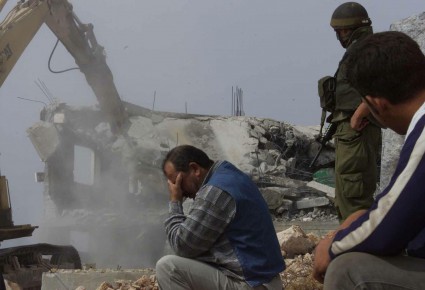
Public radio station fires editor who dared to speak out about Israel’s ‘brutal military occupation’
by Philip Weiss – 22 March 22, 2012 – Mondoweiss News
Ugly news about the American discourse, and the role of the Israel lobby inside liberal institutions. A longtime editor at a public radio station in Baltimore has been fired in part because he questioned US pandering to Israel. David Zurawik reports in the Baltimore Sun:
Sunni Khalid, managing news editor at WYPR-FM, has been dropped by the public radio station after more than nine years on the job there.
Khalid, a former Baltimore Sun reporter, had been on probation in February for comments he posted on the Facebook page of a friend questioning the influence of Israel on American politics.
“I, for one, have had enough of this pandering before the Israeli regime,” he wrote. “The war-mongering toward Iran has, once again, distracted the world from Israel’s brutal military occupation of the West Bank, East Jerusalem and the Golan Heights.”
March 22, 2012 Add Comments
Syria, Bahrain: A Tale of Two Uprisings… One Fabricated, the Other Forgotten
Syria, Bahrain: A Tale of Two Uprisings… One Fabricated, the Other Forgotten
by Finian Cunningham – Global Research – 19 March, 2012
The violent turmoil in Syria and Bahrain over the past year, taken together, provides a sharp comparative case study of the deception and hypocrisy of Western governments and the mainstream media.
It also points up the nefarious role of the pro-Western Arab states, in particular the Persian Gulf monarchies headed by Saudi Arabia.
Last week marked an exact anniversary for Syria and Bahrain. On the 15 March 2011, Syria saw the beginning of an armed insurgency described as “anti-government protests” in the Southern city of Daraa, on the border with Jordan. While the state forces of President Bashar Al Assad responded ruthlessly, from the outset it was clear that the anti-government “protesters” were heavily armed and well organised.
The events in Syria mirrored those in Libya, where opposition groups were also heavily armed and ready to use violence from the outset. In both Syria and Libya, the apparent protests were distinctly different from those seen in most other Arab countries, such as Tunisia, Egypt, Jordan, Yemen and Bahrain, where there was a groundswell of popular opposition to the incumbent Western-backed regimes and where dissent was largely peaceful.
This key difference can be explained because Western powers and their proxies, such as Israel, Turkey and the Gulf Arab states, were instrumental in arming and directing the supposed anti-government opposition in both Syria and Libya.
Special forces from NATO powers Britain and France were, tellingly, active on the ground from the get-go, lending their expertise in techniques of sabotage and terrorism.
Saudi Arabia and Qatar in particular were also instrumental in driving events in Syria and Libya, providing financial support, weapons, covert fighters and strident diplomatic backing for the self-styled “transitional councils”. In the instance of Libya, NATO’s involvement was scaled up to a full-blown aerial bombing campaign to assist the so-called rebels on the ground. Such overt NATO aggression has not yet transpired in the case of Syria, but it is a contingency that Western governments are only shying away from for now out of political calculation.
To get back to Syria’s comparative twin in this case study, Bahrain, the Persian Gulf kingdom also saw an upsurge in violence on the 15 March 2011 – but for markedly different reasons. In the month prior to that date, Bahrain had witnessed a truly mass uprising against the Al Khalifa monarchy.
Peaceful demonstrations in the capital, Manama, drew crowds of up to 300,000 – nearly half the indigenous population of the tiny oil-rich kingdom. The protest movement against the US-backed autocratic Sunni rulers had set up a permanent peace camp near the financial district of the capital. After four weeks of peaceful rallies calling for the downfall of the monarchy, the Bahraini uprising was ruthlessly attacked by the combined state forces of Bahrain, Saudi Arabia, Qatar and the other members of the so-called Gulf Peninsula Shield Force which had crossed the King Fahd Causeway linking Saudi Arabia and Bahrain. The military invasion to crush a civilian pro-democracy movement – one that was merely calling for an elected government to replace the decades-long dictatorship of the Al Khalifa dynasty – was given the green light by both Washington and London. . …more
March 22, 2012 Add Comments
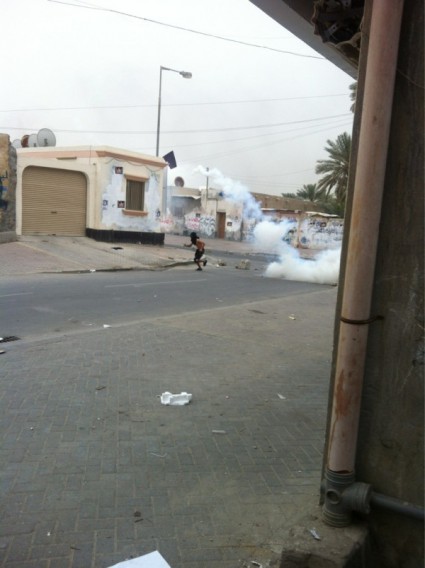
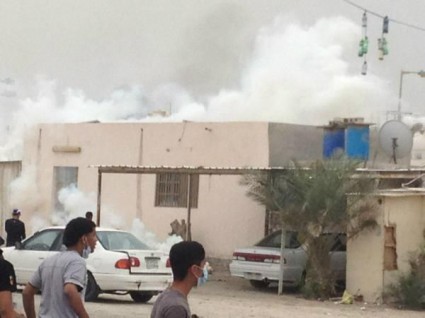
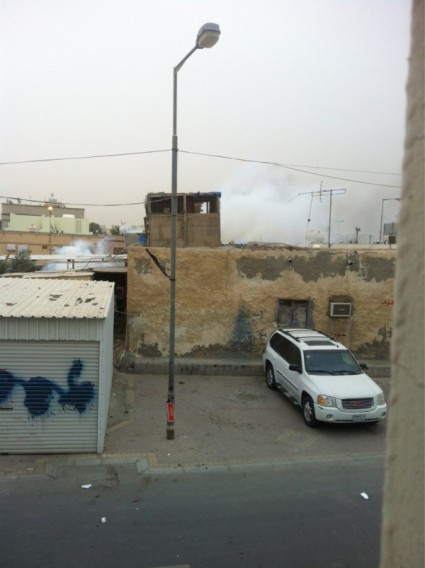
Funeral in Sanabis for Gassing victim while Gas rains down on Shahrakan
March 22, 2012 Add Comments